
Provins is a walled medieval town about 90 minutes from Paris. It earned UNESCO World Heritage status in 2001 as the “Town of Medieval Fairs”. Few visitors know it. That is the best reason to go.
For about two centuries, merchants from across Europe came here to trade. They brought cloth, spices and silver. Today the same streets hold a quiet, honest picture of the Middle Ages. This guide explains why Provins mattered, what to see and how to plan your visit.
Why Provins Matters: The Champagne Fairs
The Counts of Champagne ruled this land in the Middle Ages. They were clever rulers. They offered merchants safe roads, fair courts and steady rules. In return, traders flocked to their towns.
Four towns hosted the great Champagne fairs. They were Troyes, Lagny-sur-Marne, Bar-sur-Aube and Provins. The fairs in Provins ran from about 1120 until 1320. Together the fairs formed a kind of year-round market at the crossroads of Europe.
Merchants from Flanders sold fine wool cloth. Italian traders brought silk and spices. Money changers set the exchange rates. Provins even minted its own coin, the denier provinois. People accepted it across much of Europe.
Of the four fair towns, Provins kept the most of its medieval character. That is the main reason UNESCO listed it. You can read the official entry on the UNESCO World Heritage page for Provins.
The Tour César: The Town’s Great Keep
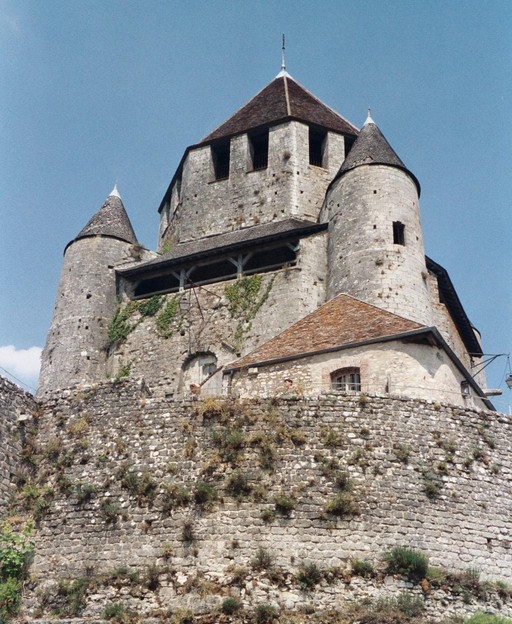
The Tour César dominates the skyline. It is a 12th-century keep with four corner turrets. Its walls are thick and plain. It looks like a fortress from a child’s storybook.
The name is a puzzle. Julius Caesar never built it. Medieval people often linked old towers to Rome. The name stuck.
Climb the tower and look out over the roofs. You can see the upper town, the lower town and the green plain of Brie beyond. From here you grasp the layout at once. The rich fair merchants lived below. The counts and their soldiers held the high ground.
The Ramparts and the Upper Town
Provins has two parts. The upper town sits on a hill. The lower town spreads along the river banks. Medieval walls still guard much of the upper town.
Walk the ramparts at your own pace. The walls were built to protect trade and the town’s wealth. Round towers punctuate the stonework. Footpaths run along the outside, so you can see the full height of the defences.
Many houses in the upper town date from the 12th and 13th centuries. They once held shops, homes and counting houses. Look at the doorways and steep roofs. Look at the stone cellars too. Merchants stored their goods below street level.
The Grange aux Dîmes and the Merchant Cellars
The Grange aux Dîmes is a large 13th-century hall. Its name means “tithe barn”. Farmers once paid their dues here. Traders also used the space during the fairs.
Provins is also known for its underground passages. Many old houses sit above deep vaulted cellars. Some cellars link to each other. Local guides run tours through selected parts. Check the official Provins tourism site for current tours and opening hours.
Saint-Quiriace and Saint-Ayoul: The Churches
The collegiate church of Saint-Quiriace crowns the upper town. Builders began it in the 12th century. They never finished it. A later dome now covers part of the crossing. The unfinished look gives the church its odd, moving shape.
The Church of Saint-Ayoul tells another story. Monks found relics here in 996. Pilgrims soon followed. Count Thibaut I of Champagne later replaced a small chapel with a larger church and a priory. Pilgrims and traders shared the same roads.
The Provins Rose and a Medieval Legend
Provins is also famous for its roses. Tradition says Count Thibaut IV of Champagne brought a red rose home from the Crusades. The town grew it for perfume and medicine. People still make rose jam and sweets here today.
A second legend links the rose to England. Some say an English prince took it as his emblem. They say it later inspired the red rose of Lancaster. Historians treat this tale with caution. It remains a lovely story to tell on your walk.
🇫🇷 Enjoying this? 7,000 France lovers get stories like this every week. Subscribe free →
Why the Fairs Faded
The fairs did not last forever. Trade routes changed. Italian ships began to carry goods straight to northern Europe by sea. Merchants no longer needed to cross France by road.
War and politics also played a part. Champagne passed to the French crown through a royal marriage in 1284. The Hundred Years War then hit the region hard. The great fairs ended around 1320, and the town grew quiet.
That quiet saved Provins. No one rebuilt it in a grander style. The medieval town simply stayed in place. Time preserved what wealth might have torn down.
Tracing Family Roots in Brie and Champagne
Provins sits in the old province of Brie. Many French-Canadian and American families trace roots to this part of northern France. Parish and civil records can take you back a long way.
The Seine-et-Marne departmental archives hold records for the area. Many French archives now offer digital copies online. Our guide on how to trace your French ancestry explains each step.
Standing in your ancestral region changes how a name feels. A short trip here can turn a line in a register into a real place.
How to Plan Your Visit to Provins
Provins works well as a day trip from Paris. A regional train links the two. Plan about 90 minutes each way. Check train times before you go.
Give yourself a full day. Start with the Tour César while you are fresh. Walk the ramparts next. Eat lunch in the upper town. Spend the afternoon on the cellars and churches. If you want a slower trip, stay one night.
The town hosts a large medieval festival each year, with costumed performers. Check the tourism site for dates. Opening hours change by season, so always confirm them. Our guide to the best day trips from Paris compares other options. For wider planning, start with our France trip planning hub.
Frequently Asked Questions About Provins
Is Provins worth visiting?
Yes. It is one of the best-preserved medieval towns near Paris. UNESCO listed it in 2001. It suits history lovers and families.
How far is Provins from Paris?
It lies about 90 kilometres south-east of Paris. A regional train takes roughly 90 minutes. Confirm the timetable before you travel.
What were the Champagne fairs?
They were great trade fairs held in four towns under the Counts of Champagne. Merchants from Flanders and Italy met there. The Provins fairs ran from about 1120 to 1320.
Why is it called the Tour César?
Medieval people linked old towers to Julius Caesar. He never built it. The keep dates from the 12th century.
Can I visit Provins in one day?
Yes. A full day covers the keep, ramparts, a church and the cellars. An overnight stay gives you a slower pace.
You Might Also Enjoy
- Falaise Castle: Where William the Conqueror Was Born
- Cluny Abbey: The Burgundy Monastery That Shaped Medieval Europe
- Gothic Cathedrals of France: How Medieval Builders Reached for the Sky
Plan Your France Trip
Ready to build your journey? Visit our planning hub for your trip to France for routes, seasons and practical tips.
Join 7,000+ France Lovers
Every week, get France’s hidden gems, seasonal guides, local stories, and the art of la vie française — straight to your inbox.
Subscribe free — enter your email:
Free forever · One email per week · Unsubscribe anytime
Tours & experiences you might love


Powered by Viator. Some links are affiliate links — we may earn a small commission at no extra cost to you.

Leave a Reply