Walk into any French kitchen and set a baguette on the counter, flat-side down. Within seconds, someone will quietly turn it right-side up. They won’t say a word. They won’t explain. That correction is a reflex so deep it feels like breathing.
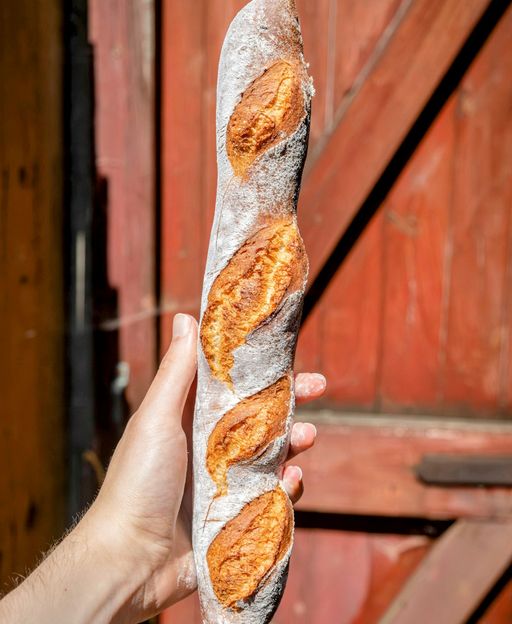
That reflex is centuries old. Most French people cannot name the reason. But it goes back to a man whose job was to end lives — and the bakers who could not refuse him.
The Man Every Baker Dreaded
In medieval France, every town kept an executioner. Society needed the role. But nobody wanted to be near the man who did it.
The bourreau — the executioner — lived at the edge of ordinary life. Neighbours crossed the street to avoid him. Some taverns turned him away. The church seated him apart. His was a necessary role, but it carried a kind of social contamination. Touch him, and some of it transferred to you.
Bakers, though, had no choice. They had to sell to the bourreau like any other customer.
So they marked his bread. They turned his loaf upside down on the counter — pain tourné, turned bread — to flag it as reserved. Other customers saw the inverted loaf and knew instantly: that one belongs to the executioner. Do not touch it.
How a Marker Became a Curse
Other customers noticed the upside-down loaf. They watched. They stayed away. Over time, the turned bread grew into something beyond a practical system. It meant death. It meant the man who killed on the state’s behalf. Nobody wanted to pick up the bourreau’s bread by mistake.
The association hardened into instinct.
Centuries passed. The executioner’s trade faded from daily town life. The specific custom disappeared. But the feeling stayed. The upside-down baguette still felt wrong. No school taught this. No parent gave the historical explanation. Every grandmother corrected it, and every child watched and learned without asking why.
Enjoying this? 7,000 France lovers get stories like this every week.
Thinking about it for retirement? If you’ve started thinking seriously about retiring there, our complete our full Retire in France guide covers the visa, healthcare, cost-of-living, and the regions worth shortlisting.
A Rule That Never Needed Writing Down
France has written laws about bread. A 1993 government decree specifies exactly what a true baguette de tradition française can contain: flour, water, salt, and yeast. Nothing else. No additives, no shortcuts. Protecting the baguette from industrial shortcuts is something France treats as a matter of national identity.
But the inversion superstition needs no decree. It enforces itself. French people follow it the way they follow dozens of unwritten social codes — not because anyone told them to, but because these rules live in muscle memory.
The bread means something. Handle it accordingly.
Other French Bread Customs With Unexpected Roots
The upside-down baguette is not the only bread custom with a strange history behind it.
Never pass bread on a knife blade
In French tradition, passing bread on steel brings arguments to the table. Some trace this to the same cultural fear that surrounded bladed weapons and the men who used them professionally. Pass bread by hand, always.
Don’t abandon the heel
The crusty end of a baguette — the quignon — carries its own meaning. In rural households across France, wasting the heel showed ingratitude. Some traditions hold it was once the baker’s private privilege. In older French homes, leaving it uneaten still feels rude.
Pick up dropped bread and kiss it
In some older households, dropping bread prompts an apology to the loaf — a small kiss before setting it back. It is an act of respect, a nod to centuries when bread meant the difference between hunger and survival.
No teacher covers these rules in class. Families pass them down without announcing them. They are part of the daily bread ritual that still defines French life in ways most visitors never notice. If you are planning your trip to France, watch a French family eat together. The bread rules are very much alive.
Frequently Asked Questions
Why do French people never turn a baguette upside down?
The tradition comes from medieval France, when bakers turned bread upside down on the counter to mark it as reserved for the town executioner. The inverted loaf became associated with death and misfortune — a superstition that has survived for centuries without ever being officially written down.
What does pain tourné mean in French?
Pain tourné means “turned bread” in French. It refers to the historical practice of placing a reserved loaf upside down on the counter to mark it as the executioner’s bread. The term is rarely used today, but the superstition it created survives in French kitchens everywhere.
What are the bread customs and rules in France?
In France, you never lay a baguette flat-side down, never pass bread on a knife blade, and never waste the heel carelessly. These customs have roots in medieval trade practices and centuries of rural life, where bread was too important to treat without respect.
Is it really considered bad luck to put a baguette upside down?
In French tradition, yes. The superstition dates back to when bakers marked the executioner’s reserved loaf by inverting it. Today, most French people follow this rule instinctively, even if they have never heard the historical explanation behind it.
Join 7,000+ France Lovers
Three times a week, get France’s hidden gems, seasonal guides, local stories, and the art of la vie française — straight to your inbox.
Subscribe free — enter your email:
📲 Know someone who’d love this? Share on WhatsApp →
Love more? Join 65,000 Ireland lovers → · Join 43,000 Scotland lovers → · Join 29,000+ Italy lovers →
Free forever · · Unsubscribe anytime
Next time someone corrects your bread without saying a word, let them. That small, unhurried gesture carries eight centuries of memory — the fear of a blade, the mark of an outcast, and the quiet dignity France still reserves for even its humblest loaf.
🇫🇷 You Might Also Love
Tours & experiences you might love


Powered by Viator. Some links are affiliate links — we may earn a small commission at no extra cost to you.

Leave a Reply