
The French Riviera — or Côte d’Azur — is one of the most celebrated stretches of coastline in the world. This French Riviera travel guide covers everything you need to plan a trip: where to go, when to visit, how to get there, and what to do once you arrive. From the palm-lined boulevards of Nice to the glittering harbour at Cannes, this corner of southern France rewards every type of traveller.
Love France? Join 7,000+ readers on our free newsletter → lovetovisitfrance.substack.com
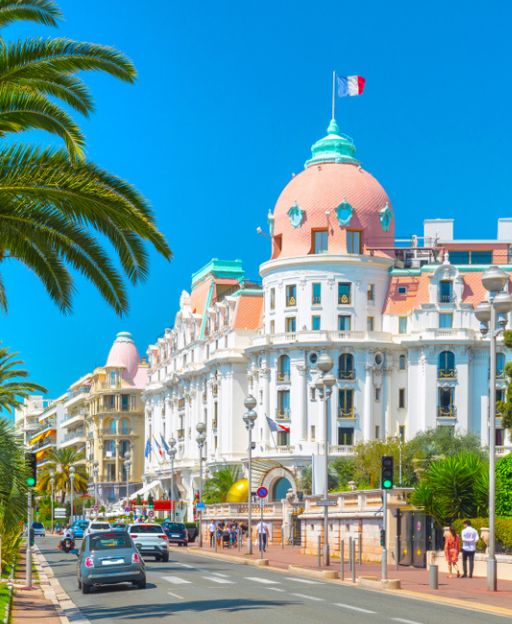
Where Is the French Riviera?
The French Riviera runs along France’s Mediterranean coast from Menton, near the Italian border, to Cassis, just east of Marseille. The heart of it — the stretch most visitors picture — covers roughly 50 kilometres between Nice and Menton, taking in Villefranche-sur-Mer, Beaulieu-sur-Mer, Èze, Cap Ferrat, Monaco, Roquebrune, and Cap Martin.
Nice is the regional capital and the main transport hub. Cannes lies 30 kilometres to the west. Antibes and Juan-les-Pins sit between the two. Further west, the Calanques near Cassis offer a wilder version of the same Med coastline — and if you want to understand how dramatic it gets, this guide to the Calanques is worth reading before you go.
Best Time to Visit the French Riviera
The French Riviera has a warm, dry Mediterranean climate. This means long summers and mild winters — but it also means crowds, heat, and inflated prices in July and August.
Spring: May and June
May and June are ideal. The sea is warming up, the flowers are in bloom, and the towns are busy but not overwhelmed. The Cannes Film Festival runs in May, which fills Cannes itself but has little impact on the rest of the coast. Temperatures sit between 18°C and 25°C.
Autumn: September and October
September is the Riviera’s best-kept secret. The summer crowds thin out, but the sea is at its warmest (around 23°C). Restaurants and shops stay open. Hotels drop their prices. Locals return to their routines and the towns feel more like themselves again.
Summer: July and August
Summer brings heat, queues, and France’s traditional August exodus, when Paris empties and the Riviera fills. It is the most expensive and most crowded time to visit. If July or August is your only option, book everything — accommodation, restaurants, boat trips — months in advance.
How to Get to the French Riviera
Flying from the US
Nice Côte d’Azur Airport (NCE) is the Riviera’s main international gateway. It sits just a few kilometres from the city centre. Several US airlines operate seasonal direct routes from New York (JFK), with connecting flights available from most US cities via Paris CDG, London Heathrow, or Amsterdam. The airport connects to Nice city centre by tram (Line 2) in under 10 minutes.
By Train from Paris
The TGV from Paris Gare de Lyon to Nice takes just under six hours. It is a comfortable, scenic journey — and on the final stretch between Marseille and Nice, you’ll get your first glimpses of the Mediterranean. Trains run frequently, and booking in advance through SNCF Connect secures the best fares. From Nice, the local coastal train (the Côte d’Azur train line) connects all the main Riviera towns efficiently and cheaply.
The French Riviera’s Key Towns
Each town along the Riviera has its own character. Here is a quick guide to the main ones.
Nice
Nice is the obvious base. It has the best transport links, the most accommodation options, and — thanks to its long history as a European city that only joined France in 1860 — a distinct personality. The story of how Nice became French is more interesting than most people realise. The old town (Vieux-Nice) is a tangle of narrow Baroque streets, morning markets, and open-air restaurants. The Promenade des Anglais stretches for seven kilometres along the bay. The Matisse Museum and the Marc Chagall National Museum are both worth a morning.
Cannes
Cannes is synonymous with the film festival, but it is far more than that one fortnight in May. La Croisette — the palm-lined seafront boulevard — is beautiful year-round. The old quarter of Le Suquet, rising on the hill behind the port, offers the best views and some of the best restaurants. A short ferry trip takes you to the Lérins Islands, where one island holds a monastery that has been occupied by monks for over 1,500 years and still produces honey and wine.
Antibes
Antibes sits between Nice and Cannes and is often overlooked by visitors rushing between the two. That is a mistake. The old town is surrounded by Vauban ramparts that drop straight into the sea. The Picasso Museum occupies the château where Picasso worked in 1946 and left the town 23 paintings and 44 drawings in gratitude. The daily market in Cours Masséna is one of the best on the Riviera.
Èze
Èze is a medieval village perched on a rocky outcrop 427 metres above the sea. It takes about 40 minutes to drive from Nice (or you can take a bus). From the top, the view across to Italy and down to the coast is extraordinary. The village itself is small and can be seen in a couple of hours, but those hours are well spent.
Menton
Menton lies right at the Italian border and feels markedly different from the rest of the Riviera — quieter, gentler, and famous for its lemons. The annual Lemon Festival in February fills the town with elaborate citrus sculptures. The old town’s colourful pastel buildings are among the most photogenic on the coast.
What to Do on the French Riviera
Swimming and sunbathing are the obvious draws, but the Riviera offers much more.
Walking is one of the great underrated pleasures here. The Coastal Path (Sentier du Littoral) runs for stretches along the entire coast, connecting villages and offering views that no road can match. The three Corniches — Lower, Middle, and Upper — are three roads built at different heights above the sea, each offering different perspectives of the coastline. Driving all three is a half-day well spent.
For day trips, Monaco sits just 20 kilometres east of Nice and can be reached by train in 25 minutes. The Principality is tiny — you can walk across it in under an hour — but the oceanographic museum, the Prince’s Palace, and the famous casino square are all within easy reach. You do not need to gamble or stay to enjoy it.
Art lovers will find more here than they expect. In addition to Nice’s Matisse and Chagall museums, the Foundation Maeght in Saint-Paul-de-Vence (just inland from Nice) is one of Europe’s finest private art foundations, with a permanent collection that includes Miró, Calder, and Giacometti, set in gardens that are sculptures in their own right.
If you’re planning a longer stay in the south of France, the Luberon villages of inland Provence make a natural extension. This guide to the Luberon explains what makes them worth the detour.
Where to Eat on the French Riviera
The Riviera’s food scene reflects its geography — Mediterranean, sun-soaked, and deeply tied to the sea. Socca (a chickpea pancake baked in a wood-fired oven) is Nice’s street food staple, sold hot from market stalls in Vieux-Nice. Salade Niçoise, made properly, bears little resemblance to the international versions — no boiled potatoes, no cooked vegetables, and anchovies that taste of the sea.
Bouillabaisse — the saffron-scented fish stew — is associated with Marseille rather than the Riviera proper, but many restaurants along the coast serve their own versions. Pissaladière (an onion tart with anchovy and olive) and pan bagnat (a tuna and vegetable sandwich pressed under weight) are the two other dishes you’ll see everywhere. Order them from a market rather than a tourist restaurant and they’ll taste completely different.
How Long to Spend on the French Riviera
Four to five days is the minimum to see Nice, Cannes, Antibes, and a couple of day trips without rushing. A week gives you time to slow down — to spend a morning at the Antibes market, a full day walking a stretch of coastal path, and an evening in Èze watching the sun drop into the sea.
The Riviera pairs naturally with Provence — an hour’s drive inland takes you into a completely different landscape of lavender fields, hilltop villages, and Roman ruins. If you have two weeks in France, combining the two makes for a perfect southern itinerary. For the full picture, our two-week France itinerary shows how to fit both into a single trip.
Frequently Asked Questions
What is the best time to visit the French Riviera?
May, June, September, and October are the best months. The weather is warm, the sea is swimmable, and the crowds are much smaller than in July and August. Spring also brings the Cannes Film Festival in May and flower festivals along the coast.
How do I get from Paris to the French Riviera?
The TGV from Paris Gare de Lyon to Nice takes just under six hours and is the most comfortable option. Book in advance via SNCF Connect for the best prices. Flying Paris to Nice takes about 90 minutes, but once you add check-in and transfer time, the train is often faster door to door.
Is the French Riviera expensive?
It can be, but it depends on how you travel. Nice has good-value restaurants and a free beach. Cannes and Monaco skew more expensive. Eating at markets instead of tourist restaurants, staying slightly inland, and using the local train along the coast all reduce costs significantly.
Do I need a car on the French Riviera?
Not for the main towns. The coastal train connects Nice, Antibes, Cannes, Villefranche, Monaco, and Menton efficiently and cheaply. A car becomes useful if you want to explore inland Provence or drive the three Corniches. For the Riviera coast itself, the train is more practical than a car.
You Might Also Enjoy
- The Calanques: France’s Hidden Coastline That Outshines the Riviera
- The City on the French Riviera That Wasn’t French Until 1860
- Two Weeks in France: The Perfect 14-Day Itinerary
Plan Your France Trip
Ready to start planning? Our France Trip Planning Hub brings together guides, itineraries, and practical advice to help you build the perfect trip — whether it’s your first time or your fifth.
Join 7,000+ France Lovers
Three times a week, get France’s hidden gems, local recipes, and travel inspiration — the kind you won’t find in any guidebook.
Subscribe free — enter your email:
🇫🇷 Discover the France Most Tourists Never Find
Get our free guide to 25 hidden villages of France — then join 7,000+ readers for weekly stories about places most guidebooks never mention.
Get Your Free Village Guide →Love more? Join 64,000 Ireland lovers → · Join 43,000 Scotland lovers → · Join 30,000 Italy lovers →
Free forever · Unsubscribe anytime
🇫🇷 You Might Also Love
Thinking about it for retirement?
If you’ve started thinking seriously about retiring there, our complete our full Retire in France guide covers the visa, healthcare, cost-of-living, and the regions worth shortlisting.
Tours & experiences you might love


Powered by Viator. Some links are affiliate links — we may earn a small commission at no extra cost to you.

Leave a Reply