
Two châteaux sit on opposite cliffs above the Dordogne river. For nearly two centuries, the men inside them wanted each other dead. One flew the English flag. The other flew the French.
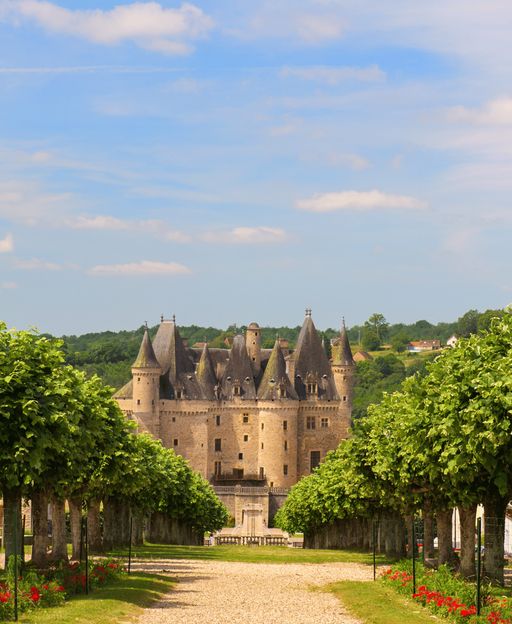
This is not a story about ruins. Both Castelnaud and Beynac still stand in almost complete form, separated by just a bend in the river. Standing between them, you sense the Hundred Years War in a way no history book quite manages.
A River That Divided Two Worlds
The Dordogne river cuts through some of the most beautiful countryside in France. In the 13th and 14th centuries, it also marked a front line. On the north bank, the lords of Beynac held their fortress for the French crown. On the south bank, the English held Castelnaud.
Both castles could see their enemy every morning. Both watched the other’s fires at night. The Dordogne itself was not just a border — it was the prize. Whoever controlled the river crossing controlled the valley, the trade, and the villages along the banks.
For nearly 130 years, during the long agony of the Hundred Years War, neither side held the upper hand for long. Castelnaud changed hands multiple times. So did the allegiance of the local villages caught between them.
Beynac — The French Side
The lords of Beynac built their fortress into the rock itself. The castle clings to a sheer limestone cliff that makes three sides almost impossible to attack. Only the fourth faces the valley — and across the water, Castelnaud.
Walk up through the village and the scale of the place becomes clear. The houses stack up the cliff in layers of golden stone, each terrace connected by narrow lanes barely wide enough for two people. At the top, the keep opens onto views that stretch for miles down the valley.
Inside, the rooms are spare and honest: stone floors, small windows, a great hall where the lords once held council. Very little decoration survived. What remains is the architecture itself — and it is extraordinary. The villages scattered through this valley have the same quality: ancient, unadorned, and astonishing.
Castelnaud — The English Side
Cross the river and the mood changes. Château de Castelnaud sits higher and bolder. Its towers are visible for miles and its position commands the whole southern approach to the valley. The English held it through most of the Hundred Years War. Before them, the Cathars used it as a refuge during the Albigensian Crusade.
That history shows in the stonework. You can trace different centuries in the walls: early medieval rubble construction, later improvements, battle damage repaired in a hurry. Castelnaud changed hands so many times that its stones carry three different stories.
Today, the castle houses one of France’s finest medieval warfare museums. The collection of siege engines is remarkable — full-scale trebuchets, mangonels, crossbows, and armour from every period of the castle’s occupation. Children find it captivating. Adults find it unexpectedly moving.
Enjoying this? 7,000 France lovers get stories like this every week.
Thinking about it for retirement? If you’ve started thinking seriously about retiring there, our complete our full Retire in France guide covers the visa, healthcare, cost-of-living, and the regions worth shortlisting.
The War That Shaped These Walls
The Hundred Years War ran from 1337 to 1453. Most people associate it with Joan of Arc and the great battles of Crécy and Agincourt. But the Dordogne valley saw years of brutal, grinding conflict too.
Local lords switched sides when it suited them. The English granted Castelnaud to allies in exchange for loyalty. The French rewarded Beynac’s lords with titles and land. Ordinary villagers paid taxes to whichever power held the nearest ford.
The treaty of 1453 ended the war and returned most of southwestern France to the French crown. The two châteaux stopped firing on each other. The river went back to being a river. The Dordogne valley, scarred and weary, began a very long recovery.
If you want to understand what drove that war — and why it lasted so long — stand on the cliff at Beynac and look across at Castelnaud. The answer is right there. Both sides genuinely believed the land was worth dying for. Looking at the valley, it is hard to disagree.
How to Visit Both in One Day
The two châteaux sit about 4 kilometres apart by road and 2 kilometres by river. Most visitors pick one and skip the other. That is a mistake. Together, they tell a complete story.
Spend the morning at Beynac. Walk the village before the coach parties arrive, climb to the keep, and take in the views. Move to Castelnaud in the early afternoon for the museum and the wider landscape. Allow 90 minutes at Castelnaud and an hour at Beynac.
The hilltop village of Domme sits nearby and gives a view of both châteaux at once from its terrace. That is the moment when the whole story clicks into place. Two fortresses, one river, centuries of rivalry. From Domme, you see it all in a single glance.
Round off the day with a walk through Sarlat, 10 kilometres to the east. The medieval market town has changed so little that arriving there feels like stepping through a door in time. Start your Dordogne adventure properly at our France planning hub.
Frequently Asked Questions
When is the best time to visit Castelnaud and Beynac?
Spring (April to June) is ideal — the valley is green, the crowds are manageable, and both châteaux are open. Summer brings long queues in July and August. Autumn delivers golden light and fewer visitors, which makes it a favourite for repeat travellers.
How much time do you need at each château?
Allow 90 minutes at Castelnaud if you visit the medieval warfare museum — it rewards a slow look. Beynac takes about an hour including the village walk. Combine both with Domme and Sarlat and you have a full and satisfying day in the valley.
Can you see both châteaux from the river?
Yes, and a canoe trip between the two is one of the finest ways to understand the medieval rivalry. You see both fortresses rising from opposite banks. Several hire points operate along the Dordogne from spring through early autumn.
Is there an entrance fee for both châteaux?
Both charge a standard adult admission, typically around €8–10 each. Castelnaud offers a combined family ticket. Both sites are open year-round, though hours vary by season — check their official websites before you visit.
Join 7,000+ France Lovers
Three times a week, get France’s hidden gems, seasonal guides, local stories, and the art of la vie française — straight to your inbox.
Subscribe free — enter your email:
📲 Know someone who’d love this? Share on WhatsApp →
Love more? Join 65,000 Ireland lovers → · Join 43,000 Scotland lovers → · Join 29,000+ Italy lovers →
Free forever · Unsubscribe anytime
Stand on the riverbank at dusk, when the limestone cliffs turn gold and both châteaux catch the last of the light. The Hundred Years War ended 570 years ago. The valley has been at peace ever since. But those two fortresses still watch each other across the water — patient, ancient, and utterly magnificent.
🇫🇷 You Might Also Love
Tours & experiences you might love


Powered by Viator. Some links are affiliate links — we may earn a small commission at no extra cost to you.

Leave a Reply