The photographs come first. Tourists arrive in July to stand at the edge of the fields, phones raised. They capture the purple rows, the blue sky, the classic Provençal light. Then they leave.
Photo: Shutterstock
But behind those photographs, something older and harder is happening. The harvest has already begun.
The Timing Nobody Talks About
Most lavender fields in Provence are cut in late July. But the real harvest window is narrow — sometimes just ten days. Leave it too long and the essential oil content drops. Cut too early, and the yield is low.
Experienced farmers in Valensole and the Luberon read their fields the old-fashioned way. They smell the air. They rub the flowers between their fingers. They listen — literally — for the dry crackle that tells them the oil is concentrated and ready.
It is not scientific. It is learned. Some families have been doing it for four generations.
Why the Work Starts Before Dawn
Lavender is cut before the sun gets high. In the Valensole plateau, July temperatures regularly pass 35°C by midday. In that heat, the delicate flowers lose their scent rapidly once cut.
Harvesters start before dawn. The air is cool and carries the smell of the fields like something almost overwhelming. One visiting writer described it as being inside a perfume bottle at five in the morning.
By nine, the trailers are loaded and heading to the distillery.
From Field to Flask — the Part Nobody Photographs
The distillation process is unglamorous and fascinating. Bundles of lavender are packed tightly into a still. Steam passes through. The essential oil separates from the water and rises to the surface.
A single 100-litre still yields around one litre of essential oil. One hectare of lavender — roughly 2.5 acres — produces between 20 and 30 litres in a good year. It takes thousands of flowers to fill a small bottle.
Most of what you smell in French soap, perfume, and cosmetics starts exactly here, in a metal drum in a Provençal shed.
🇫🇷 Discover the France Most Tourists Never Find
Get our free guide to 25 hidden villages of France — then join 7,000+ readers for weekly stories about places most guidebooks never mention.
If you’ve started thinking seriously about retiring there, our complete our full Retire in France guide covers the visa, healthcare, cost-of-living, and the regions worth shortlisting.
Subscribe free →
The Cooperatives That Kept the Industry Alive
Lavender farming in Provence nearly collapsed in the 1960s and 1970s. Synthetic lavender — cheaper to produce — flooded the fragrance market. Many small farmers gave up entirely.
What saved it was quality certification. The AOP label — Appellation d’Origine Protégée — now protects “Lavande de Haute-Provence.” It guarantees the oil comes from specific altitudes and specific varieties. It means something.
Today, cooperatives across the Luberon and Verdon regions bring farmers together. They share distilleries, negotiate prices, and market directly to cosmetic companies. It is community farming, done the French way.
The Monks Who Have Been Growing Lavender Since 1148
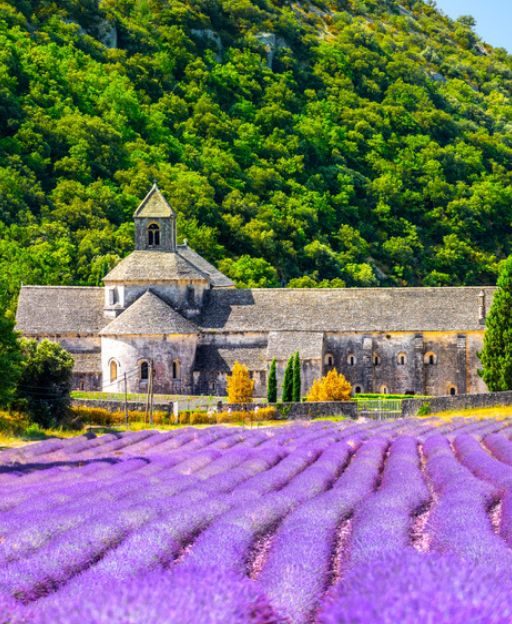
The most photographed lavender in France grows in front of the Abbaye Notre-Dame de Sénanque, near Gordes. The Cistercian monks who built the abbey arrived in 1148. They planted lavender for practical use — to clean wounds, calm fevers, and scent linens.
The monks still farm the lavender today. The field is small — barely commercial — but the sight of it, pale purple against grey stone, is one of the most quietly moving in all of France.
The abbey is open to visitors for much of the year. The lavender typically blooms in late June and is harvested through July. Come early morning, before the coaches arrive. And if you’re planning a broader visit to the region, the Provence travel guide covers the best areas and timing in detail.
After the Harvest, the Fête
In Valensole, the first weekend after the main harvest brings a lavender festival. Farmers set up stalls in the village square. There are bundles of dried flowers, sachets, essential oils, and soaps made locally.
There is lavender honey — dark and faintly medicinal — and lavender lemonade, which is stranger and better than it sounds. Children run between the stalls. Old men argue about oil yields.
The festival is not large. There are no stages or headline acts. It is a village gathering, the same as it has been for decades. That is exactly why it is worth going. For help planning your time in southern France, start with the France trip planning guide.
The photographs of the lavender fields are beautiful. But the real story is in the work — the pre-dawn starts, the ten-day window when everything must happen at once, the monks still tending their field as they have done for nine centuries. Provence does not perform its lavender harvest for tourists. It simply carries on. Those who show up early enough get to witness it.
Join 7,000+ France Lovers
Three times a week, get France’s hidden gems, seasonal guides, local stories, and the art of la vie française — straight to your inbox.
Subscribe free — enter your email:
Already a free subscriber? Upgrade to Premium for exclusive Sunday guides, hidden gems, and local secrets.
The best Irish rugby updates, straight to your inbox — Six Nations, the Nations Championship and the provinces. Only when there's something worth reading.




Leave a Reply