
On the evening of 23rd June, something extraordinary happens across rural France. Villagers carry wood to the village square. Someone lights a match. And a tradition older than the French Republic blazes back to life.
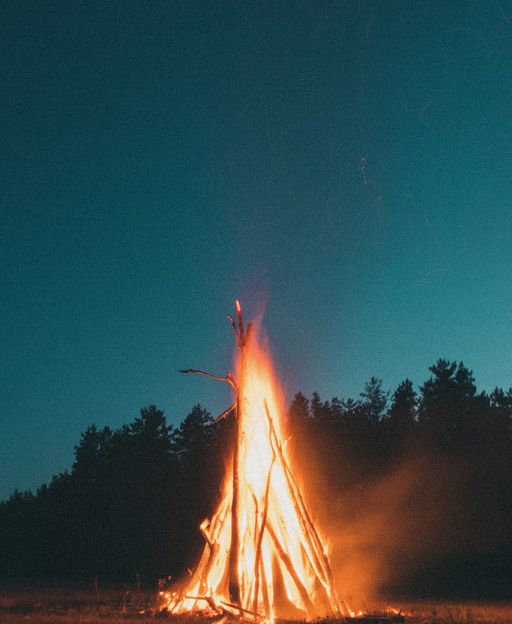
La Fête de la Saint-Jean has burned on Midsummer Eve for over a thousand years. The church adopted it as the feast of Saint John the Baptist, but its roots stretch further back — to pagan fire festivals that marked the longest days of the year. France never gave it up.
What Happens on Saint-Jean Night
The ritual varies by village, but the core is always the same.
Someone cuts and stacks a tall pyramid of branches in the village square or at the edge of a field. The fire starts just after dusk. The whole village gathers — children running barefoot, old men nursing a glass of wine, the bakery and bar both closed for the night.
The youngest man in the village usually jumps the fire first. Others follow. The belief is simple: jump the fire and you will be married before the year ends. Jump it cleanly and you will have good luck. Fall, and… well, that is what the wine is for.
Some villages add their own touches. In Brittany, the bonfire stands beside a stone cross, and a priest blesses the flame before anyone jumps. In Provence, lavender bundles go onto the fire at the end, sending up a sharp blue smoke that carries the scent of the whole summer.
Where This Tradition Comes From
No one knows exactly how old it is.
Fire festivals at midsummer appear across Europe from at least the early Middle Ages. The church absorbed many of them by linking them to saint’s feast days — Saint John’s birth on 24th June fitted perfectly. But the jumping, the dancing, the thrill of the flame — those are older still.
The French version has proved remarkably durable. Long after Paris modernised, the feux de la Saint-Jean kept burning in the countryside. The smallest communes — fewer than two hundred residents — still gather every year to stack the wood and strike the match.
Nobody needed to preserve it. No heritage body stepped in. No tourist board promoted it. Villages just kept doing it, generation after generation, because stopping would have felt like a loss.
Where to Find a Saint-Jean Bonfire Today
Enjoying this? 7,000 France lovers get stories like this every week. Subscribe free →
Saint-Jean bonfires are most alive in rural western and southern France.
In the Vendée and Loire-Atlantique, villages organise them with real ceremony: marching bands, communal meals, and fires lit by the mayor. In the Aveyron and the Lot, they happen quietly at the edge of a field, announced only by a hand-painted sign on the village noticeboard.
Brittany is exceptional. The Bretons have never been easy about losing their traditions, and Saint-Jean still works here as a genuine community anchor. Whole parishes attend. Children make wreaths of oak leaves. The fire burns past midnight.
If you are visiting France in late June — especially in a smaller town or village — ask around. The Fête de la Saint-Jean is rarely advertised online. It is almost certainly happening somewhere nearby, and any local will point you there. See our guide to the best time to visit France for more on what each season offers.
Why France Has Never Let This Go
The French are not sentimental about tradition for its own sake.
They gave up many old customs without hesitation — the harvest queens, the feast-day processions, the village pilgrimages that once defined the agricultural calendar. But fire is different.
There is something about a bonfire at midsummer — the heat against your face, the smoke rising into a still June night, the faces of people you have known your whole life lit up orange — that does not translate into nostalgia. It is too immediate. Too physical. Too alive.
France keeps this not as a museum piece or a tourist attraction, but as something that still, stubbornly, means something. If you want to build a trip around moments like this, the France travel planning guide is the right place to start. Other seasonal rituals worth seeking out include the grape harvest in Bordeaux wine villages — another gathering that feels as old as the land itself.
Frequently Asked Questions
When exactly is the Fête de la Saint-Jean in France?
The Fête de la Saint-Jean takes place on the evening of 23rd June — Midsummer Eve. Bonfires begin after dark and often burn until midnight or later in rural villages.
Where in France can I see a Saint-Jean bonfire?
You will find them most reliably in rural Brittany, the Vendée, the Aveyron, the Lot, and parts of Provence. Small communes with a few hundred residents are often the best places to look. Ask locally — these events are rarely publicised online.
Are Saint-Jean bonfires open to visitors?
Yes. These are community events, and visitors are welcomed warmly. There is rarely an entry charge. Bringing something to share — a bottle of local wine or a loaf of bread — is always well received.
What is the tradition of jumping over the Saint-Jean fire?
Jumping the fire is an ancient ritual said to bring good luck, health, and — in some villages — a marriage before the year ends. Young men jump first, then others follow. Stumbling is considered bad luck, which sharpens the leap considerably.
Somewhere in France on the night of 23rd June, someone is stacking branches in a field they have known since childhood. A match will be struck. And for a few hours, the night belongs to fire and light — and to every summer that came before.
Join 7,000+ France Lovers
Three times a week, get France’s hidden gems, seasonal guides, local stories, and the art of la vie française — straight to your inbox.
Subscribe free — enter your email:
Free forever · Unsubscribe anytime
🇫🇷 You Might Also Love
Tours & experiences you might love


Powered by Viator. Some links are affiliate links — we may earn a small commission at no extra cost to you.

Leave a Reply