
Burgundy is one of France’s most rewarding regions for first-time visitors. This Burgundy France travel guide covers everything you need to plan your trip — from the wine routes and medieval towns to the best time to go and how to get there from Paris. Whether you are drawn by the wine, the food, or the history, Burgundy delivers on every count.
Love France? Join 7,000+ readers on our free newsletter → lovetovisitfrance.substack.com
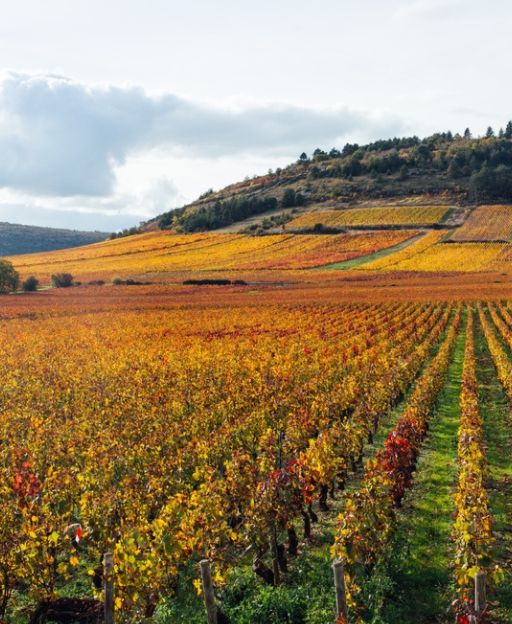
Where Is Burgundy and Why Should You Visit?
Burgundy sits in eastern central France, roughly midway between Paris and Lyon. The region stretches from the chalky slopes of Chablis in the north down to the Mâconnais in the south. It is not a coastal region and it is not a mountain destination — Burgundy is wine country, river country, and slow-travel country.
Americans tend to discover Burgundy through its wine. The names on the labels — Gevrey-Chambertin, Meursault, Puligny-Montrachet — are some of the most celebrated in the world. Standing in the actual village behind those names, surrounded by vines that stretch across the hillsides, is a different experience from reading them on a bottle.
But wine is not the only reason to come. Dijon has one of the best-preserved medieval city centres in France. Beaune has the Hôtel-Dieu, a 15th-century charity hospital so beautiful it could pass for a palace. The hilltop basilica at Vézelay is one of the great Romanesque buildings in Europe. Burgundy rewards visitors who take their time.
The Wine Routes of Burgundy
Most visitors to Burgundy focus on the Côte d’Or — the golden slope that runs roughly 50 kilometres from Dijon in the north to Santenay in the south. The northern half, the Côte de Nuits, produces almost exclusively Pinot Noir. The southern half, the Côte de Beaune, produces both red and white wines. The white Chardonnays of Meursault and Puligny-Montrachet are among the most famous in the world.
The Route des Grands Crus is the most famous driving route in Burgundy. It runs south from Dijon through a succession of wine villages — Gevrey-Chambertin, Vougeot, Vosne-Romanée, Nuits-Saint-Georges. Each village is small. Each has a story. Almost all of them have a cave (wine cellar) where you can taste and buy direct from the producer. You do not need to book ahead for most tastings. You pull off the road, walk in, and ask.
Chablis sits about 90 kilometres northwest of Dijon, in a separate pocket of the region. The wines here are Chardonnay, but leaner and more mineral than those on the Côte de Beaune. The town itself is small, with the Serein river running through its centre. If you enjoy white wine and want to see a quieter part of Burgundy, Chablis is worth the detour.
The Mâconnais in the south is more relaxed and cheaper to visit. The wine villages around Pouilly-Fuissé produce excellent white wines, and the landscape here has a softer, more pastoral feel. The rock of Solutré — a dramatic limestone outcrop — rises above the vineyards and offers a short but rewarding climb with wide views across the vines.
Planning a trip to France?
Join 7,000+ readers who get weekly France inspiration, travel tips, and hidden gems — delivered free every week.
Key Towns and Villages to Visit in Burgundy
Dijon
Dijon is the capital of Burgundy and an excellent base for a longer stay. The old centre is compact and very walkable. The Palais des Ducs — once home to the powerful Dukes of Burgundy — dominates the main square. The covered market at Les Halles runs on Tuesday, Thursday, Friday, and Saturday mornings, and is one of the best markets in France. Mustard shops line the streets, and the famous Maille boutique on Rue de la Liberté is a genuine highlight.
Beaune
Beaune is the wine capital of Burgundy and the town most visitors make their base. The Hôtel-Dieu, built in 1443 by Nicolas Rolin as a charity hospital, is the visual heart of the town. Its polychrome roof tiles and elaborate courtyard look more like a Flemish palace than a medical institution. The old town is compact and entirely walkable, with dozens of wine merchants and cellars within the medieval walls.
Vézelay
Vézelay is one of France’s great pilgrimage destinations. The Basilica of Mary Magdalene stands at the top of a long hill village and is a UNESCO World Heritage Site. It was a major departure point for pilgrims on the Way of Saint James. The view from the terrace behind the basilica, across the rolling Morvan countryside, is worth the visit alone. Plan to arrive early — the village gets very busy in summer.
Flavigny-sur-Ozerain
Flavigny is a tiny medieval village perched on a hilltop about 50 kilometres northwest of Dijon. It is best known for its anis sweets — small pastilles made in the old abbey since the 9th century. The village has barely 400 inhabitants but is a genuine medieval survivor, with stone houses, narrow lanes, and a remarkable sense of stillness. It appeared in the 2000 film Chocolat, which was filmed on location here.
How to Get to Burgundy from Paris
Getting to Burgundy from Paris is easy. TGV trains from Paris Gare de Lyon reach Dijon in around 1 hour 35 minutes. Beaune is another 20 minutes south on the regional train from Dijon. You can travel France by train very efficiently from the capital, and the rail connection to Burgundy is one of the best in the country.
If you are hiring a car, Burgundy is approximately 2.5 to 3 hours south of Paris on the A6 motorway. Driving gives you far more flexibility to explore smaller wine villages and rural communes that the trains do not reach. Most wine tastings on the Route des Grands Crus require a car unless you join an organised tour from Beaune or Dijon.
Best Time to Visit Burgundy
The harvest — vendanges — takes place in September and into early October. This is the most atmospheric time to visit. The vines are heavy with ripe grapes, the light is golden, and there is real activity in the vineyards and cellars. Temperatures are comfortable during the day, and the evenings are cool enough to enjoy a hearty Burgundy dinner without discomfort.
May and June are also excellent. The vines are in leaf, the weather is warm, and the crowds are smaller than in August. July and August bring the largest numbers of visitors, particularly in Beaune. Accommodation books up well in advance during summer, and prices rise considerably.
Winter in Burgundy is cold and quiet. Many small producers close their cellar doors between December and February. That said, the vineyards have a spare, dramatic quality in winter, and the Hospices de Beaune wine auction in November brings real energy to the region for one weekend each year.
How Long to Spend in Burgundy
Three nights is the minimum for a meaningful visit. This gives you one day to explore Dijon, one day on the wine route, and one day to visit either Vézelay or Chablis. Five nights is more comfortable and allows you to explore the Mâconnais or the quieter Côte Chalonnaise as well.
Burgundy works well as part of a broader France itinerary. Paris to Burgundy to Lyon to Provence is one of the classic routes, and you can do it entirely by train if you prefer not to hire a car. If you are building a two-week trip, our France trip planning hub covers the key decisions you need to make. Our France travel budget guide sets out realistic cost expectations for the country as a whole.
What to Eat in Burgundy
The food in Burgundy is as important as the wine — and the two belong together. Boeuf Bourguignon is the classic: beef braised slowly in red wine with mushrooms, lardons, and pearl onions. The version you eat in a small Burgundy auberge bears little resemblance to what you have encountered at home. Coq au vin, also cooked in red wine, is equally good in the region that gave it its name.
Époisses is the local washed-rind cheese — orange-rinded, intensely pungent, and best eaten at room temperature with a glass of white Burgundy. Gougères are the traditional cheese puffs served in cellars before a tasting. Dijon mustard appears on almost every table. The covered market in Dijon sells all of these, plus local charcuterie, fresh vegetables, and handmade pastries.
Lyon is an hour south by train and is often called the gastronomic capital of France. If you are spending a week in Burgundy, a day trip to Lyon to eat in a bouchon (traditional Lyonnais bistro) is very much worth adding. Read our guide to why Lyon should be on your France trip for more.
Frequently Asked Questions About Visiting Burgundy, France
Is Burgundy worth visiting if you are not a wine drinker?
Yes, absolutely. The medieval architecture in Dijon, the basilica at Vézelay, the village of Flavigny-sur-Ozerain, and the quiet canals of the Canal de Bourgogne all stand apart from wine entirely. Burgundy’s food culture is just as rich. That said, wine is woven into almost everything here — even the landscape itself is shaped by centuries of viticulture.
How much does a wine tasting cost in Burgundy?
Many small producers offer tastings for free or for a nominal fee, particularly if you buy a bottle or two. Larger domaines may charge between €10 and €30 for a formal guided tasting. The Maison du Tourisme in Beaune can point you to producers who welcome visitors without appointments. Booking ahead is advisable for the most famous domaines.
Can you visit Burgundy as a day trip from Paris?
Technically yes — Dijon is under two hours from Paris by TGV. But a day trip does not allow you to slow down, explore the wine villages by car, or do justice to the region. Burgundy rewards visitors who stay at least two or three nights. If you can only spare a day from Paris, Beaune is a better single focus than Dijon, as the Hôtel-Dieu and the wine quarter are both within easy walking distance of the station.
Do you need a car to visit Burgundy?
For Dijon and Beaune, no — both are fully walkable cities and well served by TGV. For the wine villages along the Route des Grands Crus, a car makes the experience far easier. Alternatively, you can join a guided wine tour departing from Beaune, which covers the main villages and includes tastings. Cycling the Route des Grands Crus is also popular and very manageable if you hire a bike in Beaune.
You Might Also Enjoy
- Loire Valley Travel Guide: France’s Perfect Château Road Trip
- Alsace: The Region That Was French, Then German, Then French Again
- Why Lyon Should Be on Your France Trip
Plan Your France Trip
Building your France itinerary? Our France trip planning hub covers regions, transport, budgeting, and the key decisions every first-time visitor faces. Start there before you book.
See More of France
Join 7,000+ readers who explore France through our free weekly newsletter — wine regions, hidden towns, local food, and practical travel tips.
Thinking about it seriously?
If you’ve started actually planning a move, our complete our complete Moving to France guide walks through every step, every cost, and the paperwork that catches most people out.
Join 7,000+ France Lovers
Every week, get France’s hidden gems, local recipes, and travel inspiration — the kind you won’t find in any guidebook.
Subscribe free — enter your email:
Love more? Join 64,000 Ireland lovers → · Join 43,000 Scotland lovers → · Join 30,000 Italy lovers →
Free forever · One email per week · Unsubscribe anytime
Tours & experiences you might love


Powered by Viator. Some links are affiliate links — we may earn a small commission at no extra cost to you.

Leave a Reply