
Normandy is one of the most rewarding regions in France for first-time visitors. Most people arrive for the D-Day beaches, but they stay for the apple orchards, the sea-carved chalk cliffs, the half-timbered market towns, and some of the finest food in the country. This Normandy France travel guide covers everything you need to plan a brilliant trip — from where to stay and what to eat to when to go and how to get around.
Love France? Join 7,000+ readers on our free newsletter → lovetovisitfrance.substack.com
Why Visit Normandy?
Normandy sits in north-western France, roughly two to three hours from Paris by train. It borders the English Channel, and its coastline runs for over 600 kilometres — from the wide sandy beaches of Calvados in the south to the dramatic white chalk cliffs of the Alabaster Coast in the north-east.
The region divides neatly into two departments: Calvados (home to Bayeux, Caen, and the D-Day beaches) and Seine-Maritime (home to Étretat, Rouen, and Dieppe). Both deserve time. Most visitors focus on Calvados alone, which is a shame — the Alabaster Coast rivals anything in southern France for sheer visual drama.
Beyond the history, Normandy produces some of France’s most famous foods: Camembert cheese, calvados apple brandy, moules marinières, and thick crème fraîche. A trip here is as much about eating as it is about sightseeing.
The D-Day Beaches: What to Know
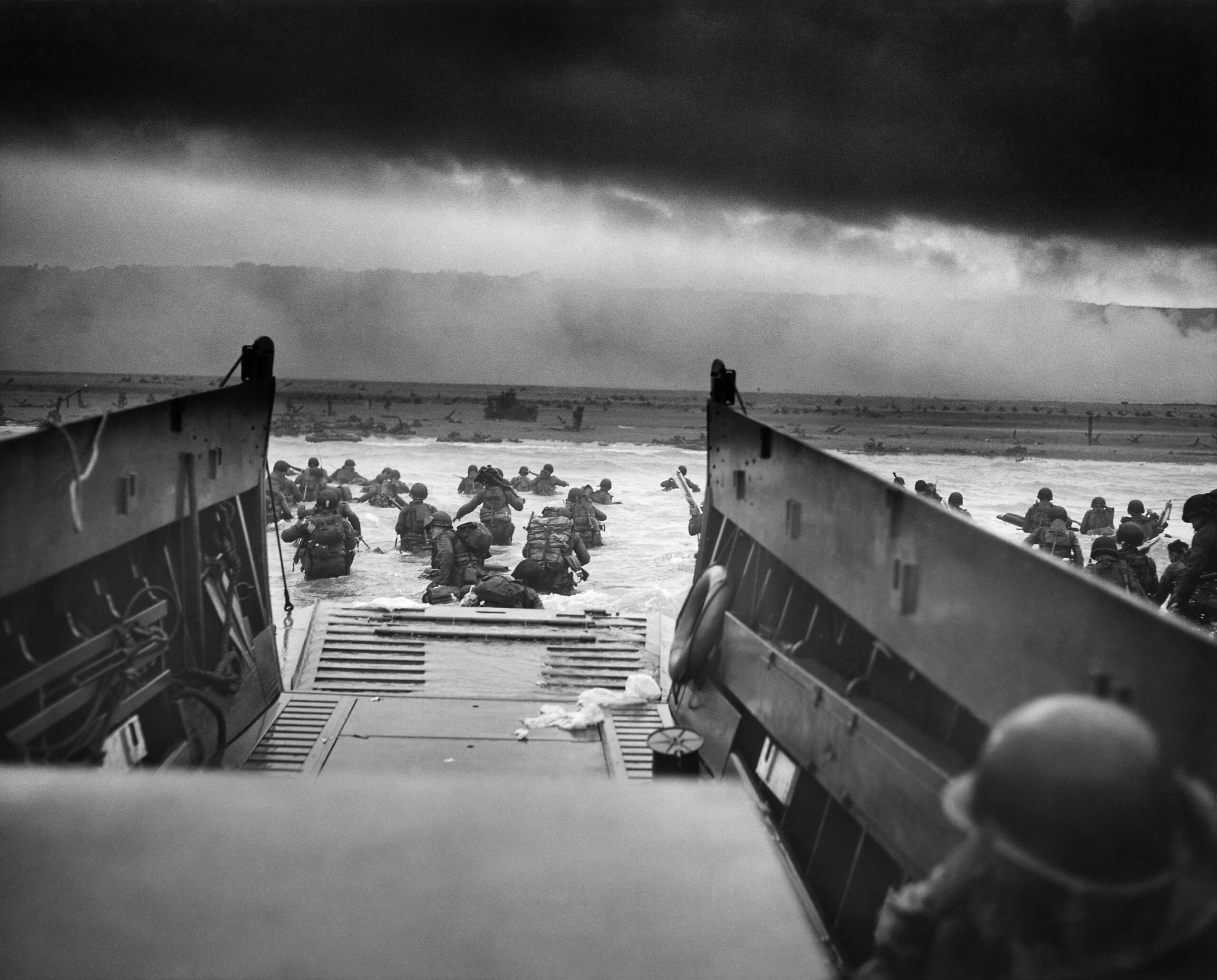
The D-Day beaches stretch along an 80-kilometre section of Calvados coastline. On 6 June 1944, Allied forces landed at five beaches — Utah, Omaha, Gold, Juno, and Sword — in the largest seaborne invasion in history. Over 156,000 troops crossed the Channel that day.
Omaha Beach is the most visited, and the American Cemetery above it — 9,387 white marble crosses and Stars of David set in 70 acres of manicured lawns — is one of the most moving sites in Europe. Arrive before 9am to have it largely to yourself.
The Mémorial de Caen is the best starting point if you want context before visiting the beaches. It tells the full story of the Second World War and the occupation of France, and it sits in Caen, which makes for a useful base.
Pointe du Hoc, where US Rangers scaled 30-metre cliffs under fire, still has its original shell craters and bunkers. The landscape has barely changed since 1944 — it feels raw in a way that the beaches do not.
Étretat and the Alabaster Coast
Drive two hours north-east from Caen and the landscape transforms completely. The Alabaster Coast — named for its brilliant white chalk cliffs — runs for 130 kilometres between Le Havre and Le Tréport. Étretat is its most famous town, and rightly so.
The cliffs at Étretat include three natural arches and a freestanding needle of rock called the Aiguille, which rises 70 metres from the sea. Claude Monet painted this view more than 50 times. He kept returning because the light changes hourly, and so does the colour of the sea — turquoise in sunshine, slate grey under clouds.
Walk the clifftop path above Étretat for the best vantage point. The round trip takes about 90 minutes and costs nothing. Go early morning for soft light and far fewer visitors. The complete guide to Étretat chalk cliffs covers the walking routes in detail.
Beyond Étretat, the village of Yport is quieter and almost entirely overlooked. Fécamp, 20 minutes north, has a magnificent Gothic abbey and a famous distillery producing Bénédictine liqueur — tours run daily.
Rouen: The City of a Hundred Spires
Rouen is Normandy’s largest city and one of the most underrated cities in France. It sits on the Seine, 130 kilometres from Paris, and its medieval centre survived the Second World War largely intact.
The Gothic cathedral — the tallest in France at 151 metres when Monet painted it in the 1890s — was another of his obsessions. He painted it more than 30 times, studying how the façade changed in different light conditions. You can stand in front of the same view today.
Joan of Arc was executed in Rouen’s Place du Vieux-Marché in 1431. A modern church built on the site is architecturally striking — half fish-scale roof, half medieval glass — and worth ten minutes.
The old town’s half-timbered streets around the Gros-Horloge clock tower are genuinely beautiful. Spend a morning here before heading to the coast.
Bayeux: Tapestry, Cathedral, and Cheese Country
Bayeux is 30 kilometres west of Caen and the most handsome town in Calvados. It escaped wartime bombing, which means its medieval street plan and Norman cathedral still stand as they have for centuries.
The Bayeux Tapestry — an embroidered linen cloth 70 metres long and nearly a thousand years old — tells the story of the Norman Conquest of England in 1066. It is extraordinary: detailed, vivid, and easy to follow even without the audio guide. Allow at least 90 minutes.
The town is also the gateway to Camembert country. The village of Camembert lies 60 kilometres to the south, but the cheese appears on every market stall in Bayeux. The Saturday morning market is worth planning your arrival around.
Mont-Saint-Michel: Day Trip or Overnight Stay?
Mont-Saint-Michel sits on the border between Normandy and Brittany. Most people visit it from a Normandy base. The island abbey — rising 92 metres above a bay that floods twice daily with some of the fastest tides in Europe — is one of the most photographed places in France.
Crowds are heaviest from June to August. Arrive before 8am or after 6pm to avoid the worst of them. The abbey closes at 7pm in summer, but the island stays open and the evening light is extraordinary.
The abbey dates to 708, though the current structure is mostly 13th century. It took over 500 years to build. The cloisters at the top are worth the climb.
If you can stay overnight, do. The day-trippers leave after dinner and the island becomes almost silent. Dawn views from the causeway are unreachable by the coach parties who arrive at 10am.
What to Eat in Normandy
Normandy’s food identity builds on apples, cream, and the sea. The regional cuisine is richer and more robust than food from the south of France.
Moules marinières — mussels steamed with shallots, white wine, and cream — appear on almost every coastal menu. They taste best from September to April.
Camembert is the obvious purchase. Look for AOP-designated Camembert de Normandie made with raw milk (lait cru) — it has a more complex, earthy flavour than the pasteurised supermarket version. Markets are the best source. For more on how to choose great French cheese, see our complete guide to French cheese.
Calvados is Normandy’s apple brandy, aged in oak barrels for a minimum of two years. Older expressions — 15 years and above — rival fine Cognac. The Pays d’Auge district produces the most prestigious calvados, and distillery visits are available around Lisieux.
Tarte tatin — upside-down caramelised apple tart — appears in every boulangerie in Normandy, and this is the perfect region to eat it. Order it warm with a spoonful of crème fraîche.
When to Visit Normandy
Normandy’s climate is Atlantic — mild, changeable, and occasionally wet. Unlike the south of France, summer sunshine is not guaranteed. July and August are the warmest months, with average temperatures around 20°C.
June is excellent for avoiding crowds. French school holidays begin in early July, so the D-Day sites and Mont-Saint-Michel are noticeably quieter in June than at any point in summer.
September is arguably the best month overall. Summer visitors thin significantly after 1 September, temperatures stay pleasant, and the apple harvest begins. Cidre nouveau — young, lightly fermented cider — appears in farm shops from mid-September.
Avoid the first two weeks of August if possible. French school holidays send half the country to the coast, and the D-Day beaches in particular become extremely congested.
For advice on planning across all French regions, see our complete guide to the best time to visit France.
How to Get to Normandy from Paris
From Paris, Caen is 2 hours 10 minutes by direct train from Gare Saint-Lazare. Rouen takes just 1 hour 10 minutes — one of the fastest regional escapes from the capital.
From the UK, Brittany Ferries runs overnight crossings from Portsmouth to Caen (Ouistreham), arriving in time for breakfast. Driving through Normandy at your own pace is strongly recommended — many of the best villages have no public transport.
From the US, the most direct route is a flight to Paris CDG followed by a train to Caen or Rouen. Direct flights serve Paris from New York, Boston, Chicago, and Los Angeles among other cities.
Frequently Asked Questions About Visiting Normandy, France
How many days do you need in Normandy?
Three to four days is a comfortable minimum to cover the D-Day beaches, Bayeux, and the Alabaster Coast. Five to six days allows you to add Rouen, Mont-Saint-Michel, and some of the quieter villages without feeling rushed.
Is Normandy worth visiting beyond the D-Day beaches?
Absolutely. The D-Day history is powerful, but Normandy’s chalk cliffs at Étretat, medieval streets in Bayeux, and food scene in Rouen are compelling destinations in their own right. Many visitors who come for the history return specifically for the coastline and cuisine.
What is the best base for a Normandy road trip?
Caen is the most practical base for the D-Day sites, with the widest range of hotels and transport connections. Bayeux is a more pleasant town for overnight stays. For the Alabaster Coast, base yourself in Étretat or Rouen. Hiring a car is strongly recommended — public transport between smaller villages is limited.
You Might Also Enjoy
- Brittany, France: The Complete Travel Guide — Normandy’s neighbour has a completely different culture, coastline, and cuisine. Ideal for a combined trip.
- Best Time to Visit France — month-by-month guide to planning your trip across all French regions.
- French Cheese: The Complete Guide — including everything you need to know about Camembert, the cheese Normandy gave the world.
Plan Your France Trip
Ready to start planning? Our France trip planning hub covers visas, transport, accommodation, budgeting, and region-by-region guides to help you build a perfect itinerary.
Join 7,000+ France Lovers
Every week, get France’s hidden gems, local recipes, and travel inspiration — the kind you won’t find in any guidebook.
Subscribe free — enter your email:
Love more? Join 64,000 Ireland lovers · Join 43,000 Scotland lovers · Join 30,000 Italy lovers
Free forever · One email per week · Unsubscribe anytime
Tours & experiences you might love


Powered by Viator. Some links are affiliate links — we may earn a small commission at no extra cost to you.

Leave a Reply