
Burgundy sits at the heart of France. For over a thousand years, its vineyards and stone villages have shaped French culture. But the region’s most lasting legacy may not be its wine. It may be the surnames that Burgundian families carried out of these valleys — and across the world.
If your family name traces to Burgundy, you are connected to one of France’s most remarkable regions. This guide explores where those surnames came from. It explains what they mean. It also shows how Burgundian families spread their names from France to Canada and America.
What’s your name in French? 🇫🇷
Your French Name — type any first name for the French equivalent, with meaning and regional notes.
Where Burgundian Surnames Come From
Burgundy takes its name from the Burgundians. This Germanic tribe settled the region in the fifth century. They gave the area its character and many of its earliest family names.
Over the following centuries, Burgundy became one of France’s most powerful duchies. The Dukes of Burgundy rivalled the French kings in wealth and influence. This history left deep marks on local surnames.
Burgundian surnames draw from four main sources. Some came from Germanic words brought by the early settlers. Others came from Latin, the language of the Church and the law. A third group reflects Old French trades and crafts. The fourth and largest group came from place names — the villages, hills, rivers, and estates where families lived and worked.
Understanding these roots can help you trace your family back to specific communes in Burgundy. Many of these place names still exist today. You can visit the exact spots where your surnames were born.
The Most Common Surnames of Burgundy
These surnames appear again and again in Burgundian parish registers. They spread across France and eventually across the Atlantic.
Bernard
Bernard is one of Burgundy’s great surnames. It comes from the Germanic words bern (bear) and hard (strong). It meant “brave as a bear.” Saint Bernard of Clairvaux was born in Burgundy in 1090. His fame spread this name across Europe. Bernard families are common in both France and French Canada today.
Gauthier
Gauthier is Germanic in origin. It combines walh (rule) and hari (army). It meant “ruler of armies.” This name was common among the Frankish nobility of early Burgundy. In French Canada, Gauthier became one of the most widespread surnames of all.
Morin
Morin comes from the Latin Maurus. It described someone with dark hair or a dark complexion. This was a very common medieval French name. Thousands of Morin families emigrated to Canada and Louisiana. The name remains widespread in Quebec today.
Perrin
Perrin is a shortened form of Pierre (Peter). French families often used such nicknames for their children. Over time, these nicknames became permanent family names. Perrin spread across Burgundy and into neighbouring Champagne and Franche-Comté.
Rousseau
Rousseau described someone with red or auburn hair. It comes from the Old French roux. The philosopher Jean-Jacques Rousseau bore this name. His ideas shaped the French Revolution and modern political thought. Rousseau families appear throughout Burgundy’s parish records and in Quebec colonial registers.
Aubert
Aubert comes from the Germanic name Adalbert. It combines adal (noble) and beraht (bright). It meant “nobly bright.” This name was popular in early medieval Burgundy. Aubert families appear in Quebec records from the earliest colonial period.
Lambert
Lambert is also Germanic. It joins land (land) and beraht (bright). It meant “bright land.” The name was popular among Frankish settlers throughout Burgundy. Lambert families can be traced through the region’s rural parish registers.
Poirier
Poirier meant someone who lived near a pear tree. Many French surnames came from the landscape around a family’s home. A distinctive pear tree in the village gave the Poirier family its name. The surname is common in Burgundy and in French Canada.
Occupational Surnames from Burgundy’s Trades
Many Burgundian surnames came directly from trades and crafts. These names tell you what your ancestors did for a living.
Vigneron
Vigneron meant a vine grower. This is perhaps the most Burgundian of all surnames. The region’s identity has rested on wine production for centuries. Families who tended the vineyards often became known by this trade name. Vigneron remains common in the Côte-d’Or today.
Lefèvre and Favre
These surnames meant blacksmith. Lefèvre comes from the Latin faber ferrarius. Every village needed a blacksmith. Families in the trade took this name. It became one of the most common surnames in all of France.
Tisserand and Tissier
Tisserand and Tissier both described weavers. The textile trade was central to Burgundy’s medieval economy. Towns like Dijon and Auxerre had large weaving industries. Families in the trade took this occupational surname.
Bouvier
Bouvier meant cowherd or cattle driver. Burgundy’s farming communities depended on cattle. Families who managed the herds became the Bouviers. The surname is still common across Burgundy and Franche-Comté.
Meunier
Meunier meant miller. Mills were vital to every community. They ground the grain that fed the population. Families who ran mills often took this occupational name.
Charpentier
Charpentier meant carpenter. It came from the Latin carpentarius. Carpenters built the houses, barns, and churches of Burgundian villages. In New France, Charpentier families appear in records from the earliest colonial period.
Chevalier
Chevalier meant knight or horseman. This surname was common among the lower nobility and the men who served them. It spread widely across France and into New France with the colonial settlers.
🇫🇷 Enjoying this? 7,000 France lovers get stories like this every week. Subscribe free →
Burgundy and the French-Canadian Connection
Burgundy played a real role in populating New France. Many early colonists came from central and eastern France. They brought Burgundian surnames to the New World.
The city of Auxerre, in the Yonne department, sent many families to Canada. Dijon, the regional capital, was a centre of commerce and learning. Its residents crossed the Atlantic in search of land and a fresh start.
Families named Bernard, Gauthier, Lambert, and Morin appear frequently in Quebec’s earliest parish records. They built farming communities along the St Lawrence valley. Many settled around Quebec City and Montreal.
Some Burgundian families moved further south. Louisiana, settled by French colonists from the 1680s, also has Burgundian roots. Family names common in Burgundy appear in Louisiana census records from the eighteenth century.
The Filles du Roi were young women sent to New France to marry colonial settlers. Some came from Burgundy and nearby regions. Their surnames — and those of the men they married — now run through millions of French-Canadian family trees.
If your French-Canadian or Acadian ancestors came from France, they may well have Burgundian roots. Research at Burgundy’s departmental archives can help you trace this connection. You might also find it useful to read our guide to surnames of Anjou and Perche, another region with strong French-Canadian ties.
Where to Research Your Burgundy Family Name
Burgundy’s records are well preserved and largely accessible online.
Archives Départementales de la Côte-d’Or in Dijon holds records for Burgundy’s most important department. Their online collection includes thousands of parish registers. Many are indexed and searchable.
Archives Départementales de Saône-et-Loire in Mâcon covers southern Burgundy. This region includes Cluny and the wine villages of the Côte Chalonnaise.
Archives Départementales de l’Yonne in Auxerre holds records for northern Burgundy. This area was a major corridor between Paris and the south.
FamilySearch (familysearch.org) has digitised many Burgundian parish records. The site is free to use. It includes baptism, marriage, and burial registers from hundreds of Burgundian villages.
For a complete walkthrough of French genealogy research, read our step-by-step guide to tracing French ancestry. It covers all the major French record repositories and how to access them from abroad.
Visiting Your Burgundian Roots
Burgundy rewards heritage visitors. The region is compact and easy to explore by car.
Dijon is the natural starting point. The city has been the regional capital for centuries. Its old town is remarkably well preserved. The ducal palace houses a museum of Burgundian art and history.
Beaune is the wine capital of Burgundy. Its Hôtel-Dieu is one of France’s most remarkable medieval buildings. The town archives may hold records of your family’s vineyard connections.
Auxerre sits on the River Yonne. Its Gothic cathedral contains some of the finest stained glass in France. The Archives Départementales de l’Yonne are based here. Staff welcome genealogy researchers — it is worth booking an appointment in advance.
Vézelay crowns a hilltop above the surrounding countryside. Its Romanesque basilica is one of the finest in France. The village was a major departure point for pilgrims heading to Santiago de Compostela.
Cluny was once home to the most powerful monastery in Christendom. Its great abbey is largely in ruins today. But those ruins give you a powerful sense of Burgundy’s medieval religious life.
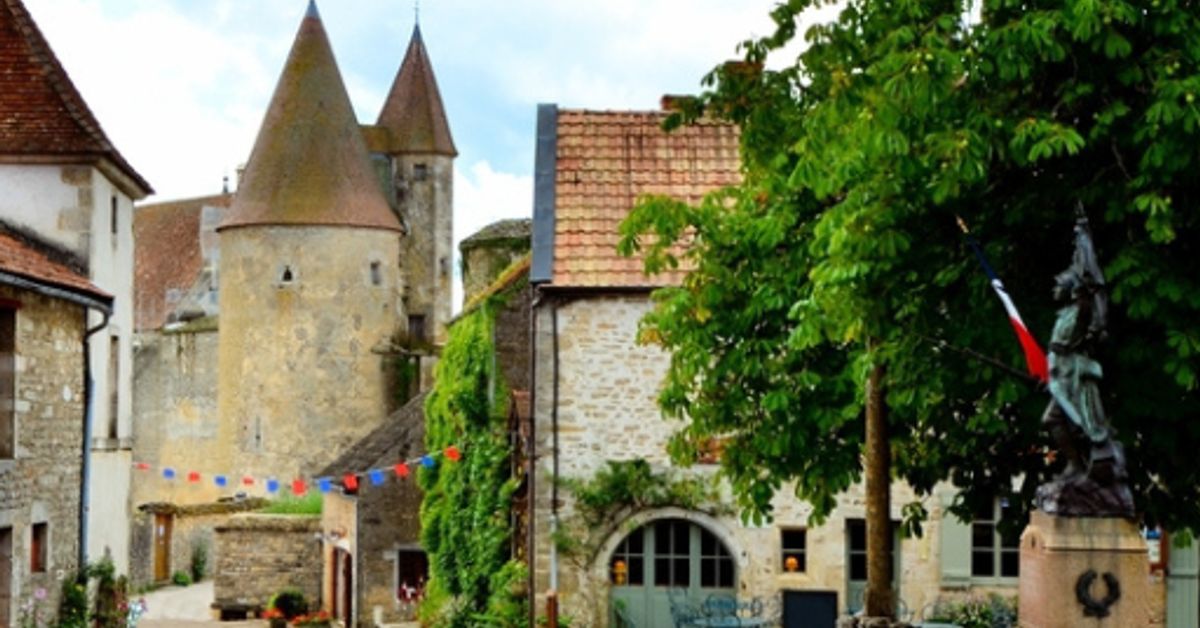
Châteauneuf-en-Auxois is one of France’s finest preserved medieval villages. Its stone houses and château stand above the Burgundy Canal. If your ancestors were Burgundian farmers or craftsmen, a village like this is exactly where they would have lived.
Frequently Asked Questions About French Surnames of Burgundy
What are the most common French surnames from Burgundy?
Common Burgundian surnames include Bernard, Gauthier, Morin, Perrin, Rousseau, Aubert, Lambert, Lefèvre, Bouvier, Tisserand, Vigneron, and Meunier. Many of these names spread widely through French Canada and the United States during the colonial era.
Did Burgundian families emigrate to French Canada?
Yes. Many Burgundian families settled in New France during the seventeenth and eighteenth centuries. Their descendants now live across Quebec, Ontario, and the Maritime provinces. Surnames such as Gauthier, Bernard, and Morin appear in Quebec’s earliest parish records.
Where can I research a Burgundian surname online?
Start with the Archives Départementales de la Côte-d’Or and FamilySearch.org. Both offer free access to digitised parish records. The Archives Nationales in Paris also holds military and legal records useful for tracing Burgundian families.
What languages shaped Burgundian surnames?
Burgundian surnames draw from four main sources. Germanic words shaped many noble and personal names. Latin influenced surnames from the Church and Roman rule. Old French gave rise to occupational names. Place names — villages, rivers, and landscape features — created the largest group of Burgundian surnames of all.
How do I plan a heritage trip to Burgundy?
Start by identifying your ancestral commune using FamilySearch or the departmental archives. Then plan a visit to that specific village. Allow time in Dijon or Auxerre to visit the archives in person. Most archives welcome genealogy visitors but ask that you book an appointment in advance.
You Might Also Enjoy
- French-Canadian Surnames: Origins, Meanings and Their Roots in Old France
- French Surnames of Anjou and Perche: The Provinces That Built New France
- The Filles du Roi: The 800 French Women Who Built Canada
Plan Your France Trip
Ready to trace your Burgundian roots in person? Start with our France travel planning guide. It covers everything from where to stay to how to book an appointment at a departmental archive.
Join 7,000+ France Lovers
Every week, get France’s hidden gems, seasonal guides, local stories, and the art of la vie française — straight to your inbox.
Subscribe free — enter your email:
Love more? Join 64,000 Ireland lovers → · Join 43,000 Scotland lovers → · Join 30,000 Italy lovers →
Free forever · One email per week · Unsubscribe anytime
Tours & experiences you might love


Powered by Viator. Some links are affiliate links — we may earn a small commission at no extra cost to you.

Leave a Reply