
Gorges de l’Ardèche: France’s Grand Canyon Travel Guide
Most visitors to southern France drive straight past one of the country’s most dramatic natural landscapes. The Gorges de l’Ardèche stretch for 30 kilometres through limestone cliffs up to 300 metres high, with a turquoise river winding below and cave paintings dating back 36,000 years. You do not need to be an outdoor enthusiast to enjoy this place. You just need to know where to go.
Love France? Join 7,000+ readers on our free newsletter → lovetovisitfrance.substack.com
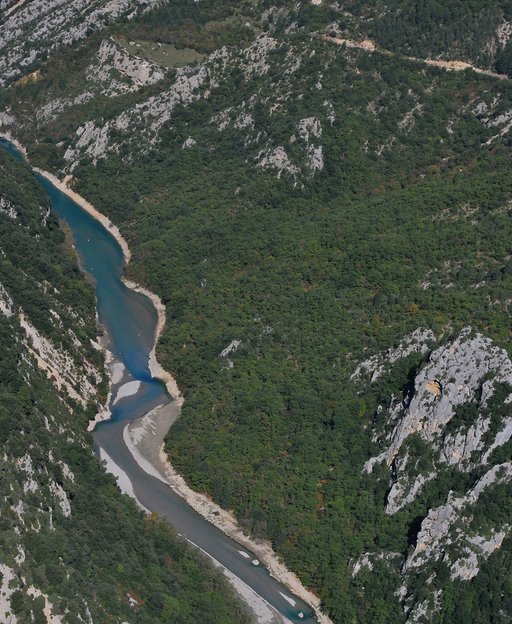
What Are the Gorges de l’Ardèche?
The Ardèche river cuts through the southern edge of the Massif Central, carving a deep canyon through white limestone rock over millions of years. The gorge runs from Vallon-Pont-d’Arc in the north to Saint-Martin-d’Ardèche in the south, covering 30 kilometres of protected natural landscape. The cliffs here reach 300 metres above the river in places. The water below is clear and, in spots, genuinely turquoise.
This is one of the most popular canoeing destinations in France. Around 250,000 people paddle the gorge each summer. The river moves gently enough for beginners on most sections, but the scenery is dramatic enough that experienced paddlers return year after year. Even if you never get in a canoe, the belvedere viewpoints along the ridge road give you views that rival anything in the country.
The region sits in the Ardèche department, which is part of the Auvergne-Rhône-Alpes region in south-central France. It borders both Provence and the Rhône Valley, which makes it easy to combine with a wider southern France itinerary. Read our guide to visiting Provence if you are planning a longer trip through the south.
The Pont d’Arc: France’s Natural Stone Arch
The most famous sight in the gorge is the Pont d’Arc, a natural limestone arch spanning 59 metres across the Ardèche river. It stands 34 metres high. The arch formed as the river gradually eroded the rock over centuries, cutting through a limestone spur to create what is now one of the most photographed natural landmarks in France.
Visitors can swim beneath the arch in summer, which makes for an unforgettable photograph. The beach at the base of the arch fills up quickly in July and August. If you want the arch to yourself, arrive before 8am or visit in September when the summer crowds have thinned considerably.
Canoeists paddle under the arch on the standard descent route. The moment you drift beneath it and look up at 34 metres of limestone above you is one of those travel experiences that stays with you. This is also where most canoeing trips begin their journey down the gorge.
Canoeing the Gorge: What to Expect
The full descent from Vallon-Pont-d’Arc to Saint-Martin-d’Ardèche covers approximately 30 kilometres. Most people take two days, camping on the river bank overnight at the halfway point near La Sauze. A one-day option covers the top 8 kilometres to the Serre de Tourre section, which includes the most dramatic cliffs.
Numerous canoe hire companies operate in Vallon-Pont-d’Arc. Prices typically start around €25 per person for a half-day hire including equipment and return shuttle. The companies provide basic instruction, waterproof bags for your belongings, and maps of the river.
The Ardèche is graded class 1 to 2 for most of its length, meaning it suits complete beginners. There are a few rapids that require basic technique, but guides will advise on these before you set off. Children from age 7 can usually participate on the calmer sections, though check with individual companies for their age policies.
Water levels matter. The river runs highest in spring (April and May) after winter rains. By August, water levels drop and some sections become shallow. Late May, June, and September offer the best balance of comfortable temperatures and good water levels.
The Route des Belvédères
If canoeing is not for you, the Route des Belvédères — the belvedere road — runs along the top of the gorge for 28 kilometres, with a series of designated viewpoints overlooking the canyon below. This road connects Vallon-Pont-d’Arc to Saint-Martin-d’Ardèche along the northern rim.
The main viewpoints include the Belvédère du Serre de Tourre, which offers the widest view of the gorge at its deepest point, and the Belvédère de la Madeleine, where cliffs rise vertically from the river. Allow a full day to stop at each viewpoint properly rather than rushing through.
The road is narrow and winding in places. A small car is better than a large vehicle. In peak summer, some parking areas at viewpoints fill by mid-morning. Arriving before 9am or after 5pm gives you far better access and softer light for photographs.
You can combine the belvedere road with a short walk. Several marked trails descend from the ridge down to the river bank, allowing you to experience both perspectives of the gorge in a single day. The descent takes around 45 minutes; the climb back up is steeper.
The Caverne du Pont d’Arc: The World’s Oldest Cave Art
The Chauvet Cave, discovered in 1994, contains the oldest cave paintings known to exist anywhere on earth. Radiocarbon dating puts the oldest images at around 36,000 years old. That makes them more than twice the age of the Lascaux paintings in the Dordogne. The original cave is permanently sealed to protect the fragile art.
Instead, the Caverne du Pont d’Arc opened in 2015 as a full-scale replica cave, recreating the original with extraordinary precision. The replica covers 8,500 square metres. It contains more than 1,000 reproduced images — lions, mammoths, rhinoceroses, and horses. Early humans painted these in charcoal and ochre during the last ice age.
The guided visit takes around 90 minutes. It is one of the most impressive museum experiences in France. The replica is so detailed that archaeologists use it to study the original sealed art. Allow extra time for the outdoor exhibits. They explain how early humans lived in this landscape.
Booking in advance is strongly recommended, particularly between June and September when the cave sells out weeks ahead. Tickets cost €15 for adults in 2026, with reduced rates for children and families. The cave is located just outside Vallon-Pont-d’Arc on the road leading to the gorge entrance.
Where to Stay Near the Gorges de l’Ardèche
Vallon-Pont-d’Arc is the main base for visiting the gorge. It is a small town with restaurants, supermarkets, and a good range of accommodation from basic campsites to comfortable hotels. The town sits at the northern entrance to the gorge, giving easy access to both the canoe hire companies and the belvedere road.
Camping is popular and genuinely well-suited to this area. The climate is warm and dry in summer, and several campsites sit directly on the river bank. Le Mondial Camping and Camping International are among the well-established options with river access and facilities for families.
For hotel accommodation, Vallon-Pont-d’Arc offers several small hotels at mid-range prices. The nearby village of Ruoms, 8 kilometres north, provides a quieter alternative with easier parking and a weekly market. Ruoms is a proper Ardèche village with a medieval centre and several good restaurants.
Aubenas, 18 kilometres north, is the largest town in the Ardèche department and has a fuller range of hotels, restaurants, and shops. Many visitors base themselves here and drive down to the gorge each day.
Best Time to Visit the Gorges de l’Ardèche
The gorge is busiest in July and August. French families descend in numbers, campsites fill completely, and queues for canoe hire form early in the morning. If you want the experience without the crowds, mid-June and September are significantly quieter. Water temperatures are still warm enough for swimming, the scenery is identical, and you pay lower prices for accommodation.
Spring (April to May) suits walkers and anyone who wants to see the gorge when the surrounding scrubland is flowering. Water levels are higher after winter rains, which improves the canoeing but makes some swimming spots less accessible. Temperatures are mild but evenings can be cool.
Autumn (October to November) brings beautiful light and almost no tourists. The cave art replica remains open year-round, and the belvedere road is accessible. Swimming is too cold for most people, and canoeing companies operate reduced hours or close entirely. If your priority is photography and solitude, this is the best time.
Winter sees most tourist facilities close. The gorge itself is always visible, and walking along the ridge is possible on clear days. Check the Caverne du Pont d’Arc website for winter opening hours before you visit.
For help planning the rest of your France trip around seasons, read our complete month-by-month guide to visiting France.
Getting to the Gorges de l’Ardèche
A car is the most practical way to reach and explore the area. The gorge lies roughly 200 kilometres north of Montpellier and 150 kilometres south of Lyon. From Paris, the drive takes approximately five hours via the A7 motorway south.
The nearest train stations are Montélimar (1 hour north) and Nîmes (1 hour south-east), both on the main Paris–Marseille line. Local buses connect these stations to Aubenas, but services to Vallon-Pont-d’Arc itself are infrequent. Hiring a car at either train station is the easiest solution.
The gorge sits between Provence and the Rhône Valley, making it a natural addition to a longer road trip through southern France. It pairs well with a visit to Avignon (90 minutes south-east) or the Gorges du Verdon (2.5 hours east), which offers a different but equally dramatic canyon experience. If you are planning a southern France road trip, see our guide to 7 days in France by car.
Practical Tips for Visiting
Book the Caverne du Pont d’Arc in advance, especially in summer. The cave sells out regularly.
Bring water and sunscreen. The gorge landscape is exposed and temperatures exceed 35°C on many summer days. There are limited shade opportunities on the belvedere road.
Wear shoes you do not mind getting wet if you plan to swim near the Pont d’Arc. The approach involves walking across river gravel.
The gorge road has a 25 km/h speed limit in places. French speed cameras are common in this region.
Wild camping in the gorge is technically restricted, but the two designated overnight camping spots on the river bank during a canoe descent are established and accepted. Your canoe hire company will brief you on these.
If you visit during Bastille Day on 14 July, the Ardèche region hosts local fireworks displays in several villages. Ruoms and Vallon-Pont-d’Arc both put on good celebrations.
What is the best time to visit the Gorges de l’Ardèche?
Late May, June, and September offer the best combination of warm weather, good river conditions for canoeing, and far fewer crowds than July and August. Prices for accommodation and canoe hire are lower outside the peak summer weeks.
How long does it take to canoe the full gorge?
The full 30-kilometre descent takes two days, with an overnight camp at the halfway point. A half-day or full-day trip covers the most dramatic northern section from Vallon-Pont-d’Arc to around the Serre de Tourre cliffs, which is enough for most visitors.
Is the Gorges de l’Ardèche suitable for non-swimmers or older visitors?
Yes. The belvedere road provides spectacular views with no physical exertion required, and the Caverne du Pont d’Arc is fully accessible. Canoeing on the Ardèche is genuinely beginner-friendly, and life jackets are provided by all canoe hire companies.
You Might Also Enjoy
- Gorges du Verdon: France’s Turquoise Canyon Guide — the other great gorge of southern France, with emerald water and sheer limestone walls
- Provence Travel Guide — the region that sits on the doorstep of the Ardèche, with lavender, markets, and hilltop villages
- The Best Regions to Visit in France — help choosing where to go based on your interests and travel style
Plan Your France Trip
Ready to explore more of France? Our complete France trip planning guide covers everything from choosing regions to booking transport and finding the best times to visit.
Join 7,000+ France Lovers
Every week, get France’s hidden gems, local recipes, and travel inspiration — the kind you won’t find in any guidebook.
Subscribe free — enter your email:
Love more? Join 64,000 Ireland lovers → · Join 43,000 Scotland lovers → · Join 30,000 Italy lovers →
Free forever · One email per week · Unsubscribe anytime
Tours & experiences you might love


Powered by Viator. Some links are affiliate links — we may earn a small commission at no extra cost to you.

Leave a Reply