
Every spring, before the sun clears the peaks, a sound fills the valleys of the French Alps. Distant bells, growing louder. Then the track comes alive — hundreds of cattle, flowers braided into their horns, dust rising from their hooves.
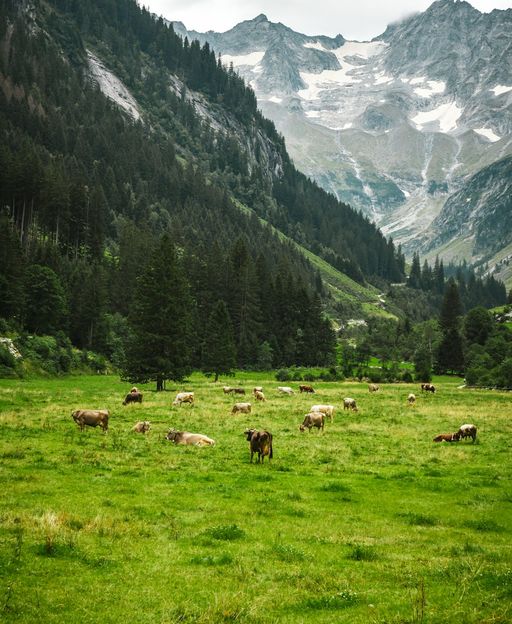
This is la transhumance. If you’ve never witnessed it, you’ve missed one of France’s oldest and most quietly moving traditions.
What Is La Transhumance?
Transhumance is the seasonal movement of livestock — cattle, sheep, and goats — from winter lowland pastures to high mountain summer pastures called alpages.
French shepherds have practised this ritual for more than 2,000 years. Each spring, they drive their flocks up ancient paths that the Romans once walked. Each autumn, they bring them home again.
The word comes from Latin: “trans” (across) and “humus” (ground). But no translation captures what it feels like to watch a thousand cattle pour through a mountain village at sunrise.
Why Villages Still Celebrate It
In the Alps, the Pyrenees, the Massif Central, and the Auvergne, the spring montée (ascent) is a genuine community event. Not a festival invented for tourists — one rooted in real necessity.
Farmers decorate their lead animals with flowers, ribbons, and garlands. Children line the roads. The village baker opens early. Brass bands sometimes play.
The animals that go up in spring return in autumn leaner and tougher. Their milk grows richer from months on high mountain grass. That richness gives Beaufort, Comté, and Reblochon cheese their depth of flavour.
The Alpages: What Waits at the Top
The alpages are high-altitude meadows, some rising above 2,000 metres. Snow buries them for most of the year. They’re green only from June to September.
During those summer months, shepherds live up there — often alone. Each morning, they wake before dawn to milk the animals. They make cheese on-site in stone huts called chalets d’alpage.
Beaufort made at this altitude earns the label “Beaufort d’alpage.” A single wheel can weigh up to 40 kilograms. Every one carries the memory of a summer on the mountain.
Enjoying this? 7,000 France lovers get stories like this every week. Subscribe free →
Where to See Transhumance in France
The most celebrated transhumance events include:
- Aubrac (Aveyron): The estive de l’Aubrac in late May is one of the most photographed transhumances in France. Thousands of cattle pass through small stone villages.
- Briançon (Hautes-Alpes): The fête de la transhumance in June brings brass bands, regional food stalls, and a long parade of sheep through the town centre.
- Saint-Rémy-de-Provence: Hosts a well-known urban transhumance in June, when sheep fill the streets of this Provençal market town.
- Savoie and Haute-Savoie: Seek out local montées in May and June — less famous, more authentic, and almost always free of crowds.
If you’re planning a trip to France in late spring, this is one of the best reasons to time your visit for May or June. Our French Alps travel guide covers the region in detail, including the best villages to base yourself in.
The Descent That Feels Like a Homecoming
In September and October, the flocks come down. The descente is quieter than the spring montée — more solemn, like the end of something good.
The animals have changed. Their coats sit thicker on their frames. Their bells ring differently. Their gait carries the weight of months on rocky pasture.
Villagers come out again, but the mood shifts. There is relief in it. And something close to grief.
Why This Still Matters
La transhumance faces real pressure. Industrial farming offers easier profits. Young people move to cities. Some ancient routes now cross motorways.
But the practice survives. In 2019, UNESCO added transhumance to its Intangible Cultural Heritage list. That recognition matters — not just as a preservation tool, but as a statement.
France is saying: this is not just farming. This is who we are.
You can read about how the French Alps come alive before ski season to understand why this region holds such a powerful place in French identity.
Join 7,000+ France Lovers
Three times a week, get France’s hidden gems, seasonal guides, local stories, and the art of la vie française — straight to your inbox.
Subscribe free — enter your email:
🇫🇷 Discover the France Most Tourists Never Find
Get our free guide to 25 hidden villages of France — then join 7,000+ readers for weekly stories about places most guidebooks never mention.
Get Your Free Village Guide →Free forever · Unsubscribe anytime
The best moments in France don’t announce themselves. They arrive quietly, before most people are awake, and they pass through before the day gets busy. La transhumance is like that. Blink, and you’ll miss it. Catch it once, and you’ll plan your whole next trip around it.
🇫🇷 You Might Also Love
Tours & experiences you might love


Powered by Viator. Some links are affiliate links — we may earn a small commission at no extra cost to you.

Leave a Reply