
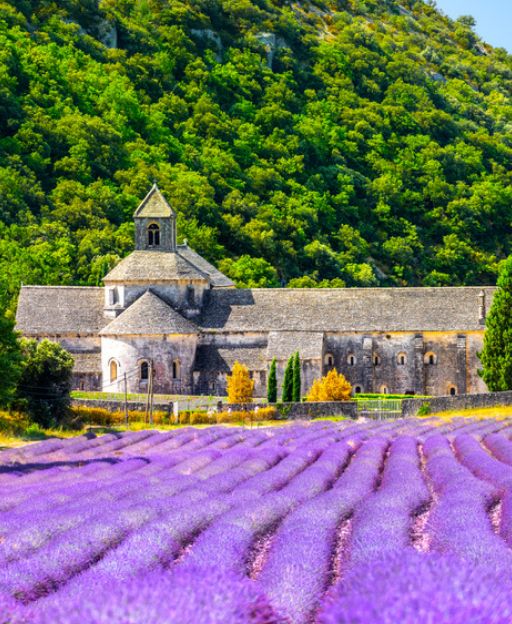
Sénanque Abbey is one of the most photographed places in France. The 12th-century Cistercian monastery sits in a narrow valley in the Luberon hills, surrounded by lavender fields. Every summer, the lavender blooms in deep purple rows in front of the honey-stone walls, and the image appears on postcards, magazine covers, and travel books across the world. If you are planning a Provence trip and wondering whether it lives up to the photographs — it does.
Love France? Join 7,000+ readers on our free newsletter → lovetovisitfrance.substack.com
What Is Sénanque Abbey?
Sénanque Abbey — Abbaye Notre-Dame de Sénanque — was founded by Cistercian monks in 1148. It stands in the Senancole valley, 3 kilometres north of the village of Gordes in the Vaucluse department of Provence. Cistercian monks built their monasteries in remote valleys deliberately, seeking silence and solitude away from towns and trade routes.
The abbey has been active for most of its history. Cistercian monks still live and work here today. They grow lavender on the terraces in front of the church and produce honey from their beehives. You can buy both in the abbey shop. The proceeds support the monastic community.
The building itself is a fine example of Romanesque architecture. The stone is the warm ochre colour typical of the Luberon, and the proportions of the cloister, the church, and the dormitory reflect the strict Cistercian principles of simplicity and balance. It is worth visiting at any time of year, not only during lavender season.
When to Visit for the Lavender
The lavender in front of the abbey typically blooms between late June and early August. Peak colour usually falls in the first two weeks of July. The exact timing shifts by a week or two each year depending on the spring weather, so it is worth checking local sources in the weeks before you travel.
Lavender blooms for three to five weeks before it is harvested. The monks cut it once it reaches full flower. If you arrive after the harvest, you will see the cut rows drying in the sun — this has its own quiet beauty, though it is different from the full purple bloom.
Early morning is the best time to visit. The valley fills with coaches and hire cars by mid-morning in July, and the car park above the abbey fills quickly. Arriving at 8 a.m. or 9 a.m. gives you calmer conditions and better light for photographs. The abbey opens its doors to visitors from 9 a.m. most days.
For everything you need to know about timing a Provence trip around the lavender, our guide to lavender season in Provence covers the best areas, peak dates, and which fields to visit beyond Sénanque.
Visiting Sénanque Abbey: What to Expect
Getting there
Sénanque lies 3 kilometres north of Gordes on a narrow road through the valley. There is no public transport. You need a hire car or a taxi from Gordes or Apt. The road is single-track in places and can become congested in July and August. In peak season, a one-way traffic system operates on the approach road — follow the signs carefully.
The nearest train station is Avignon TGV, about 45 minutes’ drive south. Aix-en-Provence TGV station is about 55 minutes south. Most visitors base themselves in Gordes, Avignon, or Aix for a Luberon trip.
Opening hours and entry
Sénanque Abbey is a working monastery, and visiting hours are limited. The guided tour of the interior runs several times daily, though exact times change by season. Entry to the exterior, the lavender terraces, and the shop does not require a tour. Check the official abbey website for current opening times before you travel, as hours vary between summer and winter.
Entry to the interior requires a guided visit. Photography inside the church and cloister is restricted — cameras and phones must be put away in these areas. The monks ask visitors to respect the silence of the monastery. The exterior and the terraces are freely accessible during opening hours.
The abbey shop
The shop sells lavender essential oil, dried lavender sachets, honey from the abbey’s own beehives, beeswax candles, and books about Cistercian architecture and monastic life. Everything is produced by the monks or made in the region. Prices are reasonable for what they are. The lavender oil in particular is high quality — Sénanque grows lavande vraie (true lavender, Lavandula angustifolia), which produces a finer oil than the hybrid lavandin grown on industrial farms.
Gordes: The Village Above the Valley
Gordes sits on a ridge 3 kilometres south of Sénanque. It is one of the most striking villages in Provence. The stone houses rise in tiers from the valley floor, topped by a Renaissance château. The village appears on every list of the most beautiful villages in France.
Gordes gets busy in summer. The main square and the viewpoint below the château draw large numbers of visitors throughout July and August. Early morning and evening, after the day-trip coaches have left, the village returns to a calmer pace. Staying overnight in Gordes lets you experience it at those quieter hours.
The village has several good restaurants around the main square and in the lanes below the château. Local dishes include tian (a slow-baked vegetable gratin), lamb from the Luberon, and goats’ cheese from nearby farms.
The Luberon Villages Beyond Gordes
The Luberon is a long ridge of limestone hills that runs east to west through the heart of Provence. The Regional Natural Park covers most of it. The villages built into the hillsides are among the finest in France. Our guide to the Luberon villages of Provence covers the full range, from Roussillon’s ochre cliffs to the quiet lanes of Ménerbes and Oppède-le-Vieux.
Here are a few villages worth including on any Sénanque and Luberon trip:
Roussillon — The village sits on a ridge of red and orange ochre rock 18 kilometres east of Gordes. The colours of the cliffs, the soil, and the buildings range from pale yellow to deep rust red. Walking the Sentier des Ocres footpath through the ochre quarries takes about an hour and is a highlight of any Luberon visit.
Bonnieux — A steep village on the south face of the Luberon, with views across to the Montagne du Luberon and the Durance valley. The old cedar forest behind the village is cool and quiet even in midsummer.
Ménerbes — A long, narrow village on a ridge between Gordes and Bonnieux. It has a fine church, a small square with a café, and some excellent local wine from the nearby Domaine de la Citadelle estate.
Ansouis — Quieter than the more famous villages, with a château still in private ownership and a peaceful old centre with few visitors even in high season.
How to Combine Sénanque with a Wider Provence Trip
Sénanque and the Luberon form the centrepiece of a classic Provence road trip. Here is how to structure the wider journey:
Day 1–2: Arrive in Avignon. Visit the Palais des Papes and the Pont Saint-Bénézet. Our Avignon travel guide covers the key sights and where to stay. Avignon makes a good base for the first nights before moving deeper into the Luberon.
Day 3–4: Base yourself in Gordes or nearby. Visit Sénanque Abbey in the morning, then explore Roussillon, Bonnieux, and Ménerbes. Take the Sentier des Ocres at Roussillon. Eat dinner in Gordes village.
Day 5–6: Drive south to Aix-en-Provence. The city has a graceful old centre with tree-lined boulevards, street markets, and excellent food. Our Aix-en-Provence travel guide covers the best things to see and eat. From Aix, you can extend the trip east to the Verdon Gorge or west to the Camargue.
Frequently Asked Questions
Can you visit Sénanque Abbey without a guided tour?
Yes. The lavender terraces, the exterior of the abbey, and the shop are accessible without a guided tour during opening hours. The interior of the church and cloister require a guided visit, which runs several times daily. The guided tour adds context and is worth doing if you have the time, but the exterior visit alone justifies the trip.
When is lavender in bloom at Sénanque?
Peak lavender bloom at Sénanque typically falls in late June to mid-July. The exact timing shifts each year depending on the spring weather. The lavender is usually harvested by the monks in late July or early August. Visiting in June gives you the building colour with a chance of full bloom; visiting in July gives you the highest chance of peak colour but also the highest visitor numbers.
Is Sénanque Abbey worth visiting outside lavender season?
Yes. The abbey is beautiful in every season. In autumn and winter, the visitor numbers fall sharply and the valley is quiet. The architecture is arguably better appreciated when it is not surrounded by crowds. Spring brings wildflowers to the surrounding hills. The monks continue their daily routine year-round, and the sense of calm in the valley is genuine whatever the season.
How far is Sénanque Abbey from Avignon?
Sénanque is about 45 kilometres north-east of Avignon, roughly 45 to 50 minutes by car. The drive takes you through the Luberon hills via Gordes. It is one of the most scenic drives in Provence and worth taking slowly with stops at viewpoints along the way.
You Might Also Enjoy
- Lavender Season in Provence: When to Go and What to Expect
- The Luberon Villages the Rest of Provence Forgot to Tell You About
- Provence Travel Guide: What to See, Do and Eat in France’s Sunniest Region
Plan Your France Trip
Sénanque and the Luberon are a highlight of any southern France itinerary. For a full overview of planning a trip to France — from visas and budgets to the best regions and when to go — visit our France trip planning hub. It is the best starting point for first-time and returning visitors alike.
Join 7,000+ France Lovers
Every week, get France’s hidden gems, local recipes, and travel inspiration — the kind you won’t find in any guidebook.
Subscribe free — enter your email:
Love more? Join 64,000 Ireland lovers → · Join 43,000 Scotland lovers → · Join 30,000 Italy lovers →
Free forever · One email per week · Unsubscribe anytime
Tours & experiences you might love


Powered by Viator. Some links are affiliate links — we may earn a small commission at no extra cost to you.

Leave a Reply