
Poitou has no great crowds and no famous skyline. Yet in one quiet village, a church holds a secret. Its ceiling is covered in paintings about 900 years old. The colours are still there. Experts call it the Sistine Chapel of Romanesque art.
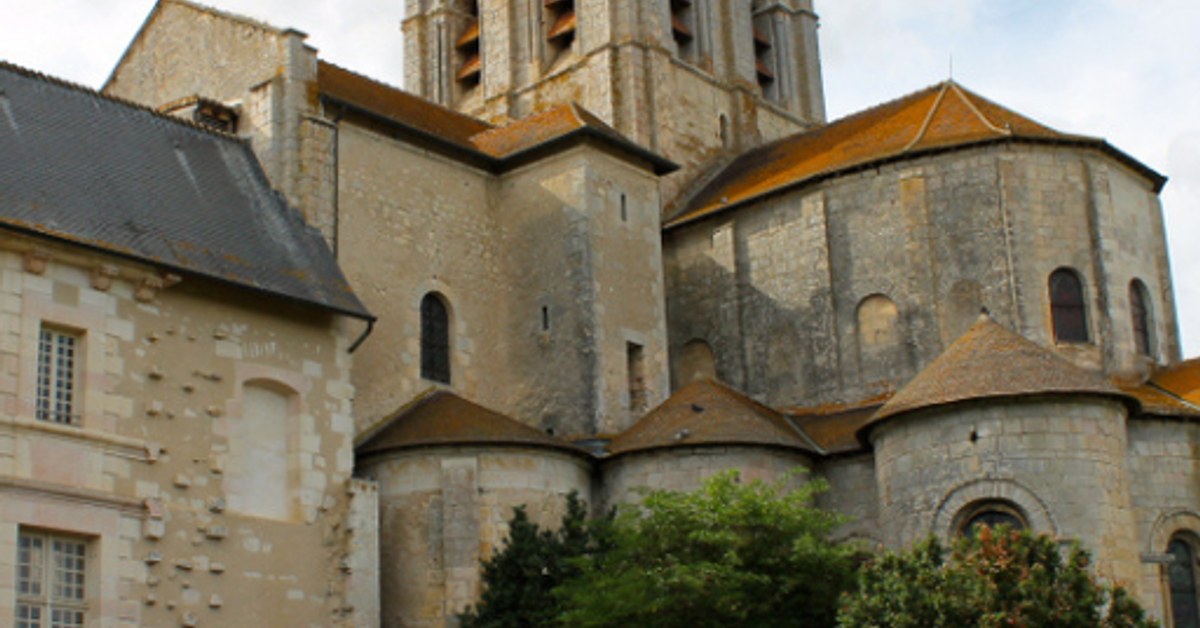
This is Saint-Savin Abbey. It sits on the Gartempe river in western France. Few visitors know it, but heritage lovers should. Here is its story, and how to see it for yourself.
A Village Church With a Long Story
Saint-Savin-sur-Gartempe is a small village in the Vienne department. It lies about 40 kilometres east of Poitiers. The abbey stands at its heart.
Local tradition links the first monastery to the time of Charlemagne. Monks lived and prayed here for many centuries. They also farmed the river valley and copied books.
The church you see today dates from the eleventh century. It is built in the Romanesque style. Romanesque means round arches, thick walls and small windows. The mood inside is calm and strong.
The abbey also draws on the wider story of the early Middle Ages. Read about Charlemagne, the king who made Europe for the background.
The Paintings on the Ceiling
Look up as you walk in. The long barrel vault of the nave is painted from end to end. Artists made these wall paintings around the year 1100.
They used a fresco method. The painter worked on wet plaster. The colour sank in as the plaster dried. That is why the work lasted so long.
The palette is simple. It uses earth pigments, mainly red, yellow ochre and green. Black lines outline each figure. The result looks bold and almost modern.
The scenes come from the Old Testament. You can follow them like a picture book:
- The creation of the world.
- Adam and Eve in the garden.
- Cain and Abel.
- Noah and the ark.
- The Tower of Babel.
- The story of Joseph and the life of Moses.
Most people in the Middle Ages could not read. These paintings taught them the great stories. A villager stood in the nave and saw the whole Bible above their head.
More paintings fill the porch and the crypt. The crypt tells the story of the two local saints, Savin and Cyprian. Together, the scenes cover hundreds of square metres.
Why So Much Survived
Few Romanesque paintings of this size have lasted. Wars, damp and neglect destroyed most of them. Saint-Savin was lucky, but only just.
The abbey suffered during the sixteenth-century Wars of Religion. Later it lost its monks. By the nineteenth century, it was close to ruin.
Then a writer came to its rescue. Prosper Mérimée served as France’s Inspector of Historic Monuments. He visited the church in the 1830s. He saw the value of the paintings and pushed for their protection.
In 1840, the abbey joined the first list of protected French monuments. Experts have cared for the paintings ever since. In 1983, UNESCO named the abbey a World Heritage Site.
🇫🇷 Enjoying this? 7,000 France lovers get stories like this every week. Subscribe free →
Romanesque or Gothic?
Many visitors know the Gothic cathedrals of France. Those buildings soar. They have tall windows and pointed arches.
Romanesque churches came first. They have round arches and thick stone walls. The windows are small, so the inside feels dim and calm.
Those thick walls had a purpose. They carried the heavy stone vault overhead. They also left large, smooth surfaces. Painters used every inch of them.
When Gothic builders opened up the walls for glass, the painted walls often vanished. That is one reason Saint-Savin is so rare. Its walls stayed solid, and its colours stayed with them.
Life Behind the Walls
Think about the monks who once lived here. They rose before dawn to pray. They worked in the fields and the workshops. They welcomed pilgrims and travellers.
The abbey was also a school and a library. Monks copied texts by hand. They kept the written word alive through hard centuries.
Local families lived in its shadow. Farmers, millers and craftsmen supplied the abbey. Many of today’s village families can trace their history back through those same lanes.
The Stone Spire and the River
The paintings are not the only draw. Outside, a tall stone spire rises above the village. It was added in the fourteenth century. You can see it from far along the valley.
The tower and spire stand over the porch. Their pale stone glows in the evening light. Take a stroll to the old stone bridge over the Gartempe. The view of the abbey from the water is lovely.
The setting is gentle. Fields, willows and slow water surround the village. It is a good place to slow down.
Visiting Saint-Savin Abbey
Plan at least half a day. Here are a few practical tips:
- Bring binoculars. The vault is high, and small details are easy to miss.
- Take a guide or audio tour. The scenes mean much more when someone explains them.
- Check the opening hours. Times change with the season, so confirm before you go.
- Dress warmly. The stone church stays cool, even in summer.
- Combine it with Poitiers. The nearby city has more Romanesque churches.
You can reach the village by car from Poitiers in under an hour. A car is the easiest way to explore this part of France. For wider ideas, see our Loire Valley road trip guide.
Fans of medieval abbeys will also enjoy Jumièges Abbey in Normandy and Sénanque Abbey in Provence.
A Place for Heritage Travellers
Many families in North America trace their roots to western France. The old provinces of Poitou and Aunis sent many settlers to New France. Some of them may have worshipped in village churches much like this one.
Standing in the nave, you share a view with those ancestors. The same vault stretched over their heads. If you are researching your family, start with our guide to tracing French ancestry. The parish records of Vienne can take you back centuries.
Frequently Asked Questions
What is Saint-Savin Abbey famous for?
It is famous for its Romanesque wall paintings. They date from around 1100. They cover the nave vault, porch and crypt.
Where is Saint-Savin-sur-Gartempe?
It is in the Vienne department of western France. The village is about 40 kilometres east of Poitiers. Most visitors come by car.
Is Saint-Savin Abbey a UNESCO World Heritage Site?
Yes. UNESCO listed the abbey in 1983. It was recognised for its outstanding Romanesque murals.
How long should I spend at Saint-Savin?
Allow two to three hours for the abbey. Add time for the village and the river walk. Half a day is a comfortable plan.
Why is it called the Sistine Chapel of Romanesque art?
The name compares its painted ceiling to Michelangelo’s famous work in Rome. Like the Sistine Chapel, it tells the story of the Bible across a single vault.
Why It Stays With You
Saint-Savin is not a grand name. It rewards the curious traveller. A quiet village hides a ceiling of colour and faith. Few places in France let you step so far back in time.
You Might Also Enjoy
Plan Your France Trip
Ready to go? Start with our planning hub for your trip to France.
Join 7,000+ France Lovers
Every week, get France’s hidden gems, seasonal guides, local stories, and the art of la vie française — straight to your inbox.
Subscribe free — enter your email:
Free forever · One email per week · Unsubscribe anytime
Tours & experiences you might love


Powered by Viator. Some links are affiliate links — we may earn a small commission at no extra cost to you.

Leave a Reply