
Few figures in history are as French as Victor Hugo.
He wrote the world’s most beloved novel. He challenged kings and emperors. He spent nineteen years in exile rather than bow to a tyrant. And when he died, two million people filled the streets of Paris to say goodbye.
Victor Hugo did not just write about France. He shaped what France means.
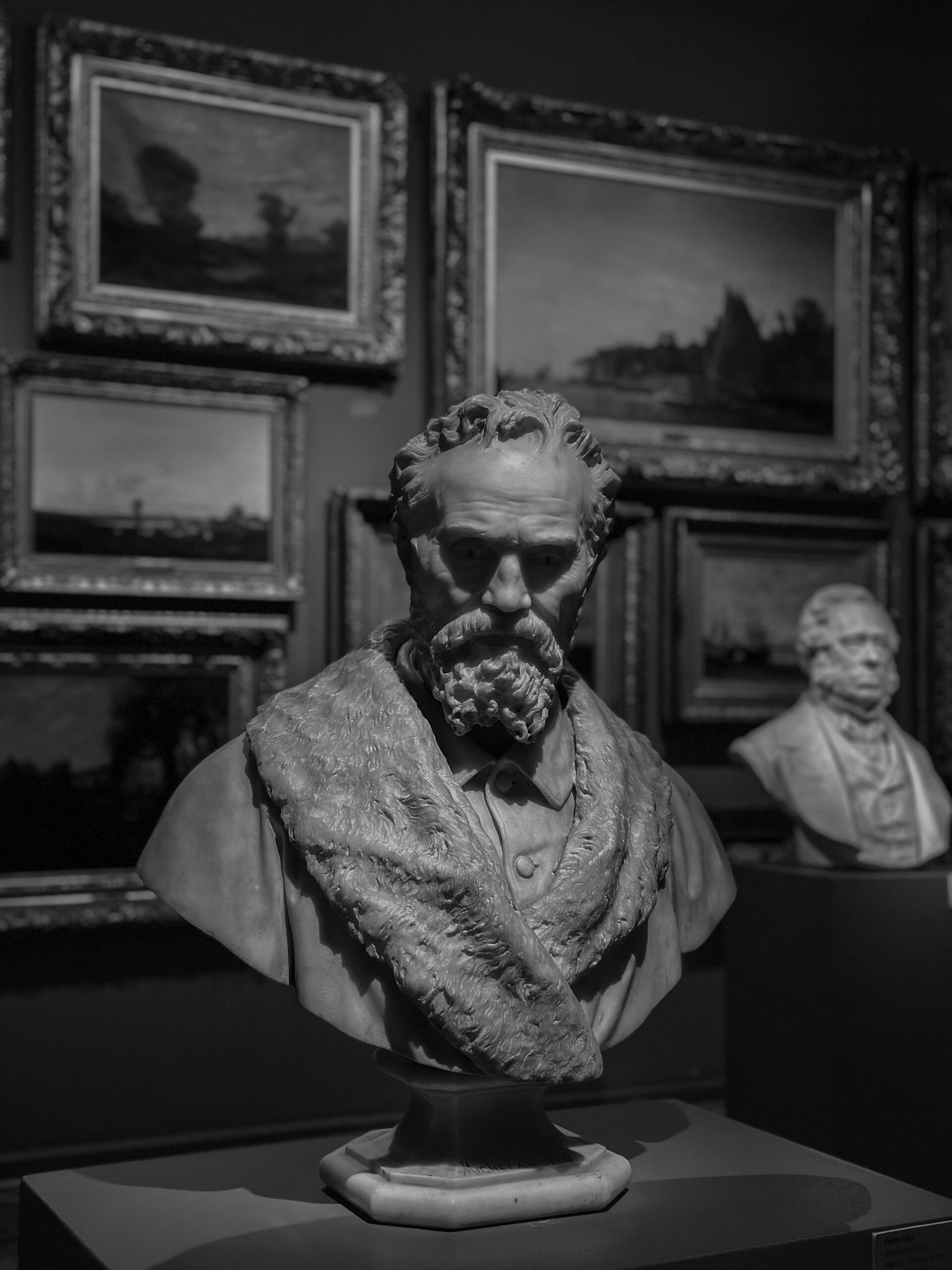
A Child of Revolution
Victor Hugo entered the world on 26 February 1802, in Besançon. France was still raw from revolution. Napoleon Bonaparte ruled as First Consul.
His father, Léopold Hugo, was a general in Napoleon’s army. His mother, Sophie Trébuchet, was a royalist. Their political differences would mark Victor for life.
His childhood was restless. The family followed Léopold from posting to posting. Victor lived in Elba, Italy, and Spain before he turned ten.
He showed gifts early. At fifteen, he won a national poetry prize. The Académie française called his work remarkable. He was barely old enough to shave.
By twenty, Hugo had published two poetry collections. By twenty-six, he was famous. His novel The Last Day of a Condemned Man (1829) shook France. It was a plea against the death penalty. Few writers had ever written with such moral force so young.
The Writer Who Saved Notre-Dame
In 1831, Hugo published Notre-Dame de Paris. We know it in English as The Hunchback of Notre-Dame.
At the time, Paris had nearly forgotten the cathedral. Notre-Dame was in poor repair. Parts of it were being used as storage. The city debated tearing it down.
Hugo loved old buildings. He hated how France was destroying its medieval past. So he wrote a novel that made the world fall in love with Notre-Dame.
It worked. The book was a sensation across Europe. Readers demanded that Notre-Dame be saved. The French government hired Eugène Viollet-le-Duc to restore it. He spent twenty years on the job.
Victor Hugo, with one novel, saved one of the world’s great buildings.
That same year brought another triumph. His play Hernani had already split Paris in two. On opening night in 1830, the audience divided into warring camps. Young romantics cheered. Old classicists booed. The noise lasted for hours. Hugo had started a revolution in French theatre.
The Politician Who Would Not Bend
By 1845, Hugo was a Peer of France. He sat in parliament and spoke on poverty, child labour, and education. He pushed hard for better lives for the poor.
In 1848, another revolution swept France. Louis-Philippe fell. Hugo was elected to the National Assembly.
For a moment, he supported Louis-Napoleon Bonaparte — Napoleon’s nephew. He thought Louis-Napoleon would protect the republic.
He was wrong.
On 2 December 1851, Louis-Napoleon seized power in a coup. He dissolved the Assembly. He jailed opponents. He declared himself Emperor Napoleon III.
Hugo was furious. He called it treason. He tried to organise resistance on the barricades of Paris. It failed.
Napoleon III’s agents hunted him. Hugo fled France just in time. A few more hours and he would have been arrested.
He would not see France again for nineteen years.
Nineteen Years in Exile
Hugo arrived in Brussels in December 1851. He was forty-nine years old. He left behind his home, his career, and his country.
He refused every offer to return. Napoleon III offered him amnesty. Hugo refused.
“When liberty returns,” he wrote, “I will return.”
He moved first to Jersey, a British island in the English Channel. He settled there with his family. He wrote poetry. He wrote political essays. He attacked Napoleon III in print at every chance.
Then trouble came. Hugo supported a journalist who had criticised Queen Victoria. The British authorities expelled him from Jersey in 1855.
He moved to Guernsey, just an hour’s sail away.
There, he bought a tall, narrow house on a hill and named it Hauteville House. He decorated every room himself — every panel, every ceiling, every wall. The result was extraordinary. It was part ship’s cabin, part palace, all Hugo.
He worked in a glass room at the very top. On a clear day, he could see France. He could not go back to it.
Les Misérables: A Novel for the Ages
From that glass room in Guernsey, Victor Hugo wrote Les Misérables.
He had started the book years before. Exile gave him time to finish it. It was published in 1862, in simultaneous editions in French, English, Spanish, German, Italian, and Russian. Nothing like that had ever been done before.
Les Misérables told the story of Jean Valjean. A poor man, jailed for stealing bread. A man who spent his life rebuilding himself while the law hunted him. A story about poverty, justice, love, and redemption.
The world recognised itself in it.
🇫🇷 Enjoying this? 7,000 France lovers get stories like this every week. Subscribe free →
The first message Hugo’s publisher sent was a single question mark: “?”
Hugo replied with a single exclamation: “!”
The book sold out the first edition within days. It has never gone out of print. It has been translated into every major language. Andrew Lloyd Webber turned it into one of the most successful musicals in history. Today, the novel sells more copies each year than it did when Hugo first published it.
The Return of the Hero
In September 1870, Napoleon III’s empire collapsed. France lost the Franco-Prussian War. The Emperor surrendered at Sedan.
Victor Hugo boarded a train in Brussels.
He arrived in Paris on the evening of 5 September 1870. Thousands of people waited at the station. They cheered. They wept. They called his name.
He had been gone nineteen years. He was sixty-eight years old.
Exile had not broken him. He stayed through the Siege of Paris, when the Prussian army surrounded the city and Parisians starved. He kept writing. He kept speaking. He never left.
The political turmoil of those years — the siege, the Paris Commune, the birth of the Third Republic — Hugo witnessed it all. France was changing fast. He changed with it, always pushing for justice, always speaking for the poor.
The Funeral That Stopped Paris
Victor Hugo died on 22 May 1885. He was eighty-three years old.
France did not know how to say goodbye to someone this large.
His body lay in state beneath the Arc de Triomphe for a whole night. France had never given this honour to anyone before. A million people filed past to pay their respects.
The next morning, his funeral procession moved through Paris.
Two million people lined the streets.
Not to see a general. Not to see a king. To say goodbye to a writer who had made France love itself.
France buried him in the Panthéon, in the heart of Paris. He rests there today, alongside Marie Curie, Voltaire, and Rousseau — the greatest minds France has ever produced. If you visit Paris and want to understand French identity at its deepest, the Panthéon is the place to go. It is not just a tomb. It is France’s answer to the question of what it values most.
Why Victor Hugo Still Matters Today
For the French diaspora, Victor Hugo carries special meaning.
His message was simple. No one is worth less than anyone else. Every human life has value. Poverty is not a crime. Exile is not a defeat.
French Canadians have long claimed him as their own. His love of the French language — his belief that French was not just a way of speaking but a way of being — found deep roots in Quebec. The fight to keep French alive was a fight Hugo understood in his bones.
The Acadians knew exile too. So did the Cajuns of Louisiana and the Creoles of New Orleans. All of them kept the French language and the French way of life alive across an ocean. All of them found in Hugo a voice for their own survival. He had shown what it meant to refuse to give up.
If you want to trace your French roots, Hugo’s story is a good place to start. His France — the France of the poor, the exiled, the stubborn, and the free — is the France most diaspora families came from. You can trace your French ancestry step by step and discover the region, and the story, that your family left behind.
Today, millions visit the Maison de Victor Hugo on the Place des Vosges in Paris. Thousands more make the journey to Hauteville House in Guernsey. Both homes are museums. Both feel alive, as if Hugo has just stepped out for a walk.
You can stand in the glass room at the top of Hauteville House. You can look out over the Channel towards France. You can understand, in that moment, why he refused to leave until France was free.
Hugo once said that the future belongs to those who refuse to give up. He lived every word of it. And France — and the world — is richer for it. The Eiffel Tower may be France’s most photographed icon. But Victor Hugo may be its most human one.
Frequently Asked Questions
What is Victor Hugo famous for?
Victor Hugo is best known for two novels: Notre-Dame de Paris (1831), known in English as The Hunchback of Notre-Dame, and Les Misérables (1862). He was also a major poet, playwright, and political leader. He spent nineteen years in exile for opposing Napoleon III’s seizure of power in 1851.
Why was Victor Hugo exiled from France?
Victor Hugo went into exile in December 1851 after Louis-Napoleon Bonaparte seized power in a coup d’état. Hugo called it treason and tried to organise armed resistance. When that failed, he fled to Belgium, then Jersey, then Guernsey. He refused all offers of amnesty and only returned when Napoleon III’s empire collapsed in 1870.
Where is Victor Hugo buried?
Victor Hugo rests in the Panthéon in Paris, alongside Voltaire, Rousseau, and Marie Curie. His funeral in 1885 drew two million mourners through the streets of Paris — one of the largest gatherings in French history. His body first lay in state beneath the Arc de Triomphe, the first person ever to receive that honour.
Can you visit Victor Hugo’s homes in France?
Yes. The Maison de Victor Hugo at 6 Place des Vosges in Paris is a free museum. Hugo lived there from 1832 to 1848. Hauteville House in Guernsey — where he wrote Les Misérables — is also open to visitors. Both homes preserve his furniture, artwork, and personal belongings.
Did Victor Hugo really help save Notre-Dame Cathedral?
Yes, in a real sense. Before Hugo published Notre-Dame de Paris in 1831, the cathedral was badly neglected. Paris had discussed demolishing or completely rebuilding it. Hugo’s novel made readers across Europe fall in love with the building. Public demand for its preservation grew strong enough that the French government launched a full restoration in 1844, hiring architect Eugène Viollet-le-Duc to lead the work.
You Might Also Enjoy
- The French Enlightenment: How Paris Became the World’s Capital of Ideas
- The Dreyfus Affair: The Scandal That Divided France
- The Eiffel Tower: How France’s Most Hated Structure Became Its Greatest Symbol
Plan Your France Trip
Ready to visit the places that shaped Hugo’s life and work? Start with our complete guide: Planning Your Trip to France. From Paris to Guernsey, we have everything you need.
Join 7,000+ France Lovers
Every week, get France’s hidden gems, seasonal guides, local stories, and the art of la vie française — straight to your inbox.
Subscribe free — enter your email:
Love more? Join 64,000 Ireland lovers → · Join 43,000 Scotland lovers → · Join 30,000 Italy lovers →
Free forever · One email per week · Unsubscribe anytime
Tours & experiences you might love


Powered by Viator. Some links are affiliate links — we may earn a small commission at no extra cost to you.

Leave a Reply