Ask for breakfast in a French home and you are likely handed a wide, handleless bowl of coffee and a length of yesterday’s baguette, sliced lengthways and spread with butter and jam. The French breakfast — le petit-déjeuner — is unapologetically light and sweet, built for dunking rather than feasting, and the big cooked plate most English speakers picture simply is not part of it. This is Guide № 012 in The Love France Guide series.
What Actually Lands on the Table
The everyday French breakfast is a modest affair: tartines — slices of baguette or pain de campagne spread with butter and confiture or honey — alongside a hot drink. On a typical weekday there are no eggs, no bacon, no fried anything. The tartine does the heavy lifting, and it is designed to be dunked into the drink until softened, which is why the vessel is often a bowl rather than a cup.
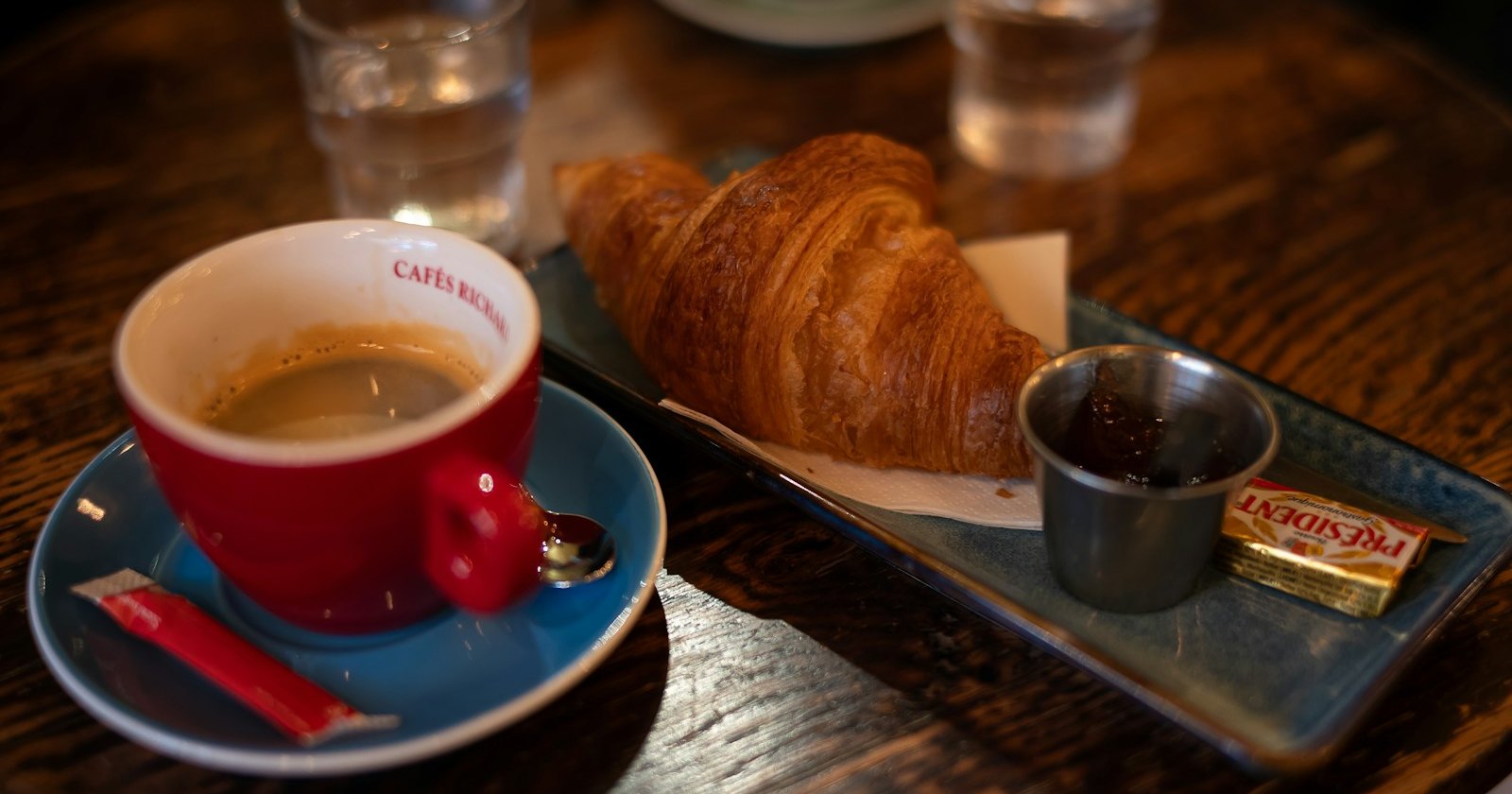
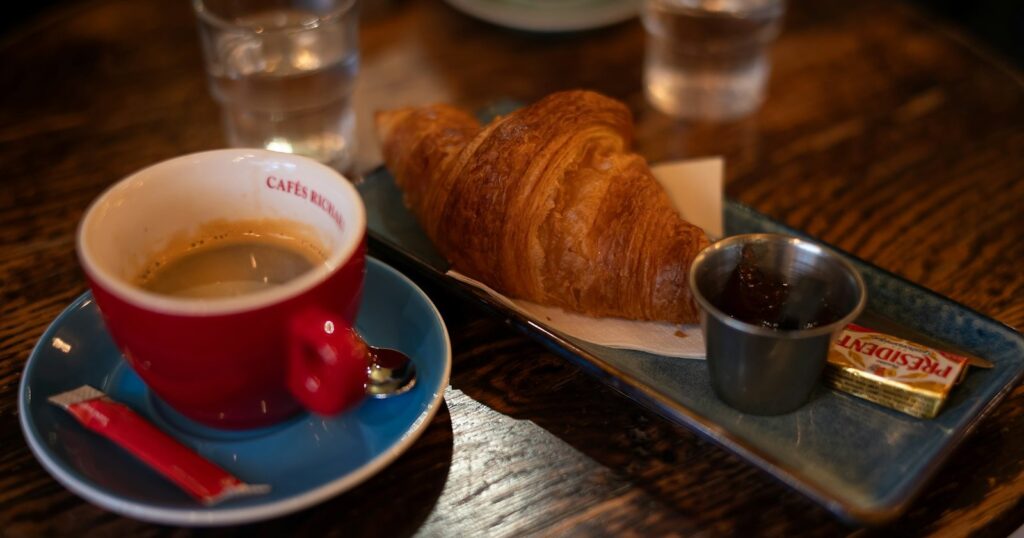
Fresh viennoiseries — croissants, pain au chocolat, pain aux raisins, brioche — are loved, but they are more often a weekend or treat-day purchase from the boulangerie than a daily ritual. A Paris address like Poilâne is famed for its sourdough miche, while Du Pain et des Idées and the long-running Stohrer draw morning queues for their baked goods.
The Drink: Coffee in a Bowl
At home, the classic morning drink is café au lait: brewed coffee topped up with plenty of hot milk and poured into a bol. The bowl is practical — it holds enough to dunk tartine after tartine, and you cradle it with both hands. This is a distinct thing from the small, strong espresso (un café) you would order standing at a café counter later in the day.
Children often drink chocolat chaud, and many households round out the table with a freshly squeezed orange pressée or a glass of juice. Tea drinkers are a minority but well catered for.
Butter and Jam, Taken Seriously
Spreads are where the French breakfast shows its quality. Butter can carry a protected designation of origin: Beurre d’Isigny from Normandy, made by producers such as Isigny Sainte-Mère, and Beurre Charentes-Poitou both hold an AOP, a status overseen by France’s INAO. Everyday national brands like Président fill most supermarket fridges.
For jam, the name heard most often is Bonne Maman, with its gingham lids and handwritten-style labels, launched in 1971 and now a breakfast fixture across the country. Honey is the common alternative, and a well-stocked grocer such as La Grande Épicerie de Paris will carry shelves of regional varieties.
Pain au Chocolat or Chocolatine?
Order the chocolate-filled rectangular pastry and the word you use gives away where you are. Across most of France it is pain au chocolat; in the southwest, around Bordeaux and Toulouse, it is firmly chocolatine. It is the same laminated pastry either way — the difference is regional vocabulary, and locals will happily correct you.
Hotels, Cafés and the Rise of Brunch
The “continental breakfast” served in French hotels is essentially the home breakfast scaled up for guests: bread, a viennoiserie or two, butter and jam, juice and a hot drink, sometimes with yoghurt and fruit. If you want a fuller spread, look for a petit-déjeuner buffet or, increasingly in cities, brunch — an imported weekend format that mixes sweet and savoury and did not exist in the traditional French day. For planning a trip around markets and bakeries, the national tourism body Atout France is a reliable starting point.
A quick practical note: in a standard café you will not usually find a sit-down cooked breakfast. The café’s morning job is coffee and perhaps a croissant, often bought next door at the bakery and carried in. The best baguettes themselves are celebrated in competitions such as the Ville de Paris Grand Prix de la Baguette, whose winner supplies the Élysée Palace for a year.
Myths Worth Retiring
Myth: The French eat a croissant every morning. Most mornings run on tartines of buttered baguette. Viennoiseries are a treat, bought fresh and more often at the weekend.
Myth: A café au lait is the same as a caffè latte. Café au lait is brewed coffee loosened with hot milk and drunk from a bowl at home, not the espresso-and-steamed-milk café drink the Italian name describes.
Myth: Pain au chocolat and chocolatine are two different pastries. They are one and the same; only the regional name changes between the north and the southwest.
Frequently Asked Questions
What time do the French eat breakfast?
Usually between about 7 and 9 in the morning, and it is quick — a light, sweet start rather than a long sit-down meal. The substantial meal of the day traditionally comes at lunch.
Do the French really dunk food in their coffee?
Yes. Dunking a buttered tartine, or even a croissant, into a bowl of café au lait is standard practice at home, which is a large part of why the drink is served in a bowl rather than a cup.
Can I get a cooked savoury breakfast in France?
Not traditionally. Larger hotels, brunch spots and some tourist-facing cafés offer eggs and the like, but the classic French breakfast is sweet and has no cooked element, so a bakery and a café together are your most authentic option.
More The Love France Guides
The Love France Guide is a numbered series — one tightly focused subject at a time, each with its own downloadable collectible edition. Guide № 001 is The Croissant, Guide № 002 is Bastille Day, Guide № 003 is The Béret, Guide № 004 is French Wine & Terroir, Guide № 005 is Café & Bistro Etiquette, Guide № 006 is French Slang & Verlan, Guide № 007 is Cognac & Armagnac, Guide № 008 is Chanson Française — The French Song Tradition, Guide № 009 is The Breton Stripe (Marinière), Guide № 010 is French Folklore & Ghost Stories, Guide № 011 is French Sayings & Proverbs, This is Guide № 012. More editions are on the way.
🇫🇷 Join 7,000+ France Lovers
Every week, get hidden stories, local secrets, and travel inspiration from people who live and love it.
Subscribe free — enter your email:
Tours & experiences you might love


Powered by Viator. Some links are affiliate links — we may earn a small commission at no extra cost to you.

Leave a Reply