
Each May, something remarkable arrives in a small village at the edge of the Camargue. Thousands of pilgrims come from across Europe — many travelling for days. Gardians on white horses ride through crowded streets. Music fills the salt air. And in the crypt of a ninth-century church, candles burn around the statue of a woman most French people have never heard of.
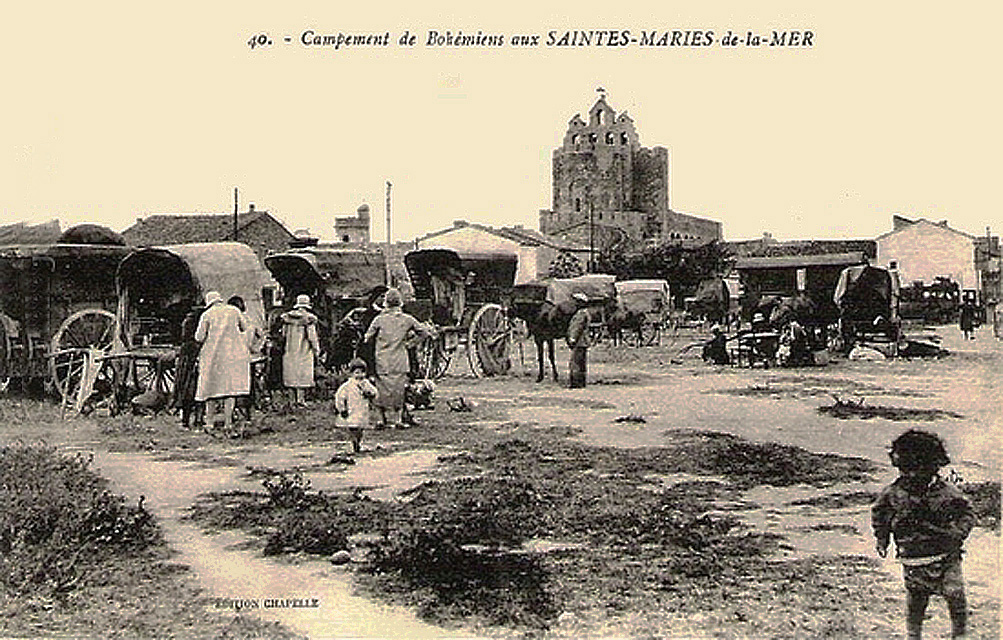
This is Saintes-Maries-de-la-Mer. And for three days every year, it is one of the most extraordinary places in France.
A Village at the Edge of the World
Saintes-Maries-de-la-Mer sits where the Rhône delta meets the Mediterranean Sea, deep inside the Camargue wetlands. For most of the year, it is a quiet fishing village. White walls, a low skyline, the flat silence of the marshes all around.
The ninth-century church at its centre looks nothing like a typical French cathedral. It is low and fortified — built as much for protection as for worship. It has stood through floods, invasions, and the long centuries of people arriving from the sea.
In many ways, it looks like a village that time has left behind. In May, you realise it is a village that time has always returned to.
The Legend of the Three Marys
The village takes its name from a story. According to Provençal tradition, shortly after the crucifixion, a small group of women fled Jerusalem by boat. Among them were Mary Jacobe — believed to be the sister of the Virgin Mary — and Mary Salome, the mother of two of Christ’s apostles. With them came Sara, their Egyptian servant.
They had no oars. They simply crossed the sea. And according to the legend, they landed here — at the shore of the Camargue.
The two Marys stayed. Their relics — or what are believed to be their relics — rest today in a gilded reliquary high above the nave. Every May, the reliquary is lowered on ropes in a ceremony watched by enormous crowds.
Sara — The Saint the Church Almost Forgot
It is Sara who draws the Roma pilgrims from across Europe.
Known as Sara la Kali — Sara the Black — she is the patron saint of the Romani people. Her statue stands in the crypt beneath the church, dressed in layers of embroidered robes gifted by pilgrims over generations. Each year, more robes are added. The oldest layers, buried deepest, are decades old.
The tradition is at least five hundred years old. Romani families who make the journey here often say their families have been coming for generations. They do not need to be told why they come. They simply do.
🇫🇷 Discover the France Most Tourists Never Find
Get our free guide to 25 hidden villages of France — then join 7,000+ readers for weekly stories about places most guidebooks never mention.
Get Your Free Village Guide →Three Days of Music and Prayer
The main pilgrimage falls on 24 and 25 May each year. Roma families begin arriving weeks in advance, camping in the fields around the village. By the time the festival begins, the population of Saintes-Maries — normally around two thousand people — has grown many times over.
In the evenings, guitars and tambourines fill the streets. The music has a distinctly flamenco flavour — a reminder of how deeply Romani culture has shaped southern European music, and how much of what the world calls “Spanish guitar” has older, wider roots.
If you happen to be exploring the wild wetlands of the Camargue, arriving during the festival weekend is like stepping into a different century.
The Procession to the Sea
On the afternoon of 24 May, the statues of the two Marys are carried from the church in a gilded boat and walked through the streets to the shore. The crowd presses in from every side. Gardians — the Camargue horsemen in wide-brimmed hats, mounted on their famous white horses — ride alongside.
At the water’s edge, the statues are blessed and held out over the waves. Then the crowd carries them back.
The following afternoon, Sara’s statue makes the same journey. Hundreds wade into the sea alongside her. It is an act of faith that is quiet and absolute — and almost impossible to describe to someone who was not there.
The Village That Waits All Year for This
When the festival ends, Saintes-Maries-de-la-Mer returns to itself. The caravans move on. The fishing boats come back. Pink flamingos stand in the lagoons behind the village. Herds of white horses graze in the tall reeds.
It is the same village it was before. But if you are planning a trip through southern France and this date falls anywhere near your itinerary, it is worth going out of your way for.
Some places become sacred because of their history. Saintes-Maries-de-la-Mer is sacred because people keep choosing it. They cross the sea, as the legend says the Marys once did. They come back every year. They leave their robes on a statue in a crypt. And that, in the end, is what makes a place holy.
Join 7,000+ France Lovers
Three times a week, get France’s hidden gems, seasonal guides, local stories, and the art of la vie française — straight to your inbox.
Subscribe free — enter your email:
Free forever · Unsubscribe anytime
🇫🇷 You Might Also Love
Tours & experiences you might love


Powered by Viator. Some links are affiliate links — we may earn a small commission at no extra cost to you.

Leave a Reply