
The town of Cognac, in the Charente valley of south-west France, looks as if something is quietly burning. Black stains creep up church walls, streak across stone facades, and darken the rooftops of houses that have stood for centuries. Nobody is alarmed. Nobody ever cleans it off.
What Is Turning the Walls Black?
The black coating is a fungus — Baudoinia compniacensis — that feeds on alcohol vapour. And in Cognac, there is a lot of alcohol vapour.
Every year, around two to three per cent of the brandy ageing inside the town’s limestone cellars evaporates through the oak barrels. The French have a name for this invisible loss. They call it la part des anges — the angel’s share.
The fungus follows the vapour. Wherever there is a distillery, a warehouse, or a cellar, you will find its black bloom spreading quietly across stone and plaster. After centuries of this, Cognac’s buildings wear the mark like a birthright. It is not a stain to be removed. It is evidence of something.
A Small Town With a Very Large Name
Cognac is not a big place. Around 20,000 people live here, in a quiet bend of the Charente river, roughly two hours north of Bordeaux. But its name is known on every continent.
The four great Cognac houses — Hennessy, Martell, Rémy Martin, and Courvoisier — all call this town home. Hundreds of smaller distilleries and independent producers scatter across the surrounding Charente countryside. The region exports around 200 million bottles of Cognac every year, shipped to more than 150 countries.
In spite of all this, the town itself remains quietly, stubbornly local. There are no tourist traps lining the old riverside quays. The weekly market is still the centre of community life. On warm afternoons, the streets near the old port carry a faint but unmistakable smell of oak and aged spirit — as if the air itself has been slowly soaking in brandy for three hundred years.
Inside the Chais
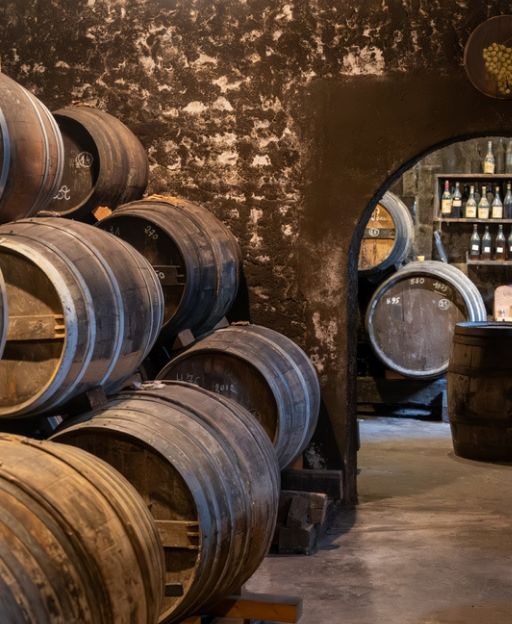
The heart of Cognac production is the chai — the limestone cellar where barrels sit in long rows while the brandy slowly transforms. A young eau-de-vie enters the barrel sharp and raw. Over years, sometimes decades, it draws colour from the wood, softens, and deepens into something complex and rounded.
A fine Cognac can spend 30 or even 50 years inside a single chai. The walls of the oldest ones are black with generations of fungus. The floor stays cool and damp even in high summer. The smell inside is extraordinary — dense with wood and dried fruit, something almost sweet, almost sacred.
Visitors can walk through the cellars of the major houses along the river. Hennessy has been ageing barrels on these banks since 1765. Martell even longer — since 1715. Some of the Cognac resting in those barrels today was placed there before anyone alive was born. The patience required is difficult to imagine.
Enjoying this? 7,000 France lovers get stories like this every week. Subscribe free →
What the Labels on the Bottle Actually Mean
VS, VSOP, XO — the markings on a Cognac bottle can look like a private code. They are a code, and knowing them changes how you drink.
VS (Very Special) means the youngest eau-de-vie in the blend has aged at least two years in oak. VSOP (Very Superior Old Pale) means at least four. XO (Extra Old) now requires a minimum of ten years ageing by French law. Hors d’âge — beyond age — typically means the youngest component has rested for at least ten years, though the finest blends contain eaux-de-vie aged for thirty or forty years.
The older the blend, the more of it the angels have quietly claimed. A bottle of XO represents not just years of patience, but also an extraordinary quantity of evaporated brandy — gone to the air, feeding the black bloom on the walls outside. That invisible cost is folded into every sip.
Making the Trip
Cognac sits on the Charente river, roughly an hour’s drive from Bordeaux and two hours from La Rochelle on the Atlantic coast. Direct trains connect Paris to Angoulême, about 30 minutes away by car, in under two hours.
The best time to visit is September and into October, when the vineyards around the town are being stripped of their grapes and the year’s new spirit is coming in. This is when the town feels most purposeful — still unhurried, still small, but very much alive with its own ancient work. If you are planning a broader journey through France’s wine country, Cognac pairs naturally with a visit to France’s other great wine regions, each with its own character and obsessions. You might also find it interesting to read about the natural wine movement that has been quietly dividing France for years.
For help putting together your trip, start with our France travel planning guide.
There are places in France that feel as if they exist entirely for visitors. Cognac is not one of them. It exists for the brandy. The tourists are welcome — but the barrels were here long before any of them arrived. Every year, a little of what is inside those barrels drifts quietly into the air, feeds the black walls outside, and disappears. The angels take their share, and the town wears the evidence with the kind of pride that needs no explanation.
Join 7,000+ France Lovers
Three times a week, get France’s hidden gems, seasonal guides, local stories, and the art of la vie française — straight to your inbox.
Subscribe free — enter your email:
Free forever · Unsubscribe anytime
🇫🇷 You Might Also Love
Tours & experiences you might love


Powered by Viator. Some links are affiliate links — we may earn a small commission at no extra cost to you.

Leave a Reply