
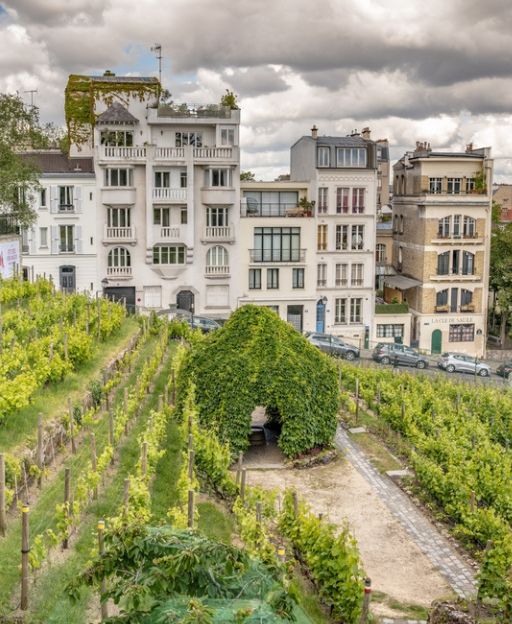
You are walking through Montmartre, past the street artists and the crêpe stalls and the tourists photographing everything. Then the city falls away. In front of you, rows of vines run down a hillside. A real, working vineyard — right in the middle of Paris.
This is the Clos Montmartre. And it has been here for nearly a century.
The Vineyard the City of Paris Planted on Purpose
The story starts in the early 1930s, when property developers fixed their eyes on an empty hillside in the 18th arrondissement. Locals were furious. They wanted the slope left open — green, quiet, and entirely Parisian.
The solution was brilliantly French. Plant vines.
In 1933, the City of Paris took ownership of the land and planted a working vineyard. Not as a symbol. Not as a tourist attraction. To stop construction. The vines were protection — and they have been there ever since.
The city still owns and manages the vineyard today. It is one of the last working vineyards within the Paris city limits, and one of the most quietly remarkable things in the capital.
Where to Find It
The Clos Montmartre sits at the corner of Rue des Saules and Rue Saint-Vincent — one of the most atmospheric streets in the neighbourhood. You can see it through the iron fence at any time of year.
In summer, the vines are thick and green. In autumn, they turn a deep gold before the harvest. In winter, the bare rows have a kind of quiet dignity against the old stone walls.
Most visitors walk past and never register what they are seeing. The ones who stop tend to linger. There is something unexpectedly moving about finding a vineyard here, in a city of eight million people.
The Wine Nobody Can Simply Buy
Each autumn, the vineyard produces a harvest from its Pinot Noir and Gamay vines. The bottles — a small run each year — carry the official Clos Montmartre label and a vintage number.
But you will not find this wine in any shop. The entire production goes to charity auction, with the proceeds funding community projects in the local arrondissement. To get your hands on a bottle, you need to be in the right place at the right time.
That place is the October festival. If you are planning a trip to France in autumn, it is worth building your dates around it.
🇫🇷 Discover the France Most Tourists Never Find
Get our free guide to 25 hidden villages of France — then join 7,000+ readers for weekly stories about places most guidebooks never mention.
Get Your Free Village Guide →The Festival That Takes Over the Neighbourhood
Every October, Montmartre holds a festival that has been running for decades. The Fête des Vendanges de Montmartre is five days of music, food, processions, and wine — the kind of neighbourhood celebration that Paris does brilliantly.
A ceremonial harvest opens the festivities. Local dignitaries, artists, and residents take turns cutting the vines. The grapes are pressed the traditional way. The street smells of fermentation and autumn leaves.
Stalls fill the cobbled streets selling cheese, charcuterie, and bottles from wine regions across France. There is folk music. There are crowds that feel local rather than touristy. And there is a warmth to the whole event that is hard to describe until you have stood in the middle of it.
It is one of Paris’s most enduring annual festivals — and one of its least commercialised.
What This Place Says About France
The Clos Montmartre is not really about wine. It is about what France believes is worth keeping.
In 1933, it would have been easy to let the developers win. The hillside would have been built over, and within a generation nobody would have remembered what was lost. Instead, the city chose to plant something. To make the land productive and beautiful and permanent.
That instinct — to preserve things not because they are useful but because they are worth preserving — runs very deep in France. You see it in the village bakers who open at six in the morning, in the market traders who set up their stalls in the rain, in the wine producers who tend the same plots their grandparents tended.
The streets of Paris are full of things like this — small, quiet acts of continuity that most visitors never notice. The Clos Montmartre is simply one of the most literal. It is a city choosing, very deliberately, to keep its roots in the ground.
Join 7,000+ France Lovers
Three times a week, get France’s hidden gems, seasonal guides, local stories, and the art of la vie française — straight to your inbox.
Subscribe free — enter your email:
Free forever · Unsubscribe anytime
If you visit Montmartre, walk down to the corner of Rue des Saules and stand at the fence for a moment. Look at the vines. Think about the people who fought to keep this hillside open in 1933, and how that small act of defiance has given Paris something it would not otherwise have.
Some things in France only make sense when you are standing in front of them.
🇫🇷 You Might Also Love
Tours & experiences you might love


Powered by Viator. Some links are affiliate links — we may earn a small commission at no extra cost to you.

Leave a Reply