
At twelve o’clock in a French village, something strange happens. The butcher locks his door. The hardware shop pulls down its shutter. Even the post office goes quiet. For the next two hours, an unofficial truce holds across the country — and the French wouldn’t have it any other way.
A Break That Is Not Optional
The French midday break — la pause déjeuner — is not a luxury. It is not a preference. In thousands of villages and small towns across France, it is simply the way things work. Shops close. Offices empty. The streets go still.
This isn’t laziness. To the French, eating properly at midday is an act of civilisation. The idea that a human being should eat a sandwich at their desk, alone, without stopping — that is the strange thing.
France has some of the strongest protections for meal breaks in Europe. Employees are entitled to at least 20 minutes after six hours of continuous work — but in practise, the culture stretches that far longer. In many offices and government buildings, a full two hours remains entirely normal.
What Happens in the Village at Half Past Twelve
Walk into a French village at 12:30 and you’ll find it almost deserted. The boulangerie will have sold out its morning bread and locked up. The pharmacy will have a sign on the door with its afternoon hours. The épicerie will be dark.
But the café will be full. Inside, you’ll find the butcher, the post office clerk, and the garage owner sitting at long tables. They’ve ordered from a short menu — entrée, plat, dessert — and they’re talking. Not about work. About anything else.
This is not a working lunch. It is not networking. It is lunch. The distinction matters enormously to the French.
How Visitors Get Caught Out
First-time visitors to France often take the midday silence personally. They stand outside a locked shop, confused, checking their watch, wondering if there’s a public holiday they missed.
There isn’t. It’s Tuesday. It’s lunchtime.
The trick is to go with it. Sit down somewhere. Order the menu du jour. Watch the tables fill with people who have nowhere else they need to be. This rhythm — once you stop fighting it — is one of the fastest ways to understand France itself. Our planning guide for France covers these essential codes so your first trip runs smoothly.
Enjoying this? 7,000 France lovers get stories like this every week. Subscribe free →
Why the Pause Has Survived the Modern World
You might expect the midday break to be fading. The internet doesn’t close for lunch. Supermarkets in cities stay open. Fast food chains never stop.
And yet the pause endures — especially in rural France. Partly it’s habit. Partly it’s culture. But partly it’s deliberate resistance to the idea that busyness equals importance.
The French are deeply suspicious of performative exhaustion. They don’t wear burnout as a badge of honour. Stopping at noon, eating properly, and returning to work at two is not inefficiency. It is — to borrow a French way of putting things — the point.
This unhurried quality runs through everything. The French follow social codes that outsiders often misread — but once you understand them, village life opens up in a completely different way.
What It Looks Like in Summer
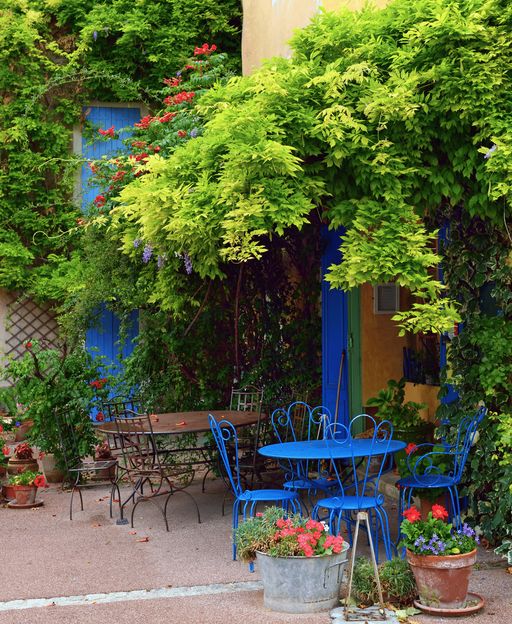
In July and August, the midday pause becomes something else entirely. The light turns golden by eleven. The air is warm and thick. Tables spill out under plane trees, in the shadow of old church walls, beside fountains.
Carafes of rosé appear. Bread is torn, not sliced. Conversations go long. By the time the apéritif hour arrives at six, the afternoon has already been lived properly. Nobody is checking their phone. Nobody is counting the minutes.
The pause is doing exactly what it was always meant to do.
The two-hour silence is one of the great gifts France offers any visitor — whether they’re ready for it or not. Let yourself be stopped. Let the shutters surprise you. Then sit down, order the plat du jour, and discover what it feels like to be in no particular hurry at all.
Join 7,000+ France Lovers
Three times a week, get France’s hidden gems, seasonal guides, local stories, and the art of la vie française — straight to your inbox.
Subscribe free — enter your email:
🇫🇷 Discover the France Most Tourists Never Find
Get our free guide to 25 hidden villages of France — then join 7,000+ readers for weekly stories about places most guidebooks never mention.
Get Your Free Village Guide →Free forever · Unsubscribe anytime
🇫🇷 You Might Also Love
Tours & experiences you might love


Powered by Viator. Some links are affiliate links — we may earn a small commission at no extra cost to you.

Leave a Reply