
Stand in the centre of Colmar and something immediately feels wrong. The street signs read French. The flag flies tricolore. But the half-timbered houses lean over the canal in shades of amber, ochre, and crimson — and every carved sign above a doorway sounds unmistakably German.
Alsace has belonged to France for most of modern history. It has also spent long stretches of that history belonging to Germany. What you see today is neither one nor the other. It is something that exists nowhere else on earth.
A Border That Never Stopped Moving
France and Germany drew their shared border through the Rhine Valley for centuries. Then, in 1871, France lost the Franco-Prussian War and Germany claimed Alsace entirely. For 47 years, the region operated as German imperial territory. Schools taught in German, German settlers arrived in numbers, and the old French signage came down.
France reclaimed Alsace in 1918 after the First World War. Germany seized it again under occupation in 1940. France took it back in 1945.
Each handover left layers. The architecture from German rule still stands. French came back both times, but the Alsatian dialect — a Germanic tongue with French loanwords — survived everything. The border has moved. The people have remained.
Why the Houses Look Like That
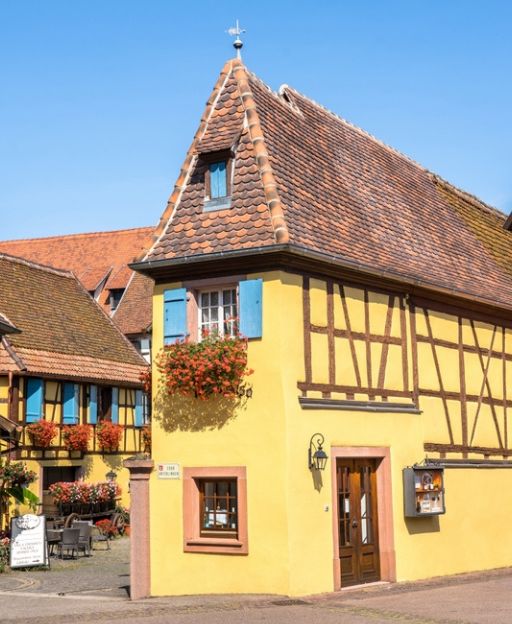
The distinctive half-timbered style — called colombage in French — predates either country’s claim on the region. Medieval builders across the Rhine Valley developed it centuries before any modern border existed. When you walk through Colmar’s old quarter or the village of Eguisheim, you stand in something much older than France or Germany as we know them.
Germany accelerated the style during the imperial period, constructing hundreds of civic buildings in a deliberate architectural statement. Today, those same buildings anchor some of France’s most photographed streets.
The colours are a strictly local tradition. Each village painted its timber frames to signal family identity or trade. Bakers chose ochre. Vignerons painted green. Wine merchants preferred red. The habit stuck — and nobody has changed it since.
How Alsace Eats
Alsace eats differently from the rest of France. The brasseries — large, loud, and decorated with dark wood and ceramic tiles — serve dishes that a chef from Lyon would barely recognise.
Choucroute garnie (sauerkraut piled with sausages and cured meats) fills entire platters. Tarte flambée — a thin, crisp base topped with crème fraîche, onion, and lardons — arrived from Alsatian farmhouses, not French bistros. The Germans call it Flammkuchen. The name gives the game away.
The wines are different too. Alsace grows Riesling, Gewurztraminer, and Pinot Gris — grape varieties linked almost entirely with German and Austrian winemaking. The bottles are long and narrow, a style called flûte d’Alsace that no other French region uses. The Alsace Wine Route threads together dozens of villages where you can taste all of them in a single afternoon.
Enjoying this? 7,000 France lovers get stories like this every week. Subscribe free →
The Language Question
At the start of the 20th century, nearly everyone in Alsace spoke Alsatian as their first language. French came second. Today, fewer than 40 per cent of the population speaks Alsatian at all, and most of those speakers are over 60.
Each time the border shifted, the ruling power changed the schools by decree. Children under German rule learned German and forgot French. Children under French rule learned French and faced punishment for speaking Alsatian in class.
The dialect survived — but only just. Local radio stations still broadcast in it. A handful of schools teach it. Shopkeepers in the villages along the Route des Vins greet walkers with Guten Tag and switch languages mid-sentence without noticing.
What Alsace Feels Like Today
Nobody in Alsace sits between two countries. They are French — fully, legally, and by a large majority by choice. The question is what to do with everything history left behind.
Most treat it as wealth. The architecture draws millions of tourists each year. The food fills cookbooks across Europe. The wines command serious prices. Alsace consistently tops lists of France’s most beautiful regions.
The border with Germany is now barely a formality. Thousands cross it every day to work, shop, and study. Strasbourg — Alsace’s capital — hosts the European Parliament. Planners chose the city deliberately: it sits on the seam between two countries that once tore each other apart.
Alsace has always been the place where France and Germany ran out of excuses and simply had to get along. That habit, too, has stuck.
Ready to plan your visit? Our France travel planning guide covers the best seasons, routes, and regions to explore.
What is the best time to visit Alsace in France?
Late spring (May–June) and early autumn (September–October) offer pleasant weather and smaller crowds. The famous Christmas markets run from late November through December and attract visitors from across Europe.
What language do people speak in Alsace?
French is the official and dominant language. Alsatian — a Germanic dialect unique to the region — survives among older generations and in some rural communities. Many locals also speak German, particularly near the border.
How do I get from Paris to Alsace?
The TGV high-speed train connects Paris Gare de l’Est to Strasbourg in under two hours. From Strasbourg, local trains and buses reach Colmar, Eguisheim, and the Route des Vins villages easily.
What food is Alsace best known for?
Alsace is the home of tarte flambée, choucroute garnie, and Munster cheese. The region also produces celebrated white wines including Riesling, Gewurztraminer, and Crémant d’Alsace — France’s answer to Champagne at a fraction of the price.
Every time you stand in Alsace — between a French café and a half-timbered house painted the colour of autumn, holding a glass of Riesling unlike anything else in France — you feel the weight of it. Not the wars. Not the politics. Just the strange, stubborn beauty of a place that refused to belong entirely to anyone.
Join 7,000+ France Lovers
Three times a week, get France’s hidden gems, seasonal guides, local stories, and the art of la vie française — straight to your inbox.
Subscribe free — enter your email:
Free forever · · Unsubscribe anytime
🇫🇷 You Might Also Love
Tours & experiences you might love


Powered by Viator. Some links are affiliate links — we may earn a small commission at no extra cost to you.

Leave a Reply