In Breton villages, people once listened for the creak of a cart axle in the dark — the sound of the Ankou, the skeletal driver who was said to collect the souls of the year’s dead. France carries thousands of these stories, from serpent-women who founded noble dynasties to a beast that terrorised an entire province while the king sent professional wolf-hunters to stop it. This is Guide № 010 in The Love France Guide series.
Brittany: The Ankou and the Korrigans
No region of France guards its folklore more fiercely than Brittany, where Celtic belief survived alongside Catholicism for centuries. The central figure is the Ankou, a personification of death usually described as a tall, gaunt figure or a skeleton in a wide-brimmed hat, driving a creaking cart (the karrigell an Ankou) to gather the souls of those who have died. In many parish tales he is the last person to die in a community before the new year, bound to serve as death’s servant until relieved by the next.
Alongside him live the korrigans — small, mischievous spirits linked to springs, dolmens and standing stones. Folklore collectors in the nineteenth century, especially around the stories gathered in the Barzaz Breiz, recorded dozens of local variants. Korrigans were traditionally blamed for leading travellers astray at night and for swapping human infants for changelings, a belief that once shaped real rituals around childbirth and baptism.
The Haunted Châteaux of the Loire and Beyond
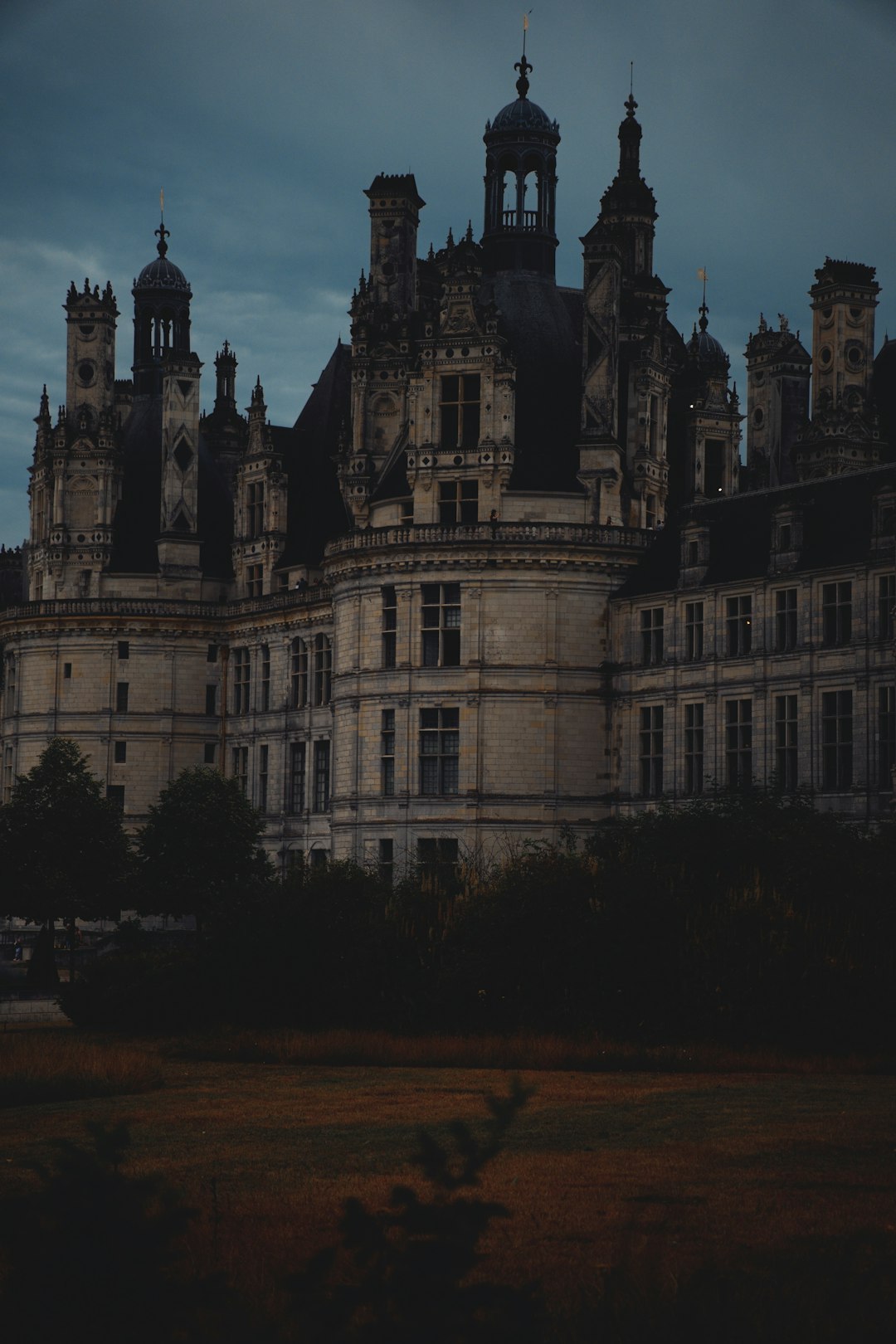
France’s best-known ghost story belongs to the Château de Brissac in the Loire, the tallest château in the country at seven storeys. Its resident spectre is the Dame Verte, the Green Lady, commonly said to be Charlotte de Brézé, an illegitimate daughter of King Charles VII, murdered along with her lover in the fifteenth century. Visitors are told she appears in the tower room of the chapel, her face marked by holes where eyes and nose should be.
Further west, the Château de Combourg in Brittany owes much of its reputation to the writer François-René de Chateaubriand, who grew up there and described its oppressive nights in his memoirs. The château’s legend concerns a former lord, a Comte de Coëtquen with a wooden leg, whose phantom limb — sometimes accompanied by a black cat — is said to climb the tower stairs. Many French châteaux maintained by the Centre des monuments nationaux carry comparable tales, a reminder that ghost lore was often a way of remembering real family tragedies.
Dragons, Beasts and the Gargoyle of Rouen
French folklore teems with monsters. In Provence, the Tarasque — an amphibious dragon with a lion’s head and a turtle’s shell — was said to terrorise the town of Tarascon until Saint Martha subdued it with prayer and a sprinkling of holy water. The town’s annual festival survives today, and the tradition of processional giants and dragons it belongs to is inscribed on the UNESCO list of intangible cultural heritage. In Normandy, the Gargouille of Rouen, a river-dwelling dragon, was reportedly tamed by Saint Romanus; the legend gave rise to the city’s old Privilège de la Fierte, by which a condemned prisoner was pardoned each year.
The most notorious case sits in the uplands of the Gévaudan, in the Margeride mountains. Between 1764 and 1767 a creature — or creatures — killed around a hundred people, mostly women and children tending livestock. The attacks drew national attention and royal hunters sent by Louis XV. The “Bête du Gévaudan” was most plausibly one or more wolves, or a large wolf-dog, though it has been mythologised ever since as something stranger.
Fairy Founders and Water Spirits
Some French legends were used to glorify real dynasties. The most famous is Mélusine, a water fairy who agreed to marry a nobleman on the condition that he never watch her bathe on Saturdays — the day her lower body became that of a serpent or fish. When he broke the promise, she fled, and the medieval House of Lusignan later claimed descent from her to lend their line an air of the supernatural. The tale was recorded around 1393 by Jean d’Arras and spread across Europe.
Brittany’s forest of Paimpont is widely identified with the legendary Brocéliande of Arthurian romance, home to Merlin’s tomb, the Fountain of Barenton and the Val sans Retour said to have been enchanted by the fairy Morgan. These are literary and folkloric associations rather than archaeological fact, but local sites have carried the names for generations and draw readers of the Arthurian cycle.
The Dead Beneath Paris
Not all of France’s eerie heritage is legendary. The Catacombs of Paris hold the bones of roughly six million people, transferred underground from the late 1780s when the overcrowded Cemetery of the Innocents was closed on public-health grounds. The remains were stacked into walls of skulls and femurs in former limestone quarries, and the ossuary has drawn stories of restless spirits and disorientated explorers ever since. By contrast, the abbey of Mont-Saint-Michel is tied to a founding legend in which the Archangel Michael appeared to a local bishop in 708, ordering him to build on the rock — folklore and faith anchoring one of France’s most-visited monuments.
Myths Worth Retiring
Myth: The Beast of Gévaudan was a supernatural monster. The attacks were real and deadly, but the most sober historical reading points to wolves or a large wolf-like animal, not a demon. The supernatural framing grew in the retelling, helped by eighteenth-century newspapers hungry for a sensation.
Myth: Halloween is a traditional French celebration. The traditional French observance is La Toussaint (All Saints’ Day, 1 November), when families visit cemeteries and lay chrysanthemums on graves. Halloween in its commercial, costumed form only arrived in France in the late 1990s and remains a modern import.
Myth: Gargoyles were always just decoration. The French word gargouille relates to the throat — the same root as “gargle” — because true gargoyles are functional waterspouts that channel rain clear of a building’s walls. The Rouen dragon legend ties the carvings directly to that drainage role; purely ornamental grotesques are a separate thing.
Frequently Asked Questions
Can you actually visit the places in these legends?
Many of them, yes. The Catacombs of Paris, Mont-Saint-Michel, the Château de Brissac and the Château de Combourg are all open to visitors, as is the Paimpont forest associated with Brocéliande. Always check official opening hours and book timed tickets in advance, as several of these sites cap daily numbers.
Is the Ankou a Breton version of the Grim Reaper?
They share imagery — a skeletal figure, sometimes a scythe — but the Ankou is distinct. He is traditionally understood not as death itself but as its servant or collector, often identified with the last soul to die in a parish each year, and he appears carved into many old Breton church porches and ossuaries.
When is the best time to experience French folklore firsthand?
Late October and early November bring Toussaint, when cemeteries fill with flowers, while summer is when towns stage traditional festivals — the Tarasque celebrations in Tarascon, for example, generally take place in late June. Check each event’s official listing before planning around it, as dates shift from year to year.
More The Love France Guides
The Love France Guide is a numbered series — one tightly focused subject at a time, each with its own downloadable collectible edition. Guide № 001 is The Croissant, Guide № 002 is Bastille Day, Guide № 003 is The Béret, Guide № 004 is French Wine & Terroir, Guide № 005 is Café & Bistro Etiquette, Guide № 006 is French Slang & Verlan, Guide № 007 is Cognac & Armagnac, Guide № 008 is Chanson Française — The French Song Tradition, Guide № 009 is The Breton Stripe (Marinière), This is Guide № 010. More editions are on the way.
🇫🇷 Join 7,000+ France Lovers
Every week, get hidden stories, local secrets, and travel inspiration from people who live and love it.
Subscribe free — enter your email:
Tours & experiences you might love


Powered by Viator. Some links are affiliate links — we may earn a small commission at no extra cost to you.

Leave a Reply