
In 1248, a French king finished a chapel in the middle of Paris. He built it to hold the Crown of Thorns. Today the Sainte-Chapelle in Paris is one of the finest rooms in Europe.
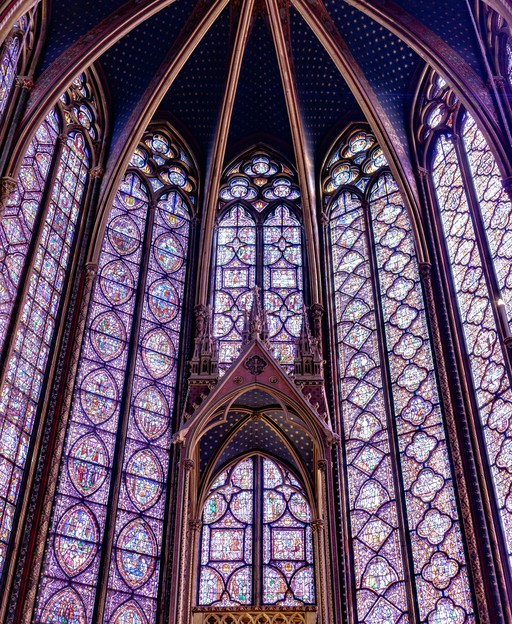
Walk up the stair and the walls seem to disappear. Glass fills almost every surface. Colour pours across the floor. This is Gothic building at its boldest, and it was made for one purpose. A king wanted a home worthy of a holy relic.
Why Louis IX Built the Sainte-Chapelle
Louis IX ruled France from 1226 to 1270. The Church later named him a saint, so the French call him Saint Louis. He was a deeply religious man. He also knew that sacred objects brought prestige to a throne.
In 1239 he bought the Crown of Thorns. Baldwin II, the Latin emperor of Constantinople, needed money. He had pawned the relic to Venetian lenders. Louis paid off the debt and brought the crown to France. He later added other relics of the Passion.
Historians usually say the relics cost far more than the building. One often-quoted figure puts the crown at about three times the price of the chapel. Treat the exact sums with care. The point is clear all the same. The relics were the treasure, and the chapel was their case.
A Royal Palace on the Île de la Cité
The chapel stands inside the old royal palace on the Île de la Cité. That island is the historic heart of Paris. Kings lived and ruled there long before Versailles existed.
Builders worked from about 1241. Louis and his court saw it consecrated on 26 April 1248. Later that year the king sailed east on crusade. He had given Paris a shrine before he left.
The chapel was not a parish church. It was a royal chapel, tied to the king and his household. That made it a statement of power as much as of faith. A king who held the Crown of Thorns held something no rival could match.
Two Chapels, One Building
The Sainte-Chapelle has two levels. Each one had its own users.
The lower chapel served palace staff and servants. Its ceiling is low. Its columns are strong and its vault is painted in deep colours. Look for the gold fleurs-de-lis and the castles of Castile. The castles honour Blanche of Castile, the king’s mother.
The upper chapel was for the king and his household. A narrow stair leads up to it. You step into a tall, bright space with almost no wall at all.
That climb is part of the design. The dark lower room makes the upper room feel even brighter. Medieval builders knew how to stage a surprise.
The Stained Glass of the Upper Chapel
The upper chapel has fifteen great windows. Together they hold about 1,100 small scenes. They tell the Bible story from Genesis onward. The last windows tell how the relics came to Paris.
Roughly two thirds of the glass is still medieval. That is rare. Few buildings keep so much glass from the 1200s.
The windows were made to be read. A medieval visitor could follow the story from panel to panel. Reds and blues dominate the scheme. The light that comes through is deep purple and gold.
Slim stone ribs carry the roof. They are so thin that the glass seems to hold up the building. This is the later style of Gothic art that the French call Rayonnant. It makes walls look like light. For the wider story, see our guide to Gothic cathedrals of France.
Look up as well. The vault is painted deep blue and scattered with gold stars. It is a ceiling made to look like the sky.
🇫🇷 Enjoying this? 7,000 France lovers get stories like this every week. Subscribe free →
The Shrine Under the Canopy
At the east end of the upper chapel stands a stone canopy. It marks the spot where the great reliquary once sat. A raised platform lifted it above the floor. The reliquary held the Crown of Thorns and other relics.
Only the king and a few chosen guests could go near it. On set feast days the relics were shown to the public. Louis is said to have carried the crown into Paris on foot when it arrived.
The reliquary no longer stands in the chapel. The relics were moved after the 1790s. The Crown of Thorns is now in the care of Notre-Dame de Paris. Check the cathedral’s official site if you wish to see it.
Restoration and Later Changes
The building has changed over the centuries. A rose window was added in the late 1400s. Its flowing lines belong to the late Gothic style called Flamboyant.
In the 1800s the chapel fell into poor repair. It had been used for other purposes and it showed. Architects began a long restoration. They repaired the glass, rebuilt the spire and repainted the interior.
Some of what you see is therefore 19th-century work. That is normal for old churches in France. Restorers copied medieval patterns as closely as they could.
Saint Louis and the Wider French Story
Louis IX shaped medieval France in other ways. The wars against the Cathars of Languedoc ended under his rule. His builders also strengthened the walls of Carcassonne. He is one of the few French kings the Church named a saint.
His name travelled far. Saint Louis, Missouri, takes its name from him. French settlers named it in the 1700s. So an American in the Midwest may already live in a city named for this king.
For heritage travellers, the chapel is a good starting point. It shows how medieval France mixed faith, art and politics. For more kings and queens of that age, read about Eleanor of Aquitaine and Charlemagne.
Planning Your Visit
Plan before you go. Tickets, opening times and security rules change. Check the official Sainte-Chapelle website for current details. Book ahead where the site allows it.
Next door stands the Conciergerie, another part of the old palace. Notre-Dame is a short walk away. Together they make a good morning on the Île de la Cité.
Go on a bright day if you can. Sunlight makes the glass glow. Arrive early, since the upper chapel is small. Give yourself time to stand still and look up.
Frequently Asked Questions
Who built the Sainte-Chapelle in Paris?
King Louis IX of France built it. Work began around 1241. The chapel was consecrated on 26 April 1248.
Why was the Sainte-Chapelle built?
Louis IX built it to house the Crown of Thorns and other relics. He had bought them from the emperor of Constantinople. The chapel was their shrine.
Is the stained glass original?
About two thirds of the upper chapel glass is medieval. The rest was replaced or restored in later centuries, mostly in the 1800s.
Is the Crown of Thorns still in the Sainte-Chapelle?
No. The relics left the chapel after the 1790s. The Crown of Thorns is now in the care of Notre-Dame de Paris.
How do I plan a visit to the Sainte-Chapelle?
Use the official website for tickets, hours and rules. These details change, so check them close to your trip.
You Might Also Enjoy
- Gothic cathedrals of France — how medieval builders reached for the sky
- The Bayeux Tapestry — the story of 1066 in linen
- Joan of Arc — the teenage heroine who saved France
Plan Your France Trip
Ready to plan? Start with our planning hub for your trip to France. It brings together regions, seasons and practical advice.
Join 7,000+ France Lovers
Every week, get France’s hidden gems, seasonal guides, local stories, and the art of la vie française — straight to your inbox.
Subscribe free — enter your email:
Free forever · One email per week · Unsubscribe anytime
Tours & experiences you might love


Powered by Viator. Some links are affiliate links — we may earn a small commission at no extra cost to you.

Leave a Reply