
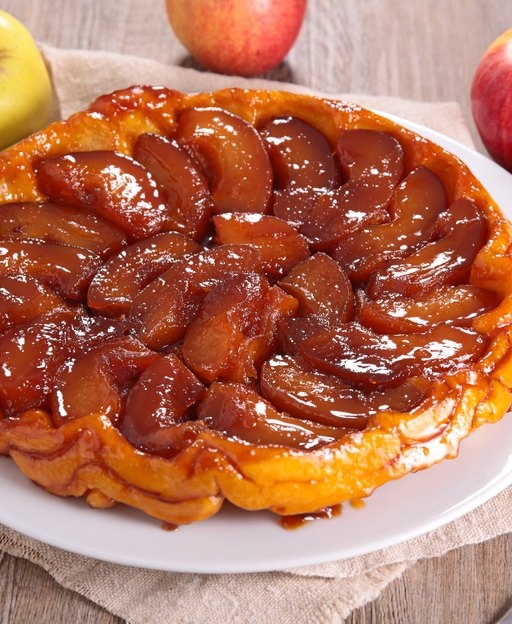
Turn the pan over and the caramel is suddenly on top, the fruit glistening, the pastry underneath crisp where it met the heat. Tarte Tatin is France’s upside-down apple tart, and its story starts at a hotel across from the railway station in Lamotte-Beuvron, a hunting town in the Sologne, south of Orléans. Here is what we can actually trace about the two sisters, the tart that was “famous all over Sologne”, and the Paris legend that does not add up, and then how to make it at home.
Two Sisters and a Station Hotel
Stéphanie, known as Fanny (1838–1917), and Caroline Tatin (1847–1911) ran an inn and restaurant in Lamotte-Beuvron, right in front of the railway station, popular with hunters, according to France’s official tourism site. It describes their apple tart as a classic dessert of the Sologne. The Friends of the Tarte Tatin website, which follows the research of the French historian Henri Delétang, says the evidence suggests the tart was created in the 1880s, and that when the sisters opened their hotel in 1894 it already had a following.
The Famous Mistake, and Why Historians Doubt It
You have probably heard the legend. On a busy day in hunting season, Fanny put the tart in the oven without its pastry base. She added the pastry late, on top, and served the tart upside down, with the caramelized apples now facing up. In another version she did not notice until the oven door opened. Either way, the warm dessert was a hit. The France.fr page adds that the Grand Larousse Gastronomique calls the mistake story a legend: the tart was an older Sologne recipe passed from mother to daughter, and the sisters’ real achievement was making it famous at their hotel. The food writer Felicity Cloake makes the same point in National Geographic Traveller: apple tarts are an old speciality of the region, and the upside-down gâteau renversé existed long before the Tatin sisters opened their doors.
The Proof: A Dinner in 1903
The first printed mention comes from 1903, in the bulletin of the geographical society of the Cher. Its members took a two-day train excursion through the region and ended up at the Hotel Tatin, where, as the Friends of the Tarte Tatin site translates it, dinner finished with a warm apple tart that was the house specialty. The writer called it “famous all over Sologne” and said it deserved a patent for as long as Miss Fanny Tatin was at the stove. Cloake also notes that this is the evidence the tart was already well known by then.
There is an early recipe too, from the handwritten notes of Marie Souchon, a close friend of the sisters. It calls for a copper dish on a coal-fired stove with embers placed on the lid, so the tart got heat from above and below. You spread plenty of butter and sugar in the dish, pack in cut-up pippin or calville apples, cover them with a very thin dough of flour, butter and water, bake, then flip the tart onto a plate and eat it warm. The friends’ site points out what is missing: no puff pastry, no cinnamon, no cream, and the apples were not peeled. The puff pastry in our recipe below is a modern shortcut.
How a Local Tart Became a Legend
Caroline died in 1911 and Stéphanie in 1917, and as far as anyone can tell the sisters never published the recipe. A local judge, Paul Besnard, printed one in 1921 in a book of poems. The real boost came in 1926, when the critic Curnonsky, nicknamed the Prince of Gastronomes, included “the famous apple or pear tart of the Demoiselles Tatin of La Motte-Beuvron” in his book La France gastronomique. France.fr says the mistake story was spread to create buzz, and it worked.
By the late 1930s the tart was on the menu at Maxim’s in Paris. The long-time owner, Louis Vaudable, told a story about how it got there: as a young hunter he had tasted it at a small hotel run by elderly ladies, and to learn the recipe he got himself hired as a gardener, until he was fired three days later because he could hardly plant a cabbage. It is a very good story. It is also impossible, as the Friends of the Tarte Tatin point out: Vaudable was born in 1902, the sisters retired in 1906, and his family only bought Maxim’s in 1932.
Visiting Lamotte-Beuvron
The hotel building is still there. It is now La Maison Tatin, which says on its own site that this large 19th-century house belonged to the Tatin sisters and that their original stove is still in the restaurant. It also describes a tea room and a restaurant serving lunch and dinner. Hours change, so check its site before you plan a stop. Lamotte-Beuvron sits in the Centre-Val de Loire region; if you are building a trip around the area, our Loire Valley road trip guide is a good starting point.
One last thing: how to serve it. France.fr says the tart goes with crème fraîche on the side, never on top, and never with ice cream. BBC Good Food suggests either crème fraîche or vanilla ice cream, so you have permission both ways. And if you are making a French dessert table, our crème brûlée and chocolate mousse go well beside it.
How to Make Tarte Tatin at Home
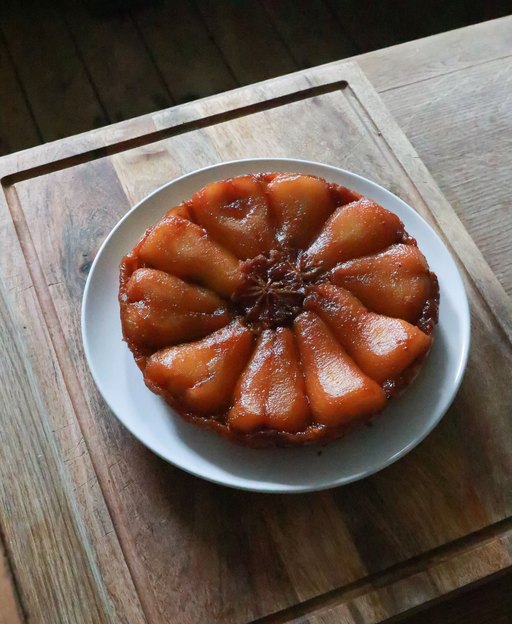
Six apples, sugar, butter and a sheet of puff pastry. The only tricky part is the flip at the end, so give the tart time to cool a little first and have your serving plate ready.
Tarte Tatin
Ingredients
Equipment
Method
- Heat the oven to 180°C / 160°C fan / 350°F / gas 4. Roll the pastry on a lightly floured surface into a round about 3 mm (⅛ in) thick, then cut a circle about 24 cm (9½ in) wide, using a plate as a guide. Prick it all over with a fork, put it on a baking sheet, cover, and freeze while you prepare the apples.
- Peel, quarter and core the apples.
- Spread the sugar over the bottom of the 20 cm (8 in) ovenproof skillet or tatin dish and set it over medium-high heat. Cook for 5 to 7 minutes, until it is a dark amber caramel that is just starting to smoke. Take it off the heat and stir in the 60 g (4 tbsp) diced cold butter.
- Arrange the apple quarters tightly in a circle around the edge of the pan, rounded side down, then fill the middle the same way. Press them down gently so there are no gaps. Brush the fruit with the melted butter.
- Bake for 30 minutes. Take the pan out, lay the frozen pastry disc on top (it will soften quickly), tuck the edges down inside the pan, and prick a few holes in the pastry for steam.
- Bake for another 40 to 45 minutes, until the pastry is deep golden and crisp.
- Let the tart cool for about 1 hour, until it is at room temperature. Run a knife around the edge, set a deep, rimmed serving plate over the pan, and, wearing oven mitts, turn the whole thing over in one confident movement. Serve with crème fraîche or vanilla ice cream.
Notes
Sources
- France.fr (Atout France): Storia di un ristorante, due sorelle e una torta al contrario, la Tarte Tatin
- Friends of the Tarte Tatin: History of the Tarte Tatin
- National Geographic Traveller (UK): Deconstructing tarte tatin, the classic French dessert (Felicity Cloake)
- La Maison Tatin, Lamotte-Beuvron
- BBC Good Food: Tarte tatin
- King Arthur Baking: Classic apple tarte Tatin
Frequently Asked Questions
Do I need a special pan?
No. BBC Good Food uses either a 20 cm tatin dish or an ovenproof heavy-based frying pan of the same size, and the handle must be able to go in the oven. King Arthur cooks the caramel in a skillet and bakes in a 9-inch round pan. The pan gets very hot, so use oven mitts when you turn the tart out.
Which apples work best?
Firm ones that keep their shape. King Arthur recommends Pink Lady and warns that softer varieties turn to mush in the pan, and BBC Good Food suggests Braeburn, Cox’s Orange Pippin or Adam’s Pearmain. Marie Souchon’s early recipe used pippin or calville apples.
Why is the pastry frozen?
In the BBC Good Food method, the pastry disc is chilled in the freezer while you prepare the apples and goes on top once the apples have had half their baking, where it defrosts quickly and bakes crisp.
Can I make it ahead?
The tart needs to cool before you turn it out, about an hour in the BBC method, so plan for that. King Arthur says to keep leftovers lightly covered at room temperature and does not recommend freezing.
Tours & experiences you might love


Powered by Viator. Some links are affiliate links — we may earn a small commission at no extra cost to you.

Leave a Reply