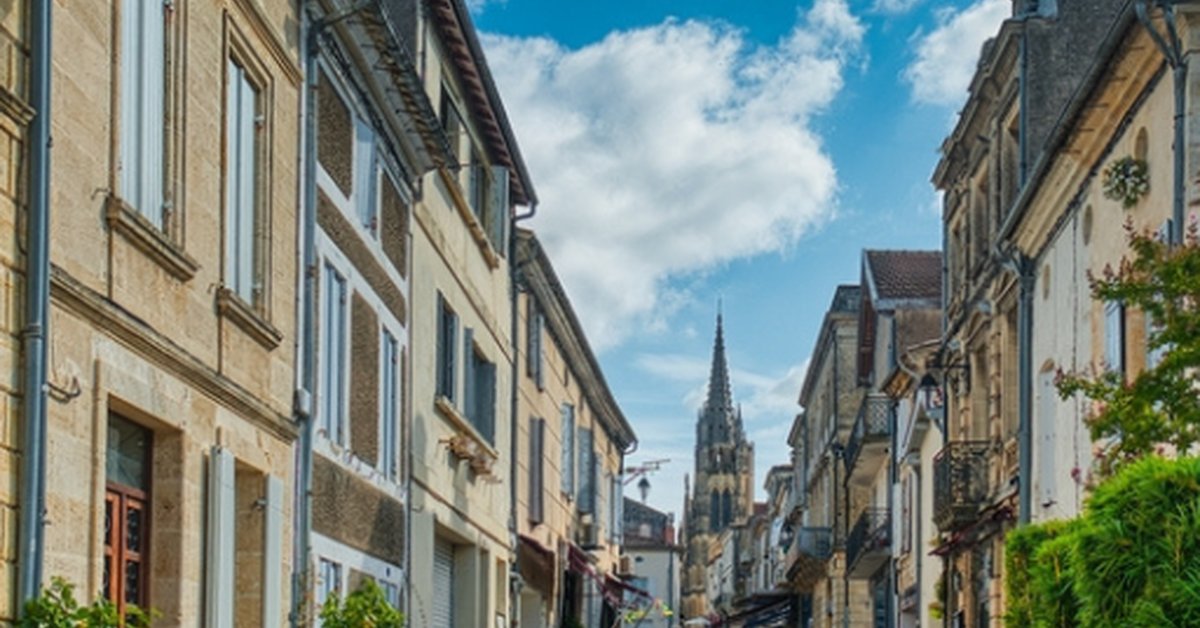
Your surname may carry a story you have never heard. If your family name sounds French — and especially if it hints at wine, rivers, stone, or the sea — there is a chance it came from the south-west of France. Bordeaux and Aquitaine were home to merchants, monks, farmers, and soldiers whose names crossed the Atlantic centuries ago. Many of their descendants live in Quebec, Louisiana, New England, and the Caribbean today.
This guide explores the French surnames of Bordeaux and Aquitaine: where they came from, what they meant, and how the families who carried them spread across the world. You will also find practical advice on tracing your own roots back to this remarkable region.
What’s your name in French? 🇫🇷
Your French Name — type any first name for the French equivalent, with meaning and regional notes.
A Region Where Languages Collided
Aquitaine was never a simple place. The Romans called it Aquitania, meaning “land of waters.” The Garonne River runs through its heart, and the Atlantic coast shapes its western edge. For centuries, this region sat at the crossroads of three cultures: Gallo-Roman in the north, Occitan and Gascon in the south, and Basque in the far south-west.
Each culture left its mark on surnames. Latin gave occupational names. Frankish Germanic names arrived with medieval lords. Gascon — a dialect closer to Spanish than to French — shaped the villages of the Landes and the Gers. And Basque, one of Europe’s oldest languages, produced surnames that look like nothing else in Europe.
The English also played a role. From 1154 to 1453, Bordeaux and much of Aquitaine were ruled by the English crown. Wine flowed north to Bristol and London. Families moved in both directions. Some French names filtered into English records during this period — and some English families left descendants in France who took French surnames.
Surnames Rooted in the Trades of Bordeaux
Bordeaux was one of the great trading cities of medieval Europe. Its port shipped wine to England, Ireland, and the Low Countries. That trade created wealth — and surnames. Many family names from this area reflect the occupations that built the city.
Faure / Favre — From the Latin faber, meaning craftsman or blacksmith. The blacksmith was essential in every town. This name spread widely across southern France and into the French diaspora.
Merle — From the Old French for blackbird. This was a nickname name, given to someone who sang well, or perhaps to someone dark-haired. It was common in the Gironde and later appeared in French-Canadian records.
Vignes / Vignier — From vigne, meaning vine or vineyard. It was an occupational name for a vine-grower. Given Bordeaux’s wine heritage, it should come as no surprise that this name was everywhere in the Gironde.
Tonnelier — From tonneau, meaning barrel. The barrel-maker was one of the most important tradesmen in the wine trade. This surname followed the wine industry wherever it went.
Charpentier — The carpenter. From the Latin carpentarius. A name found across France, but common in the Bordeaux region where shipbuilding and construction were central trades.
Renaud / Renault — From the Germanic Reginwald, meaning counsel and rule. The Franks who settled in Aquitaine after the fall of Rome left Germanic names that blended into the French language over generations. Renaud was one of the most common results.
🇫🇷 Enjoying this? 7,000 France lovers get stories like this every week.
Thinking about it seriously? If you’ve started actually planning a move, our complete our complete Moving to France guide walks through every step, every cost, and the paperwork that catches most people out.
Surnames From the Land — Fields, Hills and Rivers
Many surnames in this region describe where a family lived. France developed locative surnames — names taken from the landscape — earlier than most of northern Europe. The terrain of Aquitaine was varied enough to produce dozens of distinct names.
Dupont — “From the bridge.” Bridges were rare and important. A family living near one took its name from that fact. This name crossed to New France with early settlers and became one of the most common French-Canadian surnames.
Dumont — “From the hill.” The rolling hills of the Entre-Deux-Mers and the Dordogne gave this name to many families. Dumont spread across French Canada and Louisiana during the colonial period.
Lafitte / Laffite — From la fitte, meaning a boundary stone or stone fence. This name marked a family who lived near such a marker. The Laffite name became famous in Louisiana through the pirate brothers Jean and Pierre Laffite, both believed to have roots in the Gironde.
Laborde — From la borde, meaning a farm or small holding. This was the basic unit of rural life in Gascony and the Landes. Many families with this name emigrated to Canada in the 17th and 18th centuries.
Peyrat / Peyre / Peyrou — All derived from pierre, meaning stone. In Occitan, pèira was the local form. These names described a family who lived near a rocky outcrop, a stone wall, or a bridge built of stone. They were common across the Lot-et-Garonne and Dordogne.
Lacaze / Lacas — From la case, the house. A simple but telling name. It distinguished a family who lived in the main house of a village, rather than on the surrounding farmland.
For a deeper look at the research tools that can help you trace surnames like these back to their original communes, visit our full guide to how to trace your French ancestry.
Gascon Surnames — A Language Within a Language
Gascony is not Provence and it is not Normandy. It has its own character, its own food, its own wine, and its own language. Gascon is a dialect of Occitan, but it is distinct enough that linguists sometimes treat it separately. It crossed the Atlantic with the settlers who left the Gers, the Landes, and the Pyrénées.
Dartigues — From the Occitan artigues, meaning newly cleared land. The de prefix indicates origin. A family who cleared forest to create farmland would carry this name forward.
Cazeaux — From the Gascon cazau, meaning houses or homesteads. Related to maison in standard French. This is a distinctly south-western name, concentrated in the Gironde and Landes.
Lestrade — From la estrade, a paved Roman road. Families living beside an ancient road took this name. Many roads in Gascony followed Roman routes, and the name survives today in villages across the region.
Hourquet — From the Gascon horca, meaning a fork — either a fork in a road or a river. Gascon replaced the Latin f with h in many words (a signature feature of the dialect), giving this name its distinctive look.
Daste — From the Gascon ast, meaning the ash tree. Trees gave their names to countless families across the region. The ash was prized for tool handles and weapons, making it a landmark in any village.
If your surname has Gascon roots, there is a good chance it overlaps with the surnames of the Gascony and Occitanie regions. Read our companion guide: French Surnames of Gascony and Occitanie.
Basque Surnames From the Pyrénées-Atlantiques
The far south-west of Aquitaine is Basque country. The Basque people are one of Europe’s great mysteries — their language, Euskara, has no known relatives. Their surnames look completely unlike French names. But many families from this corner of Aquitaine took those Basque surnames with them when they emigrated.
Etcheverry — From Basque etxe (house) and berri (new). Literally “new house.” This was a name given to a family who built a new home in the village. It is one of the most common Basque surnames found in French records.
Larre — From Basque lar, meaning heath or moor. Open heathland was common in the Basque interior. Families who lived on or near the moor took this name.
Harriet / Harrigues — From Basque harri, meaning stone or rock. This name described a family living near a notable rock formation. The French form Harriet became common in records after the Revolution, when Basque names were sometimes Frenchified.
Ibarra — From Basque ibar, meaning valley or riverside plain. This name marks a family who farmed in a river valley. It crossed the Atlantic and appears in Louisiana records from the 18th century.
Mendi / Mendiburu — From Basque mendi, meaning mountain. Mendiburu adds buru (head or peak), making it “head of the mountain.” These names placed a family firmly in the Pyrenean foothills.
To understand the broader Basque culture that produced these names, read our guide to why the French Basque Country feels like nowhere else on earth.
How Aquitaine Surnames Spread Around the World
Bordeaux was a port city with connections stretching from Ireland to the Caribbean. When France began settling North America, many of those who crossed the Atlantic came from this region. The surnames they carried with them became family names that survive today — sometimes unchanged, sometimes adapted.
Quebec and French Canada — Bordeaux merchants and their families were among the earliest settlers of New France. Names like Dupont, Laborde, Renaud, and Faure appear in the earliest census records of Quebec. If you have French-Canadian ancestry, checking the état civil records for the Gironde department may reveal a connection.
Louisiana — The Cajun community of Louisiana descends largely from Acadian exiles and from direct French settlers. Many of those settlers came from Gascony and the Bordeaux region. The Laffite brothers, born in the Gironde around 1780, are the most famous example. The surnames Cazeaux, Laborde, and Dartigues all appear in Louisiana parish records.
The Caribbean — Bordeaux’s wine trade connected it to the sugar islands. French settlers from Aquitaine moved to Martinique, Guadeloupe, and Saint-Domingue (now Haiti) during the 17th and 18th centuries. Many creole families in the Caribbean carry surnames with south-western French roots.
South Africa — The Huguenot exodus of 1685 brought many Protestant families from south-western France to the Cape Colony. Some of these families came from the Bordeaux wine region — a connection you can still see in the wine-producing valleys around Franschhoek. We cover this story in full in our article on the Huguenots and their global legacy.
Tracing Your Bordeaux and Aquitaine Roots Today
If you believe your family came from this region, the tools available to you today are remarkable. France has preserved its civil and parish records better than almost any country in the world.
Start with the Archives départementales de la Gironde, which covers the Bordeaux region. Their online portal at archives.gironde.fr has digitised millions of records — births, marriages, and deaths from 1593 onwards. Many are free to search from anywhere in the world.
For the Dordogne, the Archives de la Dordogne offer similar access. The Dordogne holds some of the best-preserved parish registers in France. If your family came from Périgord — the older name for this area — the records are waiting.
FamilySearch has indexed large portions of French south-western records. Search for your surname alongside a department name (Gironde, Lot-et-Garonne, Dordogne, Pyrénées-Atlantiques, Landes) and you may find direct ancestors within minutes.
Once you find a commune of origin, you can plan a visit. The mairie (town hall) of most French villages will let you view original records by appointment. Many villages also have small local history associations (associations de généalogie) who can help you go further.
For practical advice on planning that visit, read our complete guide to planning a French heritage trip to your ancestral village.
Where to Go in Bordeaux and Aquitaine
A heritage trip to this region combines history, architecture, food, and wine in a way few places in the world can match.
Bordeaux city — The old port and the Miroir d’eau are spectacular. But for heritage travellers, the neighbourhood of Saint-Michel and the old quartier des chartrons — where wine merchants lived — tell the real story of the city. The Musée d’Aquitaine has genealogical resources and an excellent collection of artefacts from the region’s past.
Saint-Émilion — A UNESCO World Heritage Site built on wine and religion. The medieval town sits above underground churches and catacombs. Families with names like Vignes, Tonnelier, or Merle have roots in places like this.
Cadillac — The town that gave the American car brand its name. Antoine de la Mothe Cadillac, founder of Detroit, was born near here in 1658. The town’s cobblestone streets and Château des Ducs d’Épernon are remarkably preserved.
The Dordogne valley — Medieval cliff villages, prehistoric caves, and river markets. The Dordogne has been inhabited continuously for 40,000 years. For a practical guide to this area, read our Dordogne travel guide.
Bayonne and the Pays Basque — For families with Basque surnames, Bayonne is the gateway. The old town, the cathedral, and the ham market are all remarkable. The local archives hold the best collection of Basque genealogical records in France.
Frequently Asked Questions
What are the most common French surnames from Bordeaux?
The most common surnames from the Bordeaux area include Dupont, Dumont, Merle, Renaud, Faure, Laborde, and Vignes. Many of these also appear in French-Canadian, Louisianan, and Caribbean records, as Bordeaux was one of the main ports of departure for French emigrants in the 17th and 18th centuries.
How can I tell if my French surname has Basque or Gascon origins?
Basque surnames often include the elements etxe (house), harri (stone), mendi (mountain), or ibar (valley). They tend to look unlike standard French names. Gascon surnames often feature an h where standard French uses an f (e.g., Hourquet rather than Fourquet), or use Occitan elements like artigues (cleared land) or laborde (farm).
Did families from Bordeaux and Aquitaine emigrate to North America?
Yes — in significant numbers. Bordeaux was one of France’s main Atlantic ports and a major departure point for emigrants to New France (Quebec), Louisiana, and the Caribbean during the 17th and 18th centuries. Many Cajun families in Louisiana can trace their roots to Gascony and the Bordeaux region. Surnames like Laborde, Cazeaux, and Laffite appear across North American colonial records.
Where are the best archives for tracing Bordeaux and Aquitaine ancestry?
The Archives départementales de la Gironde (archives.gironde.fr) is the primary resource for Bordeaux-area records, with digitised records from as far back as 1593. FamilySearch also has indexed collections for the Gironde, Dordogne, Landes, and Pyrénées-Atlantiques departments. For Basque ancestry specifically, the Archives des Pyrénées-Atlantiques at archives64.fr has dedicated Basque genealogy resources.
What did the surname Laffite mean, and is it connected to the pirate?
Laffite derives from the Gascon la fitte, meaning a boundary stone or stone marker. It was a locative name for a family who lived near such a marker. Jean and Pierre Laffite — the privateers who helped Andrew Jackson defend New Orleans in 1815 — are believed to have come from the Gironde region. Their surname is among the most famous examples of a Bordeaux-area name that crossed to Louisiana.
You Might Also Enjoy
If this article sparked your curiosity about French heritage, these pieces go deeper:
- The Acadians: Expelled from Nova Scotia, Forever French — the story of the French settlers who were forced from Canada and rebuilt their culture in Louisiana.
- French Surnames of Gascony and Occitanie — the neighbouring region with deep ties to Bordeaux and Aquitaine.
- Dordogne Travel Guide — the valley at the heart of old Aquitaine, where medieval villages and prehistoric caves sit side by side.
Plan Your France Trip
Ready to plan a visit to Bordeaux and Aquitaine? Our planning hub has everything you need: Start here — planning your trip to France. It covers when to go, how to get around, what to budget, and how to make the most of every region.
Join 7,000+ France Lovers
Three times a week, get France’s hidden gems, seasonal guides, local stories, and the art of la vie française — straight to your inbox.
Subscribe free — enter your email:
Love more? Join 64,000 Ireland lovers → · Join 43,000 Scotland lovers → · Join 30,000 Italy lovers →
Free forever · Unsubscribe anytime
Tours & experiences you might love


Powered by Viator. Some links are affiliate links — we may earn a small commission at no extra cost to you.

Leave a Reply