
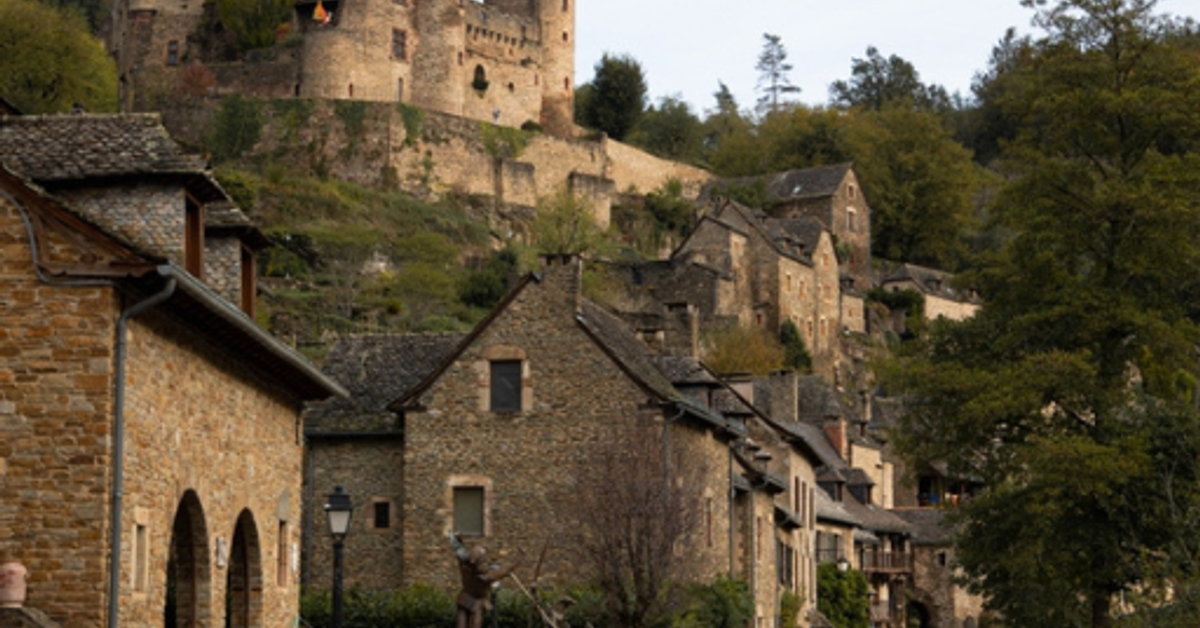
The south-west of France carries one of Europe’s deepest layers of history. For centuries, the people who farmed the limestone plateaux, fished the Atlantic coast, and built cathedral cities along the Garonne spoke not French, but Occitan — the language of the troubadours, of courtly love, and of a culture that shaped medieval Europe. The French surnames of Gascony and Occitanie bear the marks of that world. They carry Latin roots, Occitan dialects, Frankish warrior names, and the sounds of the Pyrenees. If your family name sounds like it belongs to the south of France, this is where your story begins.
What’s your name in French? 🇫🇷
Your French Name — type any first name for the French equivalent, with meaning and regional notes.
A Region Unlike Any Other in France
Gascony and Occitanie are not a single place. They are two overlapping ideas. Gascony (Gascogne) was a medieval duchy covering the far south-west — the Gers, the Landes, and the foothills of the Pyrenees. Occitanie is both an ancient cultural territory and the name of the modern administrative region that covers 13 departments from the Pyrenees to the southern Massif Central.
What unites them is language. Both were part of the world where people said “oc” for yes, not “oïl” as in northern France. That distinction gave the entire southern region its name: the land of the langue d’oc. It also gave Occitanie its capital: Toulouse, the pink city on the Garonne, whose rose-brick buildings glow at sunset like no other city in France.
The surnames that emerged from this region reflect its layered past. Roman colonisation left Latin roots. Frankish and Visigothic invasions brought Germanic warrior names. The medieval troubadour courts added romance. And the Occitan dialect shaped everything, turning Latin names into distinctly southern French forms unlike anything you find north of the Loire.
The Language Behind the Names: Occitan
Understanding Occitan is the key to understanding the surnames of the south. Occitan was the dominant language of the region from the early Middle Ages until the 17th century. Even after French became the official language, Occitan dialects survived in everyday speech until the 20th century.
Gascon, the dialect of Gascony, is one of the most distinctive. It changed the Latin “v” to “b” — so “vita” (life) became “bita” in Gascon, which is why the surname Vidal has a slightly different feel in Gascon records. Gascon also dropped final consonants that other dialects kept, creating shorter, punchier surname forms.
Words that became surnames in the north took completely different forms in Occitanie. “Miller” became molinier in Occitan rather than meunier in French. “Blacksmith” became fabre rather than lefebvre. “Farmstead” became mas rather than ferme. These distinctions let genealogists identify regional origins just by reading a surname — no other context needed.
If you want to trace your own connection to this part of France, start with our guide to tracing your French ancestry step by step.
French Surnames of Gascony and Occitanie: Twenty Names and Their Origins
These are twenty surnames with strong roots in Gascony and Occitanie. You will find them today across southern France, Quebec, Louisiana, and wherever Gascon and Occitan emigrants settled.
1. Durand / Durant
One of the most common surnames in southern France. It comes from the Latin durans — enduring, the hard one. Medieval parents gave this name to strong children. The south of France produced more Durands per capita than almost any other region.
2. Vidal
From the Latin vitalis — lively, full of life. A quintessentially southern name, far more common in Occitanie and Gascony than in northern France. The Gascon form was Bidal, reflecting the regional b/v shift.
3. Fabre / Fabres
The southern French word for a blacksmith or craftsman, from Latin faber. Where northern France produced the surname Lefebvre, the south produced Fabre. Common in Aveyron, Hérault, and the Lot, it spread across French Canada and Louisiana with emigrant craftsmen.
4. Roux
From Occitan and Old French ros or roux — red-haired. A descriptive surname for a man with notably red or auburn hair. The Gascon variant was Ros, and you find both forms in records from the Gers and Lot-et-Garonne departments.
5. Blanc
From Occitan blanc — white, fair. Referred to fair complexion, light hair, or sometimes white clothing. It exists across France, but the Occitan form is older and more rooted in the south.
6. Brun
The opposite of Blanc. From Old French and Occitan brun — brown, dark. A descriptive surname for someone with dark hair or a swarthy complexion. Widespread throughout Occitanie.
7. Guiraud / Giraud
From the Germanic ger-wald — spear and rule. The Frankish ruling class brought this name south after the 8th century. It became Guiraud in Occitan-speaking areas, while northern France turned it into Gérard. Very common throughout the Hérault and Aude.
8. Raynaud / Reynaud
From the Germanic regin-ald — counsel and rule. The southern French form of Renaud or Reynald. It appears frequently in medieval Toulousain records and in French-Canadian archives among southern French emigrants.
9. Seguin / Séguín
From the Germanic sieg-win — victory and friend. A Gascon name carried to Louisiana and Quebec by early settlers. Some historians link the Seguin surname directly to Gascon military families who joined early French colonial expeditions.
10. Delmas
From Occitan del mas — of the farmstead. The word mas describes the distinctive stone farmhouses of the south, a word that has no equivalent in northern French. People took the name because they lived at or came from a particular mas. Very common in the Aveyron and Lot.
11. Molinier / Moulinier
The Occitan word for a miller — one who worked a watermill or windmill. While northern France produced Meunier, the south produced Molinier. An occupational surname marking a family tied to a specific mill, often in the same village for generations.
12. Puech
From Occitan puech or pueg — a hilltop or rounded peak. A topographic surname for a family living near or on a distinctive hill. Unique to the south of France and impossible to mistake for anything other than Occitan origin. Common in Aveyron and Gard.
13. Causse
From Occitan causse — a limestone plateau. The Causses are the great limestone tablelands of the Massif Central, covering Aveyron, Lot, and Hérault. A family named Causse came from this specific, striking landscape. No other region of France produced this surname.
14. Lacaze / Lacazes
From Occitan la casa — the house. A topographic or residential surname for someone associated with a notable house in their village. A clear Occitan form — northern French would say Lamaison instead.
🇫🇷 Enjoying this? 7,000 France lovers get stories like this every week.
Thinking about it for retirement? If you’ve started thinking seriously about retiring there, our complete our full Retire in France guide covers the visa, healthcare, cost-of-living, and the regions worth shortlisting.
15. Combes / Combe
From Occitan comba — a small valley or hollow in the hills. One of the most common topographic surnames in Occitanie. Villages throughout the Aveyron, Lot, and Tarn-et-Garonne still carry the name Combes, and families took the name from them.
16. Espinasse / Espinas
From Occitan espinas — a thornbush or thorny hedgerow. A topographic name for someone whose land or home bordered a thorny thicket. Common in the Tarn and Aveyron, it marks families tied to the distinctive bocage landscape of upland Occitanie.
17. Gasc / Gasquet
From Gasc — the Gascon. A surname that meant simply “the person from Gascony”, applied to Gascon migrants who moved to other parts of France in the medieval period. Similar to how “French” became an English surname. Gasquet is a diminutive form, common in the Gers and Lot-et-Garonne.
18. Angles / Anglès
From Latin Anglicus or from the town of Anglès in the Tarn. Some families took this name from actual English or Anglo-Norman ancestors who settled in the south. Others simply lived near or came from the village. The accent in Anglès marks clear Occitan origin.
19. Barbe
From Occitan barbe — beard. A descriptive nickname for a man with a notably full beard, which became hereditary. Also occasionally linked to the cult of Saint Barbe (Saint Barbara), patron of artillerymen, popular in southern France.
20. Capelle / Chapelle
From Occitan capella — a chapel. A topographic surname for a family who lived near or worked at a village chapel. The Occitan form Capelle is distinct from the northern French Chapelle. Common across Languedoc and Quercy.
From Gascony to the New World
Gascon and Occitan emigrants left a clear trail across the Atlantic. When France began colonising North America in the early 17th century, soldiers, settlers, and traders from the south-west joined the expeditions.
Quebec’s founding population included a significant Gascon contingent. Families named Durand, Vidal, Fabre, and Seguin appear in the earliest Quebec parish records. They built farms along the St Lawrence and carried their Gascon surnames into a new country.
Louisiana received Gascon settlers through two routes. The first was direct French colonial immigration in the late 17th and early 18th centuries. Antoine Laumet de la Mothe, sieur de Cadillac, the founder of Detroit, was born in Gascony — the city of Cadillac in the Gironde gave its name to his title, and later to the American car. The second route was the arrival of Acadians expelled from Nova Scotia in 1755. Many Acadian communities had Gascon founders, so Gascon surnames appear in both the Cajun and the older Creole populations.
The Caribbean colonies — Martinique, Guadeloupe, Saint-Domingue — also drew heavily from the south-west. Sugar planters, sailors, and administrators from Toulouse and the Gers department appear in Caribbean colonial records through the 18th century.
In Argentina and Uruguay, Basque-Gascon immigration in the 19th century brought thousands of families from the Pyrenean borderlands. The surnames Vidal, Blanc, and Durand appear in Argentine telephone directories today in remarkable numbers.
Famous Names from the Gascon and Occitan World
Gascony produced some of history’s most remarkable figures. The real D’Artagnan — Charles de Batz-Castelmore d’Artagnan — was born around 1611 in Lupiac, in the Gers department, the heart of historical Gascony. Alexandre Dumas turned him into a fictional hero. But the real man served three French kings, rose from a poor Gascon family to become a marshal of France, and died at the Siege of Maastricht in 1673. His authentic surname, de Batz, is a Gascon place name.
Henry IV of France, who ended the Wars of Religion with the Edict of Nantes in 1598, was born in Pau — the capital of Béarn, on the border of Gascony. He remains one of the most popular kings in French history, known for his common touch and his Gascon directness. His mother was Jeanne d’Albret, Queen of Navarre, whose family held Gascon lands for generations.
The Languedoc produced its own tradition of remarkable figures: Simon de Montfort, who crusaded against the Cathars; the troubadours who invented the language of European love poetry; and later, the scholars of Montpellier, whose medical university was among the oldest in the world.
Carcassonne, the great walled city of the Aude, stands as the most visible monument to the medieval civilisation of Occitanie. Its double walls and 52 towers have survived nearly a thousand years.
Finding Your Gascon and Occitan Roots
If your family carries any of the surnames in this article, the south-west of France is where your research should focus. The departmental archives of this region are among the best in France for genealogical research.
The key archives are the Archives départementales — one per department, housed in the departmental capital. For Gascony-area research, start with the Archives du Gers in Auch, the Archives de la Haute-Garonne in Toulouse, and the Archives du Lot-et-Garonne in Agen.
For Occitanie more broadly, the Archives de l’Aveyron in Rodez hold remarkable medieval records. The Archives de l’Hérault in Montpellier cover one of the most historically rich departments in the south.
French civil registration began in 1792 under the Revolution. Parish records (registres paroissiaux) go back further — in some Occitan communes, to the 15th and 16th centuries. Many of these records are now digitised and freely accessible online through the archives websites. Searching état civil records by surname and commune is the standard starting point.
For a complete guide to the research process, read our full article on how to trace your French ancestry — it covers the full journey from first search to ancestral village visit.
You can also compare the southern naming patterns with other regions. See our guides to French surnames of Normandy and French surnames of Provence for the contrast between Norman Viking influences, northern feudal patterns, and the Mediterranean-Occitan south.
The Gascon Character: What the Surnames Tell Us
Read the surnames of Gascony and Occitanie together, and they paint a picture. You see the landscape: Causse (limestone plateau), Puech (hilltop), Combes (valley), Delmas (farmstead). You see the trades: Fabre (smith), Molinier (miller), Capelle (chapel keeper). You see the people: Roux (red hair), Brun (dark), Vidal (full of life), Blanc (fair).
These names came from a world of small communities, strong local identities, and a language that preserved Roman and Celtic roots long after the north had moved on. When Gascon emigrants carried their surnames to Quebec, Louisiana, or Buenos Aires, they carried a piece of that world with them.
If your surname appears in this list — or if you know it comes from somewhere in the south-west — you carry that heritage. The villages, the archives, the churches, and the limestone landscapes are still there, waiting.
Frequently Asked Questions
What is the difference between Gascony and Occitanie?
Gascony (Gascogne) was a medieval duchy in the far south-west of France, roughly covering modern-day Gers, Landes, and parts of the Pyrénées. Occitanie is both a wider cultural territory (all areas where Occitan was spoken) and the name of the modern administrative region created in 2016, which covers 13 departments from the Pyrenees to the Massif Central. Gascony falls largely within the boundaries of Occitanie today, but Occitanie also includes Languedoc, Quercy, Rouergue, and Roussillon.
Are Occitan surnames common in Quebec and Louisiana?
Yes, significantly so. Early French colonists in New France and Louisiana included many settlers from the south-west of France. Surnames like Durand, Vidal, Fabre, Seguin, and Blanc appear regularly in Quebec and Louisiana French-Canadian genealogical records. Gascon soldiers and traders were among the earliest French settlers in North America.
How do I find genealogical records for Gascony and Occitanie?
Start with the Archives départementales for the relevant department — each has its own website with digitised records. Key archives include those in Auch (Gers), Toulouse (Haute-Garonne), Rodez (Aveyron), and Montpellier (Hérault). Civil registration records run from 1792. Parish records (registres paroissiaux) often go back to the 15th or 16th century. FamilySearch also holds large collections of French southern records free of charge.
What is the Occitan language, and how did it shape surnames?
Occitan (also called langue d’oc) was the dominant language of southern France from the early Middle Ages until French replaced it officially in the 17th century. It evolved from spoken Latin differently from northern French, preserving different sounds and words. Occitan shaped surnames by producing its own words for occupations (fabre for smith, molinier for miller), landscape features (mas for farmstead, puech for hilltop), and personal characteristics — all different from the northern French equivalents.
Is D’Artagnan a real Gascon surname?
The real D’Artagnan’s full name was Charles de Batz-Castelmore d’Artagnan. He was born around 1611 in Lupiac, in the Gers department — the heart of historical Gascony. “D’Artagnan” was derived from a village called Artagnan in Hautes-Pyrénées. His primary family name was de Batz, a Gascon noble surname. He served as a captain-lieutenant of the Musketeers of the Guard and died at the Siege of Maastricht in 1673.
You Might Also Enjoy
- Why Toulouse Has Never Quite Forgiven Paris for What It Did — the story of the Occitan capital and its complicated relationship with the north
- The Medieval City France Tried to Demolish — and How One Man Stopped It — the remarkable story of Carcassonne’s survival
- Why the Basque Corner of France Feels Like Nowhere Else on Earth — the south-western borderland where Gascon France meets an ancient culture
Plan Your France Trip
Ready to visit the land of your ancestors? Our complete France travel planning guide covers everything you need to know — from the best time to visit each region to how to find a local guide for ancestral village research.
Join 7,000+ France Lovers
Three times a week, get France’s hidden gems, seasonal guides, local stories, and the art of la vie française — straight to your inbox.
Subscribe free — enter your email:
🇫🇷 Tracing Your French Ancestry?
Get our free step-by-step guide to French genealogy research — from departmental archives to parish records. Plus join 7,000+ France lovers for weekly stories.
Get the Free Ancestry Guide →Love more? Join 65,000 Ireland lovers → · Join 43,000 Scotland lovers → · Join 30,000 Italy lovers →
Free forever · Unsubscribe anytime
🇫🇷 You Might Also Love
Tours & experiences you might love


Powered by Viator. Some links are affiliate links — we may earn a small commission at no extra cost to you.

Leave a Reply