
🇫🇷 Enjoying this? 7,000 France lovers get stories like this every week. Subscribe free →
## Leonardo da Vinci’s Final Years In 1516, Francis I made one of the most remarkable decisions in French history. He invited Leonardo da Vinci to move to France. Leonardo was 64 years old. He was Italy’s greatest artist and thinker. Francis I set him up in a small manor house called the Château du Clos Lucé, just a few hundred metres from the Château d’Amboise. A tunnel connected the two buildings. The king visited Leonardo almost every day. Leonardo lived at Clos Lucé for three years. He brought with him several paintings, including the Mona Lisa and the Virgin of the Rocks. He died in 1519. His studio at Clos Lucé is now a museum, and his workshop models — machines he imagined centuries before their time — are on display. The French Renaissance owes much to this one decision. Francis I’s passion for Italian art changed France forever. ## When the Court Left — and What Remained By the mid-1600s, the court had moved. Paris was the capital again. Louis XIV built Versailles and made Paris the unquestioned heart of France. The Loire châteaux fell quiet. They were used as country retreats, military stores, and eventually tourist attractions. Many fell into disrepair. Several were restored in the 19th century by the architect Eugène Viollet-le-Duc, who also restored Notre-Dame de Paris and Carcassonne. Today, the Loire Valley is a UNESCO World Heritage Site. It was listed in 2000 for its châteaux, historic towns, and managed vineyards. The Loire River itself is one of the last wild rivers in Western Europe — no dams, no major engineering works, just 1,000 kilometres of free-flowing water. ## Planning Your Visit to the Loire Valley Châteaux The Loire Valley is 300 kilometres from end to end. Most visitors focus on a 60-kilometre stretch between Blois and Saumur. This section has the highest concentration of major châteaux. The best bases are **Amboise**, **Blois**, and **Tours**. All three have good train connections to Paris. From Tours, you can reach Chenonceau in 30 minutes by car or a 30-minute shuttle bus. Avoid July and August if possible. The châteaux are very busy in peak summer. April, May, September, and October offer pleasant weather and smaller crowds. Many visitors combine châteaux visits with heritage research in local archives. The Loire Valley was densely settled from the early medieval period. If your family name appears in our Loire Valley surnames guide, there may be church records and civil registers going back centuries. Local archives in Blois, Tours, and Orléans are well-organised and open to visitors. If you want to trace French ancestry from this region, the complete French ancestry guide explains how to access French archives and what you can expect to find. The Loire Valley is not just a place to visit. It is a place to feel France — its ambition, its beauty, and its long royal story — all at once. —Frequently Asked Questions
What is the most famous château in the Loire Valley?
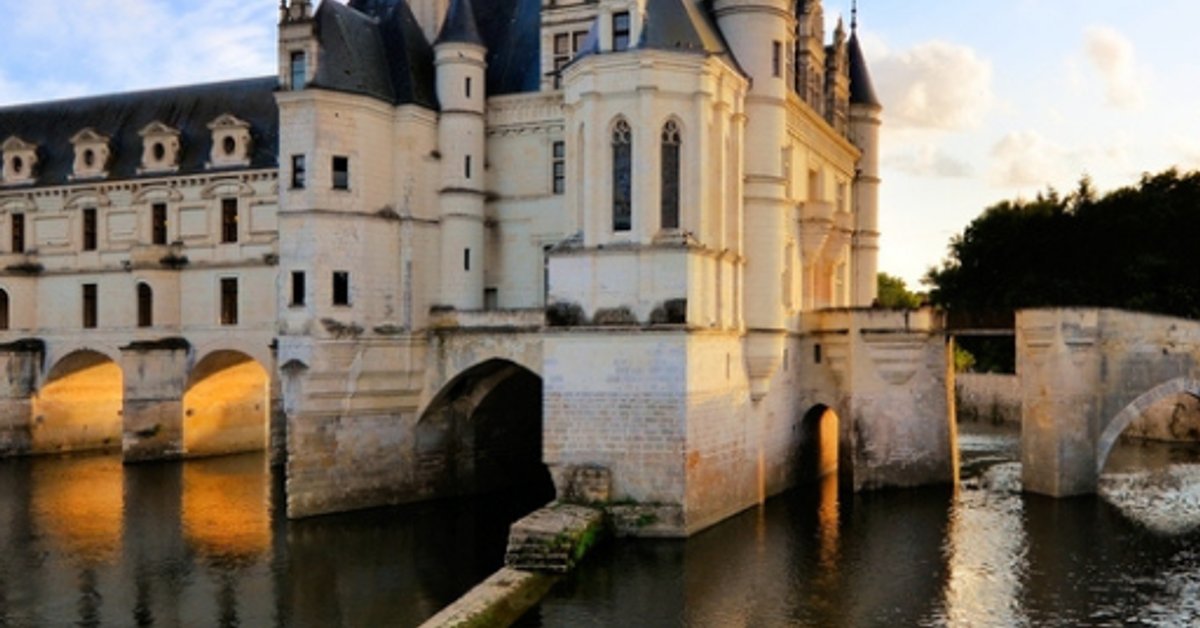
Château de Chambord is the largest and most recognisable Loire Valley château. Built from 1519 by Francis I, it has 426 rooms and a famous double-helix staircase. Château de Chenonceau, which spans the River Cher, is the most visited.
Why did French kings build châteaux in the Loire Valley?
After the Hundred Years’ War ended in 1453, the Loire Valley was the safest and most loyal region of France. The kings built their palaces there for over 200 years, from Charles VII in the 1420s until Louis XIV moved the court to Versailles in the 1680s.
Did Leonardo da Vinci live in the Loire Valley?
Yes. Leonardo da Vinci moved to the Loire Valley in 1516 at the invitation of King Francis I. He lived at the Château du Clos Lucé in Amboise until his death in 1519. The Mona Lisa came with him to France and never returned to Italy.
Is the Loire Valley easy to visit from Paris?
Yes. Tours, the main gateway city, is 55 minutes from Paris by high-speed TGV train. Amboise and Blois are also easily reached by train. Most visitors base themselves in one of these three towns and take day trips to the surrounding châteaux.
What is the best time of year to visit the Loire Valley châteaux?
April, May, September, and October are the best months. The weather is pleasant, the tourist crowds are smaller, and many châteaux offer special events including the famous Chambord son et lumière shows. July and August are beautiful but very busy.
—You Might Also Enjoy
- The French Renaissance: How Italy Transformed France — the movement that gave us the Loire châteaux
- French Surnames of the Loire Valley — if your ancestors came from this region
- Joan of Arc: Why France’s National Hero Still Matters — her story is rooted in the Loire Valley
Plan Your France Trip
Ready to visit the Loire Valley? Our complete France planning guide covers everything from getting there to the best routes through the châteaux country.
Join 7,000+ France Lovers
Every week, get France’s hidden gems, seasonal guides, local stories, and the art of la vie française — straight to your inbox.
Subscribe free — enter your email:
Love more? Join 64,000 Ireland lovers → · Join 43,000 Scotland lovers → · Join 30,000 Italy lovers →
Free forever · One email per week · Unsubscribe anytime
Tours & experiences you might love


Powered by Viator. Some links are affiliate links — we may earn a small commission at no extra cost to you.

Leave a Reply