
Fontevraud Abbey is a vast medieval monastery in the Loire Valley. It holds the tombs of Henry II and Eleanor of Aquitaine. It also shelters the effigy of their son, Richard the Lionheart. No other place in France ties the Plantagenet kings so closely to French soil.
Many visitors come for the kings and queens. They stay for the cloisters, the strange kitchen and the long story of the place. This guide explains what you will see at Fontevraud and why it matters. It also shows how to fit a visit into a Loire Valley trip.
A Monastery Where an Abbess Ruled
A wandering preacher named Robert d’Arbrissel founded Fontevraud in 1101. His idea was bold for the time. He gathered men and women in one community. Both groups lived under the rule of an abbess.
The model spread fast. By Robert’s death in 1116, nearly thirty priories followed the Fontevraud way. The mother house grew into one of the largest abbeys in Europe.
Robert wanted a humble grave outside the church. The abbess chose to bury him in the choir instead. His tomb is still inside the abbey church.
Daily life followed a strict rhythm. Prayer marked the hours. Work filled the gaps. Men and women lived in separate houses on the site. One abbess ruled them all.
The cloisters are the heart of that old routine. Arched walkways frame a square of garden. Stand in the middle and you can imagine the slow steps of hundreds of residents. The space feels calm even on a busy day.
The Plantagenet Tombs
Fontevraud became the burial place of the Plantagenet family. Henry II died in 1189 and lies here. His son Richard died in 1199 from a wound at Châlus. Richard also rests at Fontevraud, though his heart went to Rouen.
Eleanor of Aquitaine retired to the abbey in 1200. She made sure her husband and son lay in the abbey church. She died there in 1204. Her life fills an article of its own. Start with our guide to Eleanor of Aquitaine first.
The four stone effigies date from the early 13th century. They still show traces of their original colour. A fourth figure is Isabella of Angoulême, who married King John.
Look closely at Eleanor’s effigy. She holds an open book. It fits a woman who backed poets, singers and scholars all her life. You can trace that world in our story of the troubadours.
The scene feels quiet and close. The tombs sit in a tall, pale church. Light falls from high windows onto the stone. Many visitors lower their voices without being asked.
Anjou: The Plantagenet Homeland
The Plantagenets were not simply English kings. They came from Anjou, a region of the Loire Valley. Henry II ruled England, Normandy, Anjou and Aquitaine. His lands stretched from the Scottish border to the Pyrenees.
Tradition says the family name came from the broom plant. The French word for it is genêt. Count Geoffrey of Anjou, Henry’s father, wore a sprig in his cap. Historians still debate the story, but it sticks.
For English-speaking visitors, this changes the picture. English royal history began in part on French soil. Many people with British or Irish roots feel a pull here. You stand where that shared past turns into stone.
The Kitchen With the Strange Roof
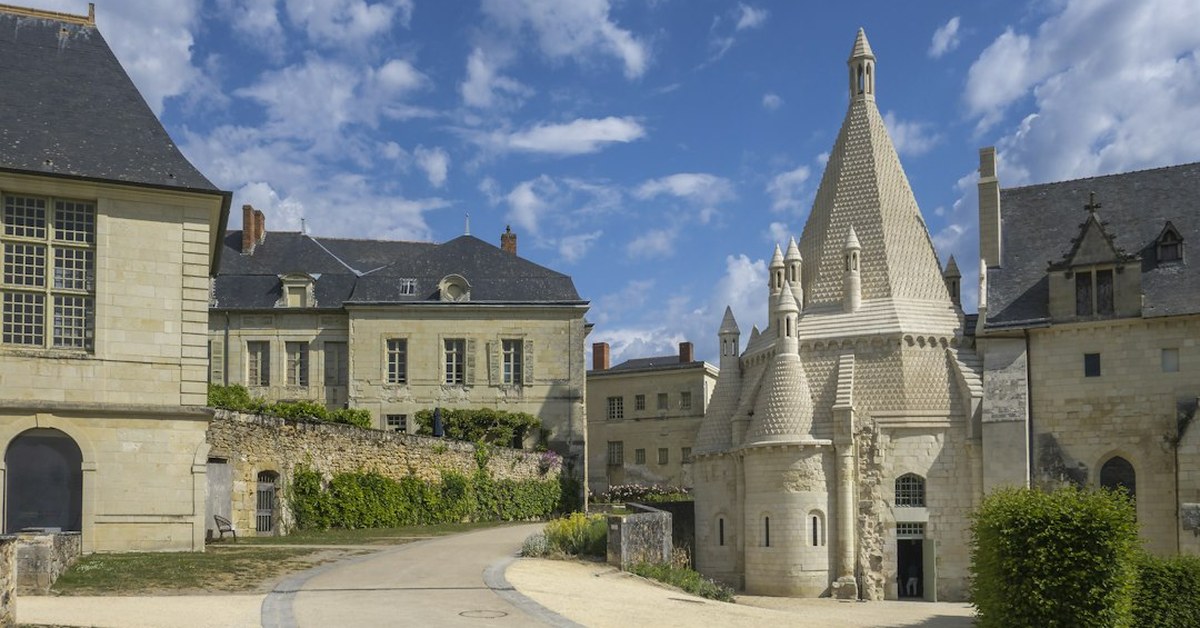
Outside the church stands the oddest building on the site. It is the medieval kitchen. A tall cone rises from the middle. Smaller towers circle its base. The towers are chimneys.
Cooks fed a huge community here. Monks, nuns and guests all needed meals. Smoke from many fires had to escape. So builders gave the kitchen its crown of chimneys. The result looks more like a fairy-tale tower than a place to cook soup.
Take time to walk around it. The stone roof has a scaled pattern. It catches the afternoon sun beautifully. Photographers love it.
🇫🇷 Enjoying this? 7,000 France lovers get stories like this every week. Subscribe free →
From Monastery to Prison
The abbey closed in 1792. Soon afterwards it became a prison. It stayed one until 1963. That is a long time for a holy place to hold prisoners.
This history explains why the site feels so different from a castle. Its walls took on many roles. Each one left marks on the stone. Today the abbey is a cultural centre. Its official site lists a modern art museum, a hotel and a restaurant (checked October 2026).
The official site also lists the abbey as a UNESCO World Heritage site. It sits within the wider Loire Valley, famous for its châteaux.
How to Visit Fontevraud
The abbey stands in the village of Fontevraud-l’Abbaye. It lies a short drive from Saumur. A car makes the trip simple. Public transport to the village is limited.
Check opening times and ticket prices on the official Fontevraud website before you go. Hours change with the season.
Allow at least half a day. Slow down inside the church. Look up at the high vaults, then down at the worn floor. Start with the abbey church and the tombs. Then walk the cloisters and visit the kitchen. Leave time for a slow lunch in the village.
Bring a light jacket, even in summer. Thick stone keeps the church cool. Wear flat shoes too, because the floors are uneven in places. A good guidebook helps you read the tombs and carvings.
Fontevraud fits well into a longer Loire trip. Pair it with our Loire Valley road trip guide. Pick a base from our list of the best places to stay in the Loire Valley.
If medieval churches fascinate you, read about the Gothic cathedrals of France too. The style looks very different from the plain Romanesque lines at Fontevraud.
Frequently Asked Questions
Who is buried at Fontevraud Abbey?
Henry II, Eleanor of Aquitaine and Richard the Lionheart have tombs in the abbey church. Isabella of Angoulême, wife of King John, has one too. The founder, Robert d’Arbrissel, also lies in the church.
Is Richard the Lionheart’s heart at Fontevraud?
No. His heart went to Rouen. His body lies at Fontevraud beside his parents.
Where is Fontevraud Abbey?
It stands in Fontevraud-l’Abbaye, in the Loire Valley. Saumur is the nearest large town. The drive from Saumur is short.
How long do you need to visit Fontevraud?
Plan on half a day. That gives you time for the church, the cloisters and the kitchen. Add time for the art museum or a meal in the village.
Why did the abbey have both monks and nuns?
Robert d’Arbrissel set up a shared community in 1101. Men and women lived in separate houses. An abbess led them all.
You Might Also Enjoy
- Eleanor of Aquitaine: The Duchess Who Became Queen Twice
- Saint-Savin Abbey: France’s Hidden Sistine Chapel of Romanesque Art
- Loire Valley Road Trip: The Complete Guide for US Visitors
Plan Your France Trip
Ready to plan a wider journey? Start with our planning hub for your trip to France. It covers seasons, regions and first-time tips.
Join 7,000+ France Lovers
Every week, get France’s hidden gems, seasonal guides, local stories, and the art of la vie française — straight to your inbox.
Subscribe free — enter your email:
Free forever · One email per week · Unsubscribe anytime
