
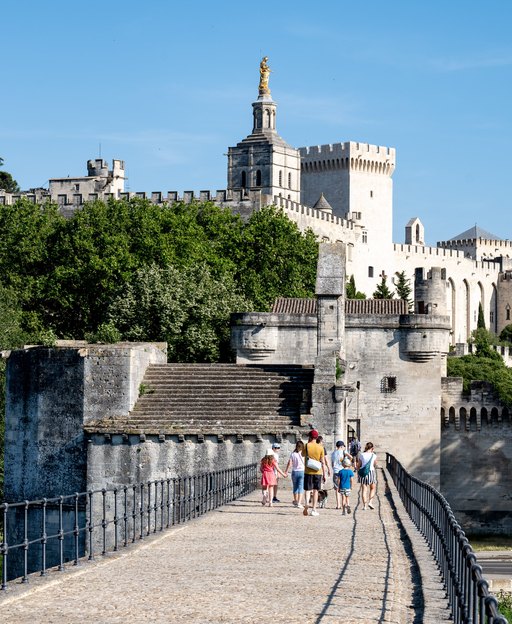
This Avignon travel guide shows you how to see the city of the popes in a weekend, and where to go when you want more. Avignon sits on the Rhône in the south of France, about 2 hours 40 minutes from Paris by TGV, according to the city tourist office. It is a walled city with a vast Gothic palace, a broken medieval bridge and a covered market hall. It also makes a good base for the rest of Provence.
Love France? Join our free newsletter → lovetovisitfrance.substack.com
Why Avignon Belongs on Your France Trip
For most of the fourteenth century, Avignon was the home of the popes. According to the Palais des Papes’ own history, Clement V came to Avignon in 1309, though he stayed only on and off and lodged in the Dominican convent. Seven popes lived in the city until Gregory XI went back to Rome in early 1377, and two rival popes ruled from Avignon during the Great Schism that followed. They built a palace that looks more like a fortress, and filled the town with churches and grand houses.
That history is still easy to see. The ramparts around the old town are 4.3 kilometers (2.7 miles) long. Work began in 1355 under Pope Innocent VI and finished in 1370 under Urban V, and the tourist office lists them as UNESCO World Heritage. The streets inside are narrow, shady and good for slow walking.
Many visitors rush through on the way to the lavender fields. Give Avignon two nights and you will see a walled city that is easy to enjoy on foot. If you are thinking of more than a visit, see our Avignon page in the Live in France series.
The Palais des Papes
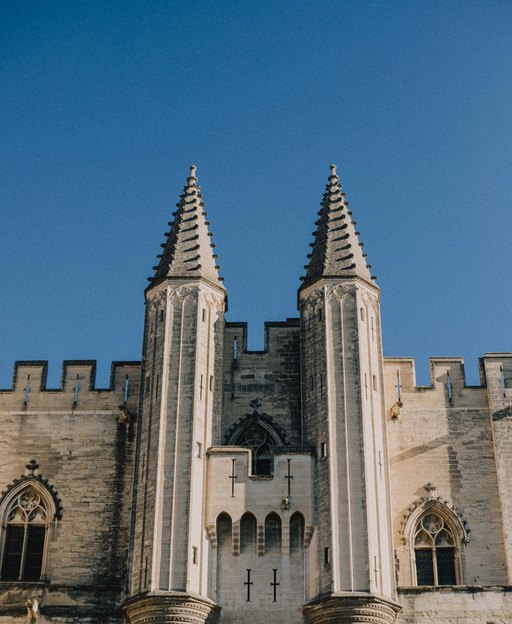
The Palais des Papes is the reason most people come. The palace’s official history calls it the largest Gothic palace, and says it is mostly the work of two popes, Benedict XII and Clement VI, who built it in nearly twenty years in the mid-fourteenth century. After the popes left it housed their legates, then became a barracks until it opened to the public in the early twentieth century.
What you will see inside
The palace says more than twenty rooms are open. You walk through the great audience halls, including the Grande Audience and the Consistory, and the Grand Tinel, where the papal feasts were held. The pope’s private rooms include the Chambre du Cerf, with secular, nature-themed frescoes that the palace calls unique for their time. The chapels of Saint-Martial and Saint-Jean hold frescoes by the Italian painter Matteo Giovannetti, painted in the 1340s. The official site says the Saint-Martial chapel is so fragile that it opens only by reservation, and the terraces give a view over the city and the Rhône.
Tips for visiting
Go early, when the crowds are thin, and book online through the official site, palais-des-papes.com, where you will also find prices and opening hours; they change, so we do not list them. Checked November 2026: the palace says a new visitor route opened on 1 May 2026 and that works continue until spring 2027, so some rooms may differ from older guidebooks. Wear good shoes, because the palace is an old monument with many stairs, and it is neither heated nor air-conditioned.
Pont Saint-Bénézet: The Bridge That Stops Mid-River
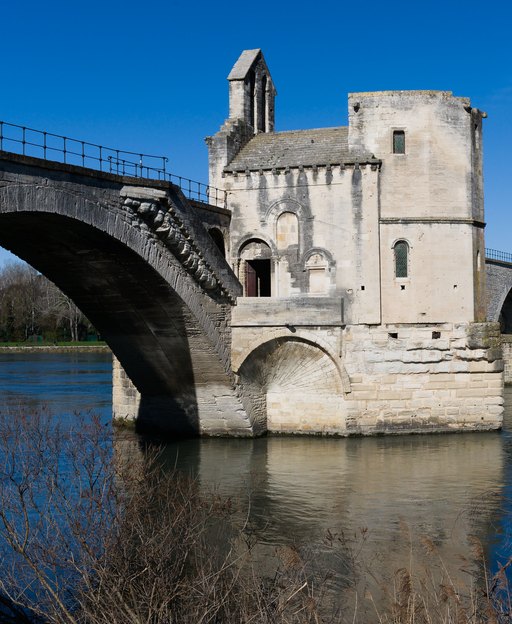
Everyone knows the song about the bridge of Avignon. The real bridge is the Pont Saint-Bénézet. It was built from the twelfth century onward, once linked the two banks of the Rhône, and keeps only 4 of its original 22 arches. The tourist office notes it has been a UNESCO World Heritage Site since 1995, and that the song is younger than most people think: it dates from the mid-nineteenth century, and its tune comes from Adolphe Adam, in a play first staged at the Opéra Comique in Paris on 2 February 1853.
You can walk out onto the bridge for a view of the city walls and the palace. The palace sells combined tickets for the palace, the bridge and the papal gardens. For a free view, take the entrance of the bridge up to the ramparts and the Rocher des Doms garden beside the cathedral of Notre-Dame des Doms. The tourist office says the cathedral overlooks the Rhône valley from the rock, and shows Barthelasse Island, the largest river island in Europe, in view from it.
Planning France in more detail? Get one trip idea a week in our free newsletter → Join free
Eating and Wandering in the Old Town
Avignon is a city for slow afternoons. You do not need a long list of sights. These three spots are all in the old town, close together and easy on foot.
Les Halles d’Avignon
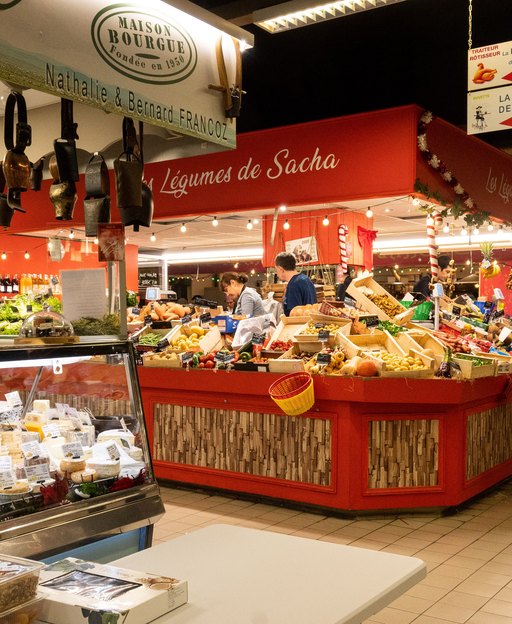
The covered market, Les Halles, on Place Pie, is the best place to eat in town. The tourist office says about 40 traders sell local produce there, and the market has a well-known flower wall. Buy lunch here and eat it in a nearby square. Opening days and hours change with the season, so check the tourist office listing before you go.
Rue des Teinturiers
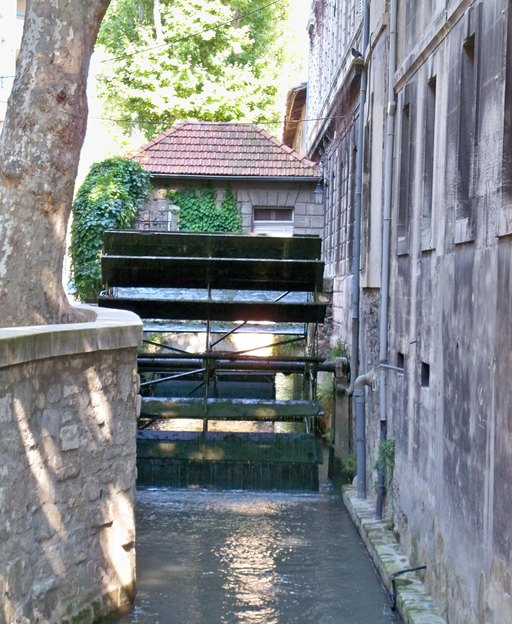
This street follows a small canal and is nicknamed the street of wheels. The tourist office says that in 1817 there were 23 water wheels here, powering the printed-fabric industry, and that four still turn along the river. The street has been a protected site since 1932. Today it is a street for strolling, and the tourist office says it is the busiest street in the city during the festival. See the tourist office page on the water wheels of Teinturiers.
Place de l’Horloge
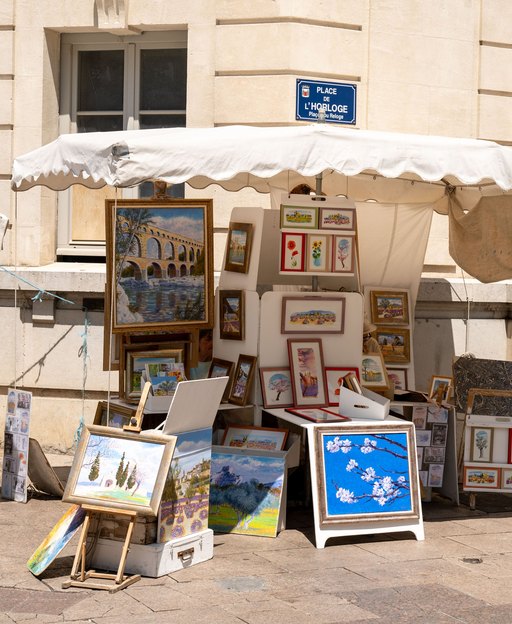
The clock square is the main square of the historic center, next to the City Hall and the Opera-Theatre. A wooden-horse carousel, the Carrousel Belle Epoque, stands on it, and the tourist office lists it as open every day in 2026. It is a good spot for a coffee while you watch the square.
Day Trips From Avignon
Avignon’s train station and roads make day trips easy, and each of these shows a different side of Provence. Pick one or two, so that you still have time for the city itself.
Châteauneuf-du-Pape
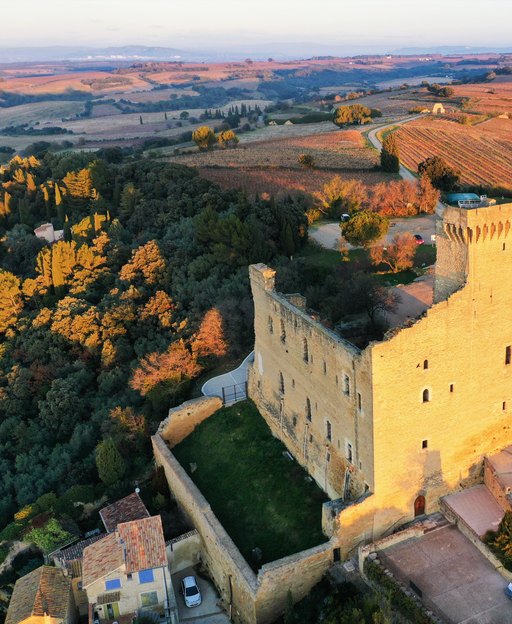
Pope John XXII ordered a castle built here between 1317 and 1333, and Vaucluse tourism says it served as a summer residence of the Avignon popes, with grounds that held vineyards and olive groves. The village now gives its name to one of the best-known Rhône Valley wines. The Avignon tourist office lists Châteauneuf-du-Pape among the vineyards just a few kilometers from the city, with estates that welcome visitors for tastings.
Pont du Gard
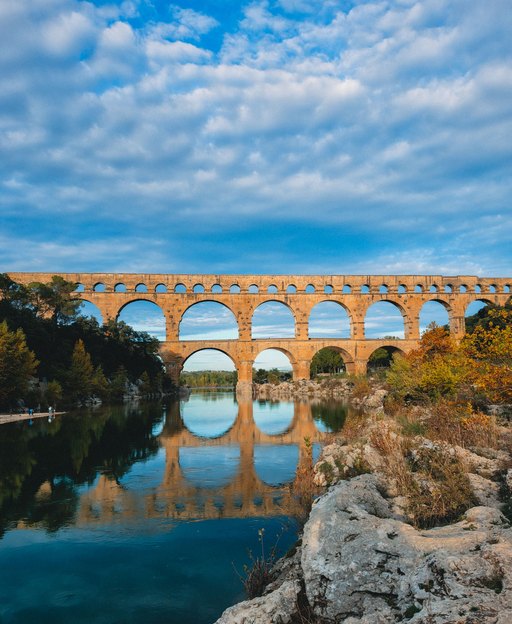
The Roman aqueduct stands about 21 kilometers from Avignon, according to the Pont du Gard site, which also lists bus line 115 from Avignon. Read how the Romans built it in our guide to the Pont du Gard, then go and walk beside it. Checked November 2026: the official site says the visitor areas (museum and cinema) are closed for the winter from 2 November 2026 to 28 February 2027, so check pontdugard.fr before you plan around them.
The Luberon villages
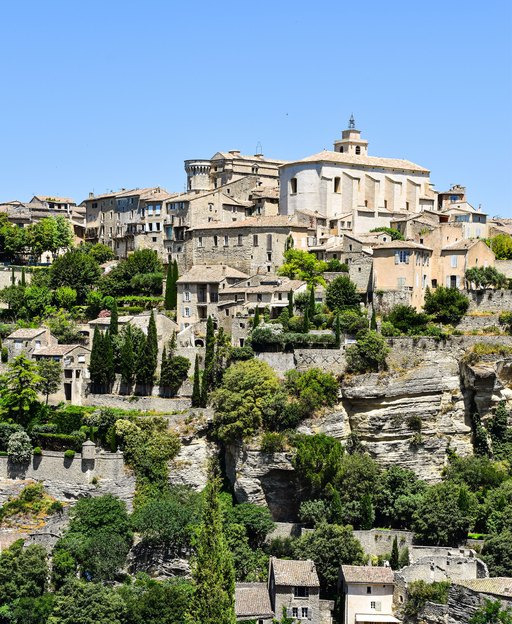
Hilltop villages such as Gordes and Roussillon lie east of Avignon in the Luberon, and a car helps. For a quiet stop, see Sénanque Abbey in the Luberon. For the wider region, start with our Provence travel guide.
When to Go and How to Get There
We like spring and early autumn for Avignon. July is the Festival d’Avignon: the Palais des Papes says its Cour d’Honneur becomes an open-air theater for the whole month of July, and that the festival began there in 1947 with Jean Vilar directing Shakespeare’s Richard II. Hotels fill up, so book ahead for July. Our best time to visit France guide covers the seasons in more detail.
The easiest way to arrive is by train. The tourist office says Avignon has two stations: Gare Centre, a 2-minute walk from the historic center and 15 minutes on foot from the palace, and Gare TGV, 6 km from the center, linked by a short TER train ride. Our guide to traveling France by train explains tickets and routes. Marseille is also close, and our Marseille travel guide shows you what to see there.
Where Should You Stay in Avignon?
Stay inside the walls if you can, so you can walk to the palace, the market and the restaurants. If you arrive by train, Gare Centre is a short walk from the historic center. The tourist office has a lodgings page with hotels and guesthouses to choose from. Book well ahead for July.
Frequently Asked Questions About Avignon
Readers often ask us the same few questions before they book. Here are short answers to help you plan.
How many days do you need in Avignon?
Two days cover the Palais des Papes, the bridge, the market and the old town. Add a third day for a trip to Châteauneuf-du-Pape or the Pont du Gard.
Is Avignon worth visiting?
Yes, because it combines a medieval papal palace, a walled old town and an easy base for Provence. It suits first-time visitors and return travelers alike.
What is the best way to get from Paris to Avignon?
The TGV is the simplest option, and the Avignon tourist office gives about 2 hours 40 minutes from Paris. Book early for the best fares.
Can you visit Avignon without a car?
Yes. The old town is small and easy to walk, and the Pont du Gard has a bus line from the city. A car helps only if you plan to visit the Luberon villages.
Sources
Checked November 2026 against these official pages:
- Palais des Papes: 9 popes in Avignon
- Palais des Papes: the largest Gothic palace
- Palais des Papes: the frescoes
- Palais des Papes: the visit route
- Avignon Tourisme: Pont d’Avignon (Saint-Bénezet)
- Avignon Tourisme: getting to and around Avignon
- Avignon Tourisme: ramparts
- Avignon Tourisme: water wheels of Teinturiers
- Avignon Tourisme: Les Halles
- Avignon Tourisme: Carrousel Belle Epoque
- Vaucluse Provence tourism: the Popes’ Castle
- Pont du Gard: getting here
You Might Also Enjoy
Plan Your France Trip
Ready to build the rest of your journey? Our France trip planning hub brings our guides, itineraries and tips together in one place.
Join the France Lovers
Every week, get France’s hidden gems, local recipes, and travel inspiration — the kind you won’t find in any guidebook.
Subscribe free — enter your email:
Free forever · One email per week · Unsubscribe anytime
Tours & experiences you might love


Powered by Viator. Some links are affiliate links — we may earn a small commission at no extra cost to you.

Leave a Reply