
On 12 September 1940, four teenagers followed a dog into a hole on a Dordogne hillside. They found a cave full of painted animals. Those animals are about 17,000 years old. The Lascaux cave paintings still stop visitors in their tracks.
The Dog, the Hole and Four Boys
The story starts near the small town of Montignac. A dog named Robot vanished down a hole beneath a fallen tree. Marcel Ravidat, aged 18, came back a few days later to look for it.
He brought three friends. Jacques Marsal, Georges Agniel and Simon Coencas squeezed down the shaft with a small oil lamp. The light flickered across the walls. Bulls, horses and stags looked back at them.
The boys told their teacher. He called Abbé Henri Breuil, a leading expert on prehistoric art. Breuil came to see the cave for himself. News spread fast. Lascaux soon became one of the most famous finds in Europe.
What the Cave Walls Show
The cave holds hundreds of painted animals. It also holds more than a thousand engravings. Horses lead the count. Stags, ibex and aurochs follow. Aurochs were huge wild cattle that no longer exist.
The best-known space is the Hall of the Bulls. One bull there measures about five metres from nose to tail. The artists drew it on a curved ceiling. That is no easy task by lamplight.
The palette was simple. The artists ground red and yellow ochre into powder. They used black from charcoal and mineral pigments. They applied it with brushes, pads and by blowing powder onto the rock.
People appear only once or twice. One scene sits at the bottom of a deep shaft. It shows a man, a wounded bison and a bird on a stick. Experts still argue about what it means.
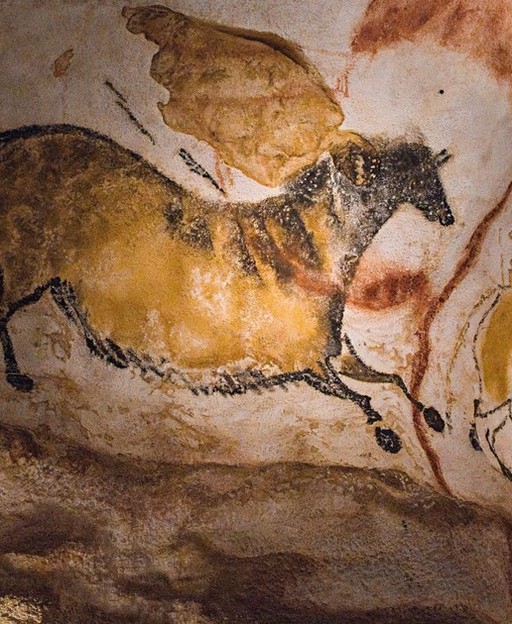
Look closely at the horses. Many have small heads and thick necks. Their coats range from yellow to deep brown. Some carry spots or dark manes. Experts think the artists painted wild horses, not tame ones. The details help scientists picture the animals of the Ice Age.
The cave also holds signs and dots that nobody has decoded. Some look like grids. Others look like lines of spots. They add to the mystery.
Why Did They Paint?
Nobody knows for sure. Several ideas have won support over the years.
- Hunting magic. Painting an animal may have brought luck on the hunt.
- Ritual. The deep chambers may have hosted ceremonies.
- Storytelling. The walls may have taught young people about the herds.
Whatever the reason, the skill is plain to see. The artists used the shape of the rock to give their animals depth. Some horses seem to gallop as the lamplight moves. These were not beginners.
How Visitors Almost Destroyed It
Lascaux opened to the public in 1948. Crowds came in their thousands. Their breath raised the carbon dioxide and the damp. Their lamps added heat and light.
Green algae soon began to spread across the walls. Experts feared the paintings would fade for good. In 1963, the French authorities closed the cave to visitors.
The cave has needed careful care ever since. Scientists monitor the air, the damp and the temperature. Only a few specialists enter, and only for short visits.
🇫🇷 Enjoying this? France lovers get stories like this every week. Subscribe free →
The Replicas That Saved the Story
France chose to copy the cave rather than lose it. Lascaux II opened in 1983 and recreated the two most famous halls. It sits close to the original hill.
Lascaux IV opened in December 2016. It copies the whole cave at full scale. Artists painted every figure by hand onto a concrete shell. The result is so precise that it shows even the cracks in the rock.
You can read about the cave and plan a visit on the official Lascaux site. Check it for opening times and tickets before you go.
Visiting Lascaux and the Vézère Valley
Montignac sits on the Vézère river in the heart of the Dordogne. The valley is rich in prehistoric sites. Our Dordogne travel guide shows how to build a trip around them.
Allow a full day for Lascaux and Montignac. Add a riverside walk and a long lunch. The Dordogne rewards slow travel. Walnut cake, duck and strong coffee all help.
If you have more time, head south. Rocamadour clings to a cliff about an hour away by car. For a wider view of the first peoples of France, read about the Gauls. They arrived many thousands of years after the Lascaux painters.
The Ice Age World Behind the Paintings
The painters lived in a far colder France. Wide open steppe covered much of the south-west. Herds of horses and bison crossed it. Reindeer roamed where vineyards grow today.
People in the Vézère valley hunted these animals with spears. They lived in rock shelters along the cliffs. They made tools from flint, bone and antler. They also made art, jewellery and music.
Seen this way, the paintings are a record of daily life. The animals on the wall are the animals the artists knew, hunted and feared.
Tips for Your Visit
- Book ahead. Check the official site for tickets before you travel.
- Go early. Mornings feel calmer in the replica cave.
- Wear layers. The cave is cool, even in summer.
- Slow down. Stand at each panel and let your eyes adjust.
- Bring children. The story of the four boys grips young visitors.
Where French Heritage Begins
Most family trees stop at a parish record or a ship list. Lascaux goes much further back. It shows people living on this land long before any surname existed.
For French-Canadians, Cajuns and Francophiles, that matters. Every French story starts somewhere. Here, the story starts with a horse painted on a wall.
Planning a first trip? Our France trip planning hub will help you choose where to go next.
Lascaux FAQ
Can you see the real Lascaux cave?
No. The original cave has been closed to the public since 1963. Visitors see a full-scale replica instead.
How old are the Lascaux paintings?
Experts date them to about 17,000 years ago. That puts them in the late Palaeolithic era.
Where is Lascaux?
Lascaux lies near Montignac in the Dordogne. This is in the Vézère valley of south-west France.
Who found the Lascaux cave?
Four teenagers found it on 12 September 1940. Marcel Ravidat, Jacques Marsal, Georges Agniel and Simon Coencas made the discovery.
Is Lascaux worth visiting?
Yes. The replica is a work of art in itself. It lets you stand where the painters stood.
You Might Also Enjoy
- The Gauls: France Before the Romans
- How the Romans Built the Pont du Gard
- Rocamadour: The Cliffside Village Worth the Climb
Plan Your France Trip
Start with our planning hub for routes, seasons and regions.
Join the France Lovers
Every week, get France’s hidden gems, seasonal guides, local stories, and the art of la vie française — straight to your inbox.
Subscribe free — enter your email:
Free forever · One email per week · Unsubscribe anytime
Tours & experiences you might love


Powered by Viator. Some links are affiliate links — we may earn a small commission at no extra cost to you.

Leave a Reply