
Arles is the best place in France to see how Rome built a provincial city. The Romans founded it in 46 BC. Today you can walk past an arena, a theatre, a cemetery and the remains of a bathhouse, all inside one small town.
UNESCO lists the town’s Roman and Romanesque monuments as a World Heritage Site. The listing dates from 1981. This guide explains what remains, why it matters and how to plan a visit.
Why Rome Chose This Spot on the Rhône
The Romans knew the town as Arelate. It sat where the Rhône river nears the sea. Boats could carry goods from the Mediterranean deep into Gaul.
Julius Caesar made Arelate a Roman colony in 46 BC. Veterans of his army settled here. They brought Roman law, Roman building skills and Roman tastes.
The city grew rich on trade. By the fourth century it was a major centre of the Roman west. The emperor Constantine spent time here. In 314 church leaders met in Arles for a famous council.
That long story explains why so much stone survives. Builders here did not tear everything down. They reused it, changed it and lived inside it. If you love Roman France, read our guide to how the Romans built the Pont du Gard as a companion piece.
The Arena That Became a Fortress and a Village
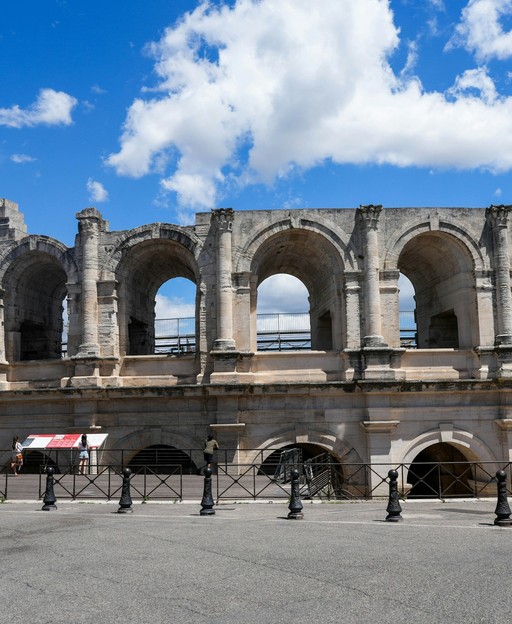
The Arles amphitheatre is the star of the town. Builders finished it around 90 AD. It has two tiers of arches and could seat about 20,000 people.
Romans came here to watch gladiator fights and animal hunts. The crowd entered through arched passages that still work today. Look at the curved galleries and you can see how the Romans moved large crowds.
After Rome fell, the arena found a new use. Townspeople turned it into a fortress. Later, families built houses and chapels inside the oval. The arena became a small walled village.
The medieval towers on top date from that fortress era. Look for them as you approach. In the nineteenth century, workers cleared the homes away and restored the arena. Bullfights and other events still take place inside.
Where the Romans Went for Plays and Music
A short walk away stands the Roman theatre. Builders raised it in the late first century BC. It once held thousands of spectators for plays and music.
Much of it is gone. Medieval builders took the stone for other projects. Two tall columns still rise above the stage area. They show how grand the building once looked.
The tiered seating survives in part. Visitors can sit where Romans once sat. Summer events use the space, so check the programme with the Arles tourist office before you travel.
Underground Galleries and a Roman Bathhouse
Not every Roman monument stands in the open air. Beneath the old town runs a set of vaulted underground galleries. Historians call them a cryptoporticus. They date from the first century BC.
The galleries held up the Roman forum above. They also gave shade and storage. The cool, dim passages feel very different from the sunny streets outside.
Near the river you will find the remains of the Baths of Constantine. They date from the fourth century. Roman bathhouses were social places, where people met, talked and did business. The surviving brick walls show how large the complex was.
🇫🇷 Enjoying this? 7,000 France lovers get stories like this every week. Subscribe free →
The Cemetery That Inspired Painters
Just outside the old walls lies the Alyscamps. It began as a Roman burial ground. It grew into one of the most famous cemeteries of the ancient world.
Early Christians also chose to be buried here. In the Middle Ages, pilgrims travelled far to visit the site. Rows of stone tombs line a shaded path of tall trees.
Vincent van Gogh arrived in Arles in 1888. He and Paul Gauguin both painted the Alyscamps that year. A walk along the path today lets you see what drew them.
From Roman Stone to Romanesque Church
The UNESCO listing covers more than Roman ruins. It also covers the church of Saint-Trophime and its cloister. Builders carved the church doorway in the twelfth century. It shows scenes of the Last Judgement in fine detail.
Medieval masons knew the town’s Roman past well. They saw Roman columns and carved stone every day. Some of that influence shows in the shape and style of their work.
This blend makes Arles special. You can stand in one square and see two thousand years of building. Roman walls, medieval towers and a Romanesque doorway all share the same skyline.
A One-Day Roman Trail
Start early at the arena, before the crowds arrive. Walk the upper gallery and look out over the rooftops. You will see the Rhône and the flat plain beyond.
Walk next to the Roman theatre. It sits only a few minutes away on foot. Then head to the underground galleries to escape the midday heat.
Take a long lunch in the old town. Then visit the church and cloister. End the day at the Alyscamps, when the light turns soft and golden. The shaded path is a calm way to finish.
If your family has roots in southern France, this trail gives you a feel for the land your ancestors knew. Many French families trace their stories back to towns like this one. Our guide to tracing your French ancestry can help you start your own search.
How to Plan Your Visit
The old town is small. You can walk between the main Roman sites in a day. Wear comfortable shoes, because the streets are cobbled and the arena has steep steps.
Spring and autumn suit most visitors. Summer brings heat and crowds. Always check opening hours and ticket details on the official tourist office site before you go. Details change.
Arles works well as a base for the wider region. Add a day in Avignon or a stop in Marseille. For the bigger picture, read our Provence travel guide.
Frequently Asked Questions
When did the Romans found Arles?
Julius Caesar made it a Roman colony in 46 BC. The Romans called it Arelate. It grew into a major trading city.
How many people could the Arles amphitheatre hold?
It could seat about 20,000 people. Builders finished it around 90 AD. Bullfights and other events still use it.
Is Arles a UNESCO World Heritage Site?
Yes. UNESCO listed its Roman and Romanesque monuments in 1981. The list covers the arena, the theatre and other sites.
How long do you need to see the Roman sites?
One full day covers the main sights. Two days give you time for the Alyscamps and a slow lunch. The old town is easy to walk.
What is the best time of year to visit?
Spring and autumn offer mild weather and fewer crowds. Summer is hot and busy. Check the tourist office for events.
You Might Also Enjoy
- How the Romans Built the Pont du Gard
- Carcassonne: The Double Walls Guide
- Avignon Travel Guide: Popes’ Palace and Bridge
Plan Your France Trip
Start with our France trip planning hub. It brings together our regional guides and practical tips.
Join 7,000+ France Lovers
Every week, get France’s hidden gems, seasonal guides, local stories, and the art of la vie française — straight to your inbox.
Subscribe free — enter your email:
Free forever · One email per week · Unsubscribe anytime
Tours & experiences you might love


Powered by Viator. Some links are affiliate links — we may earn a small commission at no extra cost to you.

Leave a Reply