
French Riviera Travel Guide: What to Know Before You Go
The French Riviera — or Côte d’Azur — stretches along the Mediterranean coast from Menton near the Italian border to Toulon in the west. It is one of the most visited stretches of coastline in Europe. Warm summers, great light, historic towns, and a food culture that draws visitors back year after year. This guide covers where to go, when to visit, and how to make the most of your time on the Riviera.
Love France? Join 7,000+ readers on our free newsletter → lovetovisitfrance.substack.com
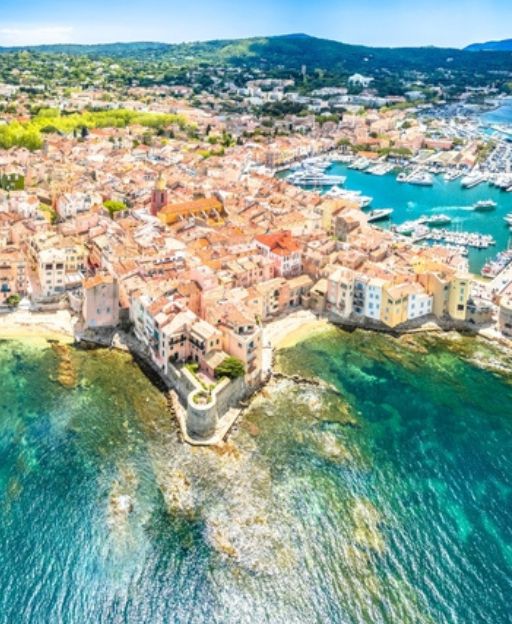
Where Is the French Riviera?
The Côte d’Azur runs through the Alpes-Maritimes and Var departments in south-east France. The main towns from east to west are Menton, Monaco (a separate principality), Nice, Antibes, Cannes, Saint-Tropez, and Hyères. Each has its own character, so it is worth deciding what you want from a visit before you book.
Nice is the largest city and the most practical base for most travellers. It has an international airport, excellent rail links, and a lively old town. From Nice you can reach Monaco in 30 minutes by train, and Cannes in 45 minutes. Saint-Tropez is further west and harder to reach without a car or ferry from Sainte-Maxime.
The Corniche Roads
One of the great drives in Europe runs along three parallel roads above the coast between Nice and Menton. The Grande Corniche climbs highest and gives the widest views. The Moyenne Corniche passes through Èze village, a medieval perched village with a cactus garden at the summit and sea views that stretch to the horizon. The Basse Corniche hugs the shore and passes through Villefranche-sur-Mer, one of the prettiest natural harbours on the coast.
If you have a car, do all three in one day and stop for lunch in Èze or Roquebrune-Cap-Martin. Even a half-day on the Corniche roads is one of the best things you can do on the Riviera.
🇫🇷 Free: The Perfect Provence & South of France Road Trip
A free 10-day itinerary covering Avignon, the Luberon villages (Gordes, Roussillon, Bonnieux), Marseille, Cassis, Aix-en-Provence, and the Camargue — with practical route notes most travel guides leave out.
Get the Free Itinerary →Best Time to Visit the French Riviera
May, June, and September are the sweet spots. The weather is warm, the sea is swimmable, and the crowds are a fraction of what they are in July and August. Prices for hotels and restaurants drop noticeably outside the peak summer months.
July and August are beautiful but crowded, particularly around Saint-Tropez and Cannes. Traffic on coastal roads can be heavy, and accommodation books up months in advance. If you visit in summer, book early and try to explore inland towns like Grasse, Vence, or Saint-Paul-de-Vence to escape the coast crowds.
Spring and Autumn
April and October are underrated. The mimosa blooms along the coast in February and March, turning hillsides yellow, and the spring wildflowers are stunning. October brings warm days, quieter beaches, and lower prices. The sea stays warm enough for swimming well into October most years.
Winter is mild by French standards — Nice rarely sees frost — and the markets, museums, and restaurants stay open. The Carnaval de Nice runs each February and is one of the most famous winter festivals in France.
Key Towns on the French Riviera
Nice
Nice deserves more than a stopover. The old town — Vieux-Nice — is a labyrinth of ochre buildings, baroque churches, and covered markets. The Cours Saleya flower and produce market runs every morning except Mondays, when it becomes an antiques market. The Promenade des Anglais runs along the seafront for 7 kilometres and is perfect for an early-morning walk.
The Musée Matisse and the Musée National Marc Chagall are both outstanding and rarely overcrowded. Nice was Italian until 1860, and the food reflects that: socca (a chickpea pancake), pissaladière (an onion tart with anchovies), and niçoise salad with real tuna, anchovies, and no lettuce.
Cannes
Cannes is famous for its film festival but it is also a proper working port with an excellent old town — Le Suquet — above the harbour. The Rue Meynadier market street sells local produce, cheese, and charcuterie at reasonable prices. The beaches on La Croisette are mostly private in summer, but public beaches are free and uncrowded at either end of the strip.
A ferry from Cannes harbour reaches the Îles de Lérins in 15 minutes. Sainte-Marguerite island is known for the Fort Royal, where the Man in the Iron Mask was supposedly held. Saint-Honorat island has a working monastery that has been producing wine since the Middle Ages.
Saint-Tropez
Saint-Tropez is small — the village itself has fewer than 5,000 permanent residents — but it draws enormous crowds in summer. The Vieux Port is beautiful in the early morning before the day-trippers arrive. The Place des Lices market on Tuesday and Saturday mornings is one of the best in Provence.
For beaches, Pampelonne is the most famous: a long stretch of sand about 4 kilometres from the village, divided into private beach clubs and public sections. Tahiti Beach is the most iconic of the clubs. The drive from Sainte-Maxime by ferry (30 minutes) or by car (longer in summer traffic) is worth it for at least one day.
Antibes and Juan-les-Pins
Antibes has one of the best-preserved old towns on the coast. Roman and Greek foundations underlie Vauban’s sea ramparts, and the Musée Picasso occupies the château where Picasso lived and worked in 1946. The covered Marché Provençal sells local produce every morning. Juan-les-Pins adjoins Antibes and has some of the finest sandy beaches on the Riviera, plus a famous jazz festival each July.
Getting Around the French Riviera
The train line from Ventimiglia (Italy) to Marseille stops at every main town on the coast. It is frequent, cheap, and often faster than driving in summer. Nice to Cannes takes 40 minutes by train and costs around €10. Nice to Monaco takes 30 minutes and costs around €4 — one of the best-value journeys in Europe.
For Saint-Tropez and the inland villages, a car is useful but not essential. Buses run from Nice bus station to many destinations including Grasse, Vence, and Saint-Paul-de-Vence. Ferries connect Cannes to the Lérins islands, Nice and Antibes to Cannes, and the Var coast between Hyères, Porquerolles, and Toulon.
Driving on the Riviera
In July and August, coastal roads can be slow, particularly the N98 near Saint-Tropez and the routes around Cannes. The motorway (A8) runs inland and is faster but has toll charges. If you are driving, leave early in the morning and avoid arriving at beaches after 10am in peak season.
Parking in town centres is limited and expensive. In Nice, the Parking Saleya and Parking Vieux-Nice are closest to the old town. In Cannes, parking near La Croisette is metered. In Saint-Tropez, park at the Port Grimaud or Sainte-Maxime lots and take the ferry across — it is far quicker than driving in summer.
Where to Eat on the French Riviera
The Riviera has its own cuisine, distinct from the rest of Provence. In Nice, try pissaladière, socca, and pan bagnat (a tuna and vegetable sandwich in a round roll soaked in olive oil). In the inland villages, daube (slow-cooked beef stew) and ratatouille made with local courgettes and aubergines are staples.
Fish is outstanding along the coast. Bouillabaisse is the great fish stew of Marseille, but simpler grilled sea bass, bream, and rouget (red mullet) are on menus across the Riviera. The Cours Saleya market in Nice is the place to buy local olives, cured meats, and cheese for a picnic.
Wine on the Riviera
The Côtes de Provence appellation covers much of the region. Rosé is the dominant wine — light, dry, and made primarily from grenache, cinsault, and syrah grapes. Bandol, a small appellation near Toulon, produces some of the finest rosé and red wines in France. Most supermarkets on the Riviera carry a good range of Provençal rosé at accessible prices.
Inland from the Coast
Some of the most rewarding places near the French Riviera are not on the coast at all. Grasse, 20 kilometres north of Cannes, is the perfume capital of France, with three major perfume houses open to visitors: Fragonard, Galimard, and Molinard. The town itself has a medieval centre and excellent views south towards the sea.
Saint-Paul-de-Vence is a fortified medieval village that became a gathering point for 20th-century artists. Matisse, Chagall, Picasso, Léger, and Miró all spent time here. The Fondation Maeght, just outside the village walls, is one of the finest modern art museums in France. The garden has Miró sculptures. The permanent collection includes Giacometti, Braque, and Calder.
Vence is quieter than Saint-Paul and has a Matisse chapel — the Chapelle du Rosaire — designed by the artist in his eighties. It is small, serene, and among the most moving spaces in the south of France. For more of Provence’s extraordinary landscapes, the Gorges du Verdon is an easy day trip inland from the Riviera.
Day Trips from the French Riviera
Monaco is the obvious day trip from Nice or Cannes. See the casino, the Oceanographic Museum (founded by Prince Albert I in 1910), and the old town on the Rock. A Formula 1 circuit weaves through the streets. It is expensive but worth a few hours. The palace guard changes at 11:55am daily.
Further afield, the hidden villages of Provence are accessible by car in under two hours from Nice. Gordes, Roussillon, and Les Baux-de-Provence are among the most photographed villages in France. The lavender fields of the Luberon plateau bloom in late June and early July — earlier most years now due to warmer springs.
Menton, on the Italian border, is quieter than Nice and known for its lemons. The old town climbs steeply above the port and the cemetery on the hillside has some of the finest views on the coast. For those exploring more of France beyond the Riviera, the Brittany travel guide covers an entirely different side of the country.
Practical Tips for Visiting the French Riviera
Book accommodation early if you are visiting in July or August. Hotels in Nice, Cannes, and Saint-Tropez fill months in advance for peak summer weeks. Renting an apartment for a week is often better value than a hotel if you are travelling as a family or a group.
The sun is strong from May onwards. Bring high-factor sun cream, a hat, and drink water regularly. The heat can be intense by mid-afternoon in July and August, and it is worth taking a long lunch break and visiting towns in the cooler morning and evening hours.
Tipping in France is not mandatory, but rounding up the bill or leaving a couple of euros is appreciated in cafés and restaurants. Most places accept cards, but smaller markets and some boulangeries prefer cash.
Frequently Asked Questions
What is the best time to visit the French Riviera?
May, June, and September offer the best combination of warm weather, manageable crowds, and reasonable prices. July and August are busiest and most expensive. Spring and autumn are underrated — the weather is mild and many attractions are quieter.
How many days do you need for the French Riviera?
A minimum of five days gives you enough time to explore Nice thoroughly, take a day trip to Monaco or Cannes, and see one or two inland towns such as Èze or Saint-Paul-de-Vence. A week or ten days allows you to reach Saint-Tropez and the Gorges du Verdon without rushing.
Is the French Riviera good for first-time visitors to France?
Yes, though Paris is more convenient as a first trip if you are flying from North America. Nice has an international airport with direct flights from many US cities and is an excellent base for exploring the south. The Riviera is well set up for English-speaking visitors and has world-class food, art, and scenery.
Do you need a car on the French Riviera?
Not necessarily. The train line along the coast is fast, frequent, and affordable. Nice, Cannes, and Monaco are all easy to reach without a car. For Saint-Tropez, the Gorges du Verdon, and the perched inland villages, a car gives you far more flexibility and is worth hiring for at least a few days.
You Might Also Enjoy
- The Hidden Villages of Provence: What Most Tourists Drive Past
- Gorges du Verdon Travel Guide: France’s Grand Canyon
- Loire Valley Road Trip: The Complete Guide to France’s Château Country
Plan Your France Trip
Ready to start planning? Our complete planning hub covers getting around, where to stay, what to eat, and how to make the most of your time in France. Visit our France trip planning guide to get started.
Join 7,000+ France Lovers
Every week, get France’s hidden gems, local recipes, and travel inspiration — the kind you won’t find in any guidebook.
Subscribe free — enter your email:
Love more? Join 64,000 Ireland lovers → · Join 43,000 Scotland lovers → · Join 30,000 Italy lovers →
Free forever · One email per week · Unsubscribe anytime
Thinking about it seriously?
If you’ve started actually planning a move, our complete our complete Moving to France guide walks through every step, every cost, and the paperwork that catches most people out.
Tours & experiences you might love


Powered by Viator. Some links are affiliate links — we may earn a small commission at no extra cost to you.

Leave a Reply