
This Brittany travel guide covers what to see, what to eat and how to plan a trip to France’s far north-west corner. Brittany juts out into the Atlantic like a thumb. It has pink granite cliffs, walled port towns, ancient standing stones and a food culture built on butter, buckwheat and seafood. It also has its own language, its own music and a fierce sense of local pride. Most first-time visitors to France never get here. That is their loss, and your gain.
Love France? Join 7,000+ readers on our free newsletter → lovetovisitfrance.substack.com
Why Visit Brittany?
Brittany feels different from the rest of France. The light is softer. The weather changes by the hour. The villages use grey granite and slate instead of the honey-coloured stone you see in Provence. Many road signs appear in two languages, French and Breton.
It is also easy to reach. The fast TGV train from Paris Montparnasse reaches Rennes in about 1 hour 25 minutes. From there, regional trains and a hire car open up the whole peninsula. If you have already seen the Loire Valley or Normandy, Brittany is the natural next step west.
Brittany Travel Guide: Getting There and Getting Around
By train and by ferry
Rennes is the main rail gateway. Saint-Malo, Dinan, Vannes and Quimper all have train stations or easy bus links. Brittany Ferries also sails from Plymouth to Roscoff, which suits travellers who want to bring a car. Our guide to travelling France by train explains how the rail network works.
Why a car helps
Trains reach the big towns. They do not reach the best coastal lanes, the small harbours or the standing stones. Hire a car for at least part of your trip. Roads are quiet and well signed, and you can park easily in most villages outside July and August.
The Best Places to Visit in Brittany
Saint-Malo: the walled corsair city
Saint-Malo is the easiest starting point. Its granite ramparts circle the old town, and you can walk the full circuit in under an hour. The walk is roughly 1.8 kilometres long. The sea slaps against the walls on one side. Narrow streets full of crêperies sit on the other.
Allied bombing and fire destroyed most of the old town in 1944. Local people rebuilt it stone by stone after the war. Today it looks much as it did in the 1700s. Tides here rank among the biggest in Europe, so check the tide table before you plan a beach walk.
Dinan: medieval streets above the river
Dinan sits above the Rance estuary and keeps most of its medieval walls. Walk down the steep Rue du Jerzual to the old port, then climb back up for a coffee. Half-timbered houses lean over the cobbles. It is one of the prettiest small towns in France, and far quieter than Saint-Malo.
The Pink Granite Coast
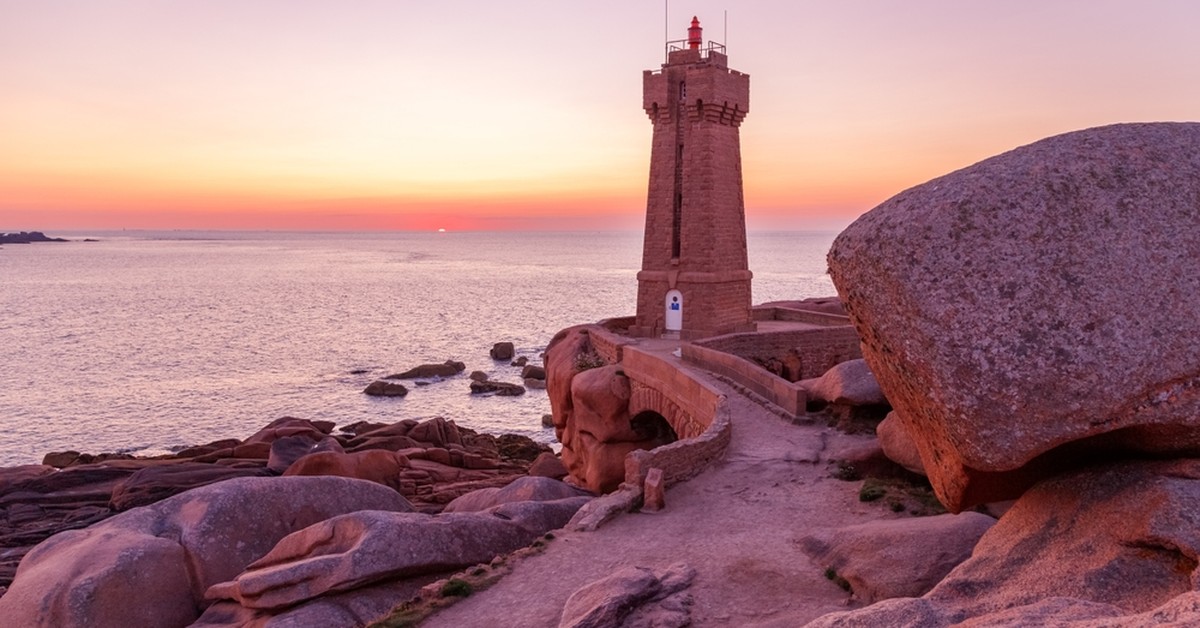
This is the scene that sells Brittany. Around 30 kilometres of coast near Perros-Guirec and Ploumanac’h glow rose and orange at sunset. Wind and waves have carved the boulders into odd shapes. A coastal path called the Sentier des Douaniers runs between the rocks. Time your walk for the last hour before sunset.
Carnac: 3,000 standing stones
Carnac holds the largest collection of prehistoric standing stones in the world, with more than 3,000 of them set in long rows. Neolithic people raised them thousands of years ago, and many pre-date Stonehenge. Nobody knows for certain why. Visit in the evening, when the tour groups have left and the light turns the stones gold.
Quimper, Locronan and the far west
Quimper is the cultural capital of Finistère. Its twin-spired cathedral rises above a river lined with flower boxes, and the shops sell painted Breton pottery. Nearby Locronan is a granite village that looks like a film set but still feels lived in. Further west, the Pointe du Raz drops into the Atlantic at the edge of the continent. The name Finistère comes from the Latin for the end of the earth.
Rennes and the islands
Rennes is a lively student city with half-timbered streets and a famous Saturday market. If you want an island day, take a short ferry to the Île de Bréhat. Cars are not allowed there, so you explore on foot among hydrangeas and pink rocks.
Planning more of France? Get one friendly email a week from our free newsletter → lovetovisitfrance.substack.com
What to Eat and Drink in Brittany
Breton food is simple and rich. The star is the crêpe. Sweet crêpes use wheat flour. Savoury ones, called galettes, use buckwheat flour and come with ham, egg and cheese. Locals drink dry cider from a small bowl called a bolée alongside them.
Salted butter is another local pride. Cooks here use it in everything. The best example is the kouign-amann, a dense, caramelised butter cake that began in Douarnenez. Its name means butter cake in Breton. On the coast, order oysters in Cancale, moules marinières and grilled fish. Our list of France’s best coastal towns for seafood has more ideas.
Look out for the Breton striped shirt too. It started as a sailor’s uniform. You can read its story in our guide to the Breton stripe.
The Best Time to Visit Brittany
May, June and September give the best balance of mild weather and thinner crowds. July and August bring the warmest sea and the biggest crowds, especially in Saint-Malo and on the Pink Granite Coast. Spring brings gorse and wildflowers along the cliffs. Autumn brings storm-watching and quiet beaches. Pack a waterproof jacket whenever you go. Our guide to the best time to visit France covers the other regions.
How Many Days Do You Need?
Give yourself four days for a first taste. Spend one in Saint-Malo, one in Dinan or the Pink Granite Coast, one at Carnac and one around Quimper. With a week, add Rennes and an island. Brittany pairs well with Normandy in a single two-week loop through north-west France. For a wider view of the country, see how it compares in our Paris versus Provence guide.
You Might Also Enjoy
- Normandy Travel Guide
- Loire Valley Road Trip: The Complete Guide for US Visitors
- France’s Best Coastal Towns for Seafood
Plan Your France Trip
Ready to turn ideas into an itinerary? Our France trip planning hub brings together our guides on regions, trains, seasons and practical tips in one place.
Brittany Travel FAQs
Is Brittany worth visiting?
Yes. It offers dramatic coastline, medieval towns, prehistoric sites and some of the best seafood in France. It also stays much quieter than Provence or the Riviera outside the summer peak.
What is the best town to stay in for a first visit to Brittany?
Saint-Malo makes the best base. It has good rail links, a walled old town and easy day trips to Dinan and Cancale. Quimper suits travellers who want to explore the far west.
How do you get from Paris to Brittany?
Take the TGV from Paris Montparnasse. Trains reach Rennes in about 1 hour 25 minutes, and they run on to Saint-Malo, Vannes and Quimper. A hire car then lets you reach the coast and villages.
Join 7,000+ France Lovers
Every week, get France’s hidden gems, local recipes, and travel inspiration — the kind you won’t find in any guidebook.
Subscribe free — enter your email:
Read the latest France stories →
Free forever · One email per week · Unsubscribe anytime
Tours & experiences you might love


Powered by Viator. Some links are affiliate links — we may earn a small commission at no extra cost to you.

Leave a Reply