
Corsica is France’s wildest island, and it rewards travellers who plan ahead. Granite peaks climb above turquoise bays. Pine forests run down to white beaches. Medieval citadels sit on limestone cliffs. This Corsica travel guide covers when to go, how to get there, where to stay and what to eat, so you can build a trip that fits your time.
Love France? Join 7,000+ readers on our free newsletter → lovetovisitfrance.substack.com
Why Visit Corsica?
Corsica is the fourth-largest island in the Mediterranean, after Sicily, Sardinia and Cyprus. It measures roughly 183 kilometres from north to south. Monte Cinto, the highest peak, reaches 2,706 metres. That means you can swim in the morning and stand among mountain lakes by the afternoon.
The island is part of France, yet it feels distinct. Villages cling to ridges, and road signs show both French and Corsican names. Locals take pride in their food, their music and their landscape. If you have already enjoyed the French Riviera or Provence, Corsica offers a quieter, more rugged alternative.
How to Get to Corsica
Most visitors arrive by air or by sea. Both options work well, and your choice depends on whether you want a car on the island.
Flying to Corsica
Corsica has four main airports: Ajaccio, Bastia, Calvi and Figari in the south. Flights from Paris take under two hours. Many European cities also have seasonal routes in summer. Book early for July and August, because seats fill fast.
Taking the Ferry
Car ferries sail from Marseille, Nice and Toulon to Ajaccio, Bastia, Calvi, L’Île-Rousse and Porto-Vecchio. The crossing takes several hours, and overnight sailings from Marseille let you sleep on board. A ferry makes sense if you plan to bring your own car or want to pair Corsica with a train journey across mainland France.
The Best Time to Visit Corsica
May, June and September are the sweet spots. The weather is warm, the sea is swimmable and the roads are calmer. July and August bring heat, crowds and the highest prices. Many hikers choose late June to late September for the high mountain trails, when the snow has melted.
Winter is quiet. Some hotels and restaurants close from November to Easter, especially on the coast. For a wider look at the seasons across the country, read our season-by-season guide to France.
Where to Go in Corsica
Corsica splits naturally into regions. Pick two or three for a week, rather than trying to see the whole island.
Bonifacio and the South
Bonifacio is the postcard town. Its old citadel stands on white limestone cliffs above a long, narrow harbour. Walk the ramparts, then take a boat trip to see the sea caves and the cliff faces from below. The famous Staircase of the King of Aragon has 187 steps cut into the rock, and it leads down to the water.
Further north, Porto-Vecchio is the base for the island’s best-known beaches. Palombaggia, Santa Giulia and Rondinara have soft sand and shallow, clear water. Arrive early in summer to claim a spot.
Ajaccio and the West Coast
Ajaccio, the island’s capital, is where Napoleon Bonaparte was born in 1769. You can visit the Maison Bonaparte and wander the old streets and the harbour. It is a relaxed city, with good markets and seafood restaurants.
North of Ajaccio, the Calanques de Piana rise from the sea in red granite. They form part of the UNESCO-listed Gulf of Porto, which also includes the Scandola Nature Reserve. The drive along the coast road is one of the most beautiful in France. Boat trips from Porto bring you close to the cliffs.
Calvi and the Balagne
Calvi has a Genoese citadel, a long sandy beach and a lively harbour. Inland, the Balagne region is dotted with small stone villages, artisan workshops and olive groves. It is a good area for a slow day of driving, with a stop for lunch in a village square.
Cap Corse and the Agriates
Cap Corse is a finger of land about 40 kilometres long at the island’s northern tip. Stop at Erbalunga, a tiny fishing port, and at Nonza, where a tower stands above a black pebble beach. East of Saint-Florent, the Désert des Agriates is a dry, wild landscape. Saleccia beach lies at the end of a rough track, and you can also reach it by boat from Saint-Florent.
The Mountains: Corte, Restonica and Bavella
The interior is the real heart of Corsica. Corte is a mountain town with a dramatic citadel and the Museum of Corsica. From Corte, the Restonica valley road leads to trailheads for Lac de Melo (1,711 metres) and Lac de Capitello (1,930 metres). The loop takes around four hours and rewards you with clear mountain water.
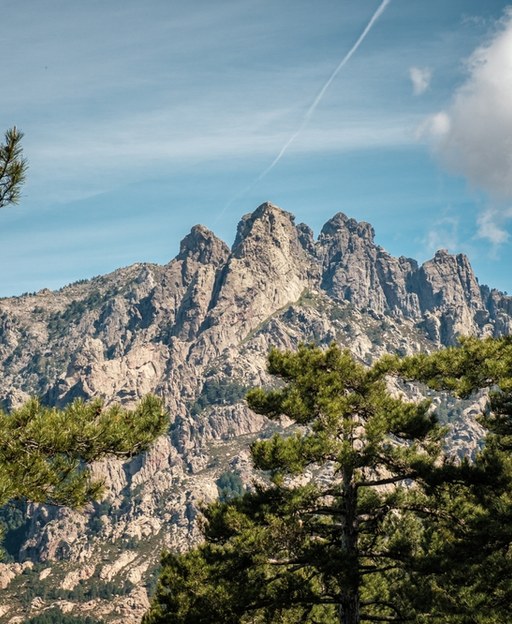
In the south, the Aiguilles de Bavella are jagged granite needles above pine forest. The Col de Bavella, at 1,218 metres, makes an easy viewpoint. Stop here even if you do not plan to hike.
Planning a bigger France trip? Get one email a week with hidden gems and local tips → Join Love France free
Hiking in Corsica
Corsica is a walker’s island. The GR20 is the most famous trail. It runs about 180 kilometres from Calenzana in the north to Conca in the south, and most people need around two weeks to finish it. The path is steep and rocky, so it suits experienced hikers with good fitness and proper boots.
You do not need to tackle the whole GR20 to enjoy the mountains. Short day walks in the Restonica valley, the Bavella area and the Calanques de Piana give you the same views. Check the weather before you set out, because conditions change fast at altitude.
What to Eat and Drink in Corsica
Corsican food leans on the mountains and the sea. The island has its own ingredients, and many of them are hard to find on the mainland.
- Brocciu: a fresh cheese made from whey, used in both savoury dishes and desserts.
- Charcuterie: look for lonzu, coppa and figatellu, a liver sausage often grilled in winter.
- Chestnut flour: locals bake it into bread, cakes and polenta.
- Honey: Corsican honey carries a protected designation and tastes of the maquis, the island’s scented scrub.
- Drinks: try Pietra, a chestnut-flavoured beer, and myrtle liqueur after dinner.
On the coast, order fresh fish and langoustines. If you enjoy seafood, our guide to France’s best coastal towns for seafood will give you more ideas.
Getting Around Corsica
Hire a car. Public transport is limited, and the best beaches and villages sit off the main roads. Plan for slow driving. The roads wind through the mountains, and a 100-kilometre journey can take well over two hours. The drive from Bastia to Bonifacio takes around three hours without stops.
Build your days around one main base per region. Check opening hours in advance, since small shops and restaurants may close for a long lunch.
How Long Should You Stay?
A week gives you a good taste. Spend three nights in the south around Bonifacio and Porto-Vecchio, two nights on the west coast near Porto, and two nights in Calvi or the Balagne. With ten days, add Cap Corse or a night in the mountains near Corte.
Want to trace your family roots on the island? Read about French surnames of Corsica. For help with the wider journey, visit our Planning Hub.
You Might Also Enjoy
- The French Island That Smells Like Herbs Before You Even See It
- The Island That France Calls Its Own
- French Riviera Travel Guide
Plan Your France Trip
Corsica works best as part of a bigger plan. Our Start Here: Planning Your Trip to France page pulls together our guides on regions, seasons and routes.
Corsica Travel FAQs
What is the best month to visit Corsica?
June and September are the best months for most visitors. The sea is warm, the trails are open and the crowds are smaller than in July and August.
Do I need a car in Corsica?
Yes, a car gives you the most freedom. Buses link the main towns, but they run rarely and skip most beaches and mountain villages.
How many days do you need in Corsica?
Seven days is a good minimum for two or three regions. Ten days lets you add Cap Corse or a mountain stay near Corte.
Is Corsica worth visiting if I have seen the French Riviera?
Yes, because the two feel very different. Corsica offers wilder landscapes, mountain hiking and a quieter pace than the Riviera.
Join 7,000+ France Lovers
Every week, get France’s hidden gems, local recipes, and travel inspiration — the kind you won’t find in any guidebook.
Subscribe free — enter your email:
Prefer a link? Join Love France here →
Free forever · One email per week · Unsubscribe anytime
Tours & experiences you might love


Powered by Viator. Some links are affiliate links — we may earn a small commission at no extra cost to you.

Leave a Reply