
The Alsace Wine Route: A Complete Guide for First-Time Visitors
The Alsace Wine Route is one of France’s most rewarding drives. Stretching roughly 170 kilometres through the foothills of the Vosges mountains, it links half-timbered villages, medieval fortresses, and some of the country’s finest white wine estates. If you’re planning a trip to northeast France, this guide covers everything you need to know — from the best villages to stop in, to what to drink and when to go.
Love France? Join 7,000+ readers on our free newsletter → lovetovisitfrance.substack.com
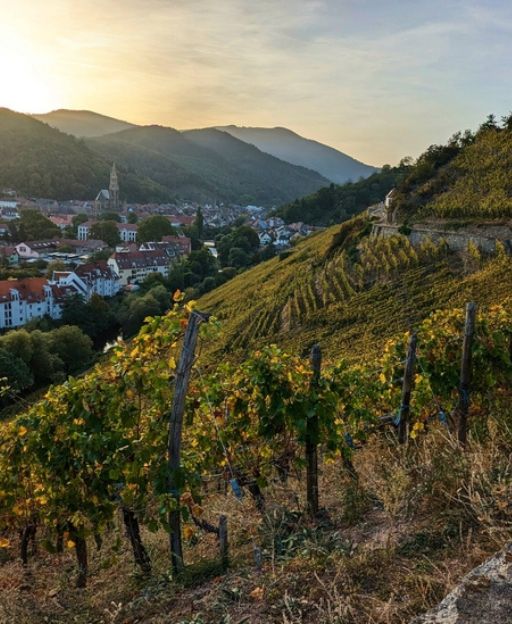
What Is the Alsace Wine Route?
Officially known as the Route des Vins d’Alsace, the wine route runs from Marlenheim in the north to Thann in the south, passing through more than 70 villages along the way. France established the route in 1953, making it one of the country’s oldest wine tourism routes. Most visitors drive it over two to three days, though a week gives you time to slow down and explore properly.
The route passes through two départements: Bas-Rhin in the north and Haut-Rhin in the south. Haut-Rhin is generally considered the more scenic half, with the greatest concentration of grand cru vineyards and prettiest villages. That said, the northern section has its own character — quieter, less visited, and worth at least half a day.
Alsace produces almost exclusively white wine and a small amount of sparkling wine (Crémant d’Alsace). The region’s Germanic heritage shapes everything here: the architecture, the food, the dialect, and the wine styles. If you’ve visited villages along the Rhine in Germany, parts of Alsace will feel immediately familiar — but distinctly French.
🇫🇷 Free: The Perfect Provence & South of France Road Trip
A free 10-day itinerary covering Avignon, the Luberon villages (Gordes, Roussillon, Bonnieux), Marseille, Cassis, Aix-en-Provence, and the Camargue — with practical route notes most travel guides leave out.
Get the Free Itinerary →The Best Villages on the Alsace Wine Route
With more than 70 villages to choose from, it helps to know which ones are worth stopping for. These are the highlights that most first-time visitors find memorable — and a couple that are worth seeking out even if they’re slightly off the main route.
Riquewihr
Riquewihr is the village most people picture when they think of Alsace. The main street runs between 16th-century houses in pale yellow, coral pink, and sage green, their window boxes overflowing with geraniums in summer. It’s busy — very busy in July and August — but genuinely beautiful. Arrive before 10am or after 4pm to see it without the crowds. The Dopff au Moulin and Hugel estates both have tasting rooms here.
Eguisheim
Many visitors call Eguisheim the most perfectly preserved village on the wine route. Built in concentric rings around an octagonal castle courtyard, it’s compact enough to walk in 20 minutes — but most people stay much longer. France named it the country’s Favourite Village in 2013. Eguisheim is the birthplace of Pope Leo IX and produces excellent Riesling from its surrounding slopes.
Kaysersberg
Kaysersberg sits where the Weiss valley meets the wine route and has more substance than many of the pretty villages nearby. It has a genuine market town feel, a fortified bridge over the river, and a ruined castle above. It’s also the birthplace of Albert Schweitzer. The wine co-operative here is excellent value for Pinot Blanc and Gewurztraminer.
Colmar
Colmar is the unofficial capital of the wine route and the natural base for exploring the southern half. Its historic centre — particularly the Petite Venise district, with its canals and flower-draped quaysides — is among the most photographed in France. The Unterlinden Museum holds Matthias Grünewald’s extraordinary Isenheim Altarpiece, one of the great works of Northern European art. Colmar deserves at least one full day.
Ribeauvillé
Ribeauvillé has three ruined castles on the ridge above it and a long main street of medieval houses. It’s slightly less visited than Riquewihr and better for it. The town has strong connections to Riesling production. The annual Pfifferdaj festival in September is one of Alsace’s oldest traditions — if you’re visiting in autumn, it’s worth timing your trip around it.
What Wines to Try on the Alsace Wine Route
Alsace produces seven principal grape varieties, all labelled by grape name rather than by village or blend — which makes ordering straightforward for visitors unfamiliar with French wine labelling conventions.
Riesling
Alsatian Riesling is dry (unlike many German versions) and most wine lovers consider it the region’s finest grape. It ranges from steely and mineral near the northern end of the route to richer and more aromatic in the grand cru vineyards around Colmar. If you only try one wine on the route, make it a Riesling from a grand cru site.
Gewurztraminer
Gewurztraminer is the wine most visitors reach for first. It’s intensely aromatic — lychee, rose petal, and spice — with a full body and relatively low acidity. It pairs beautifully with the local cuisine, particularly choucroute garnie and Munster cheese. The villages around Gueberschwihr and Ribeauvillé produce excellent examples.
Pinot Gris and Pinot Blanc
Pinot Gris is rich and honeyed, excellent with pork dishes and foie gras. Pinot Blanc is lighter and more versatile — most Alsatian restaurants serve it as an aperitif, and it does that job well. Both are significantly cheaper than Riesling and Gewurztraminer, and both reward your attention.
Crémant d’Alsace
Crémant d’Alsace is France’s best-selling sparkling wine after Champagne. Made by the traditional method from Pinot Blanc, Auxerrois, and sometimes Pinot Gris, it’s fresh, affordable, and very enjoyable. A glass of Crémant at a roadside tasting room on a warm afternoon is one of the genuine pleasures of the wine route.
Grand Cru Vineyards: What They Mean and Which to Visit
Alsace has 51 classified grand cru vineyards, all of which appear on producer labels. Unlike in Burgundy or Bordeaux, the grand cru designation here is relatively recent (producers gained most classifications in the 1980s and 1990s) and not every wine expert agrees on the rankings. That said, the best grand cru sites consistently produce wines of real depth and complexity.
The most celebrated grand cru vineyards include Schlossberg (above Kaysersberg, excellent Riesling), Goldert (near Gueberschwihr, best for Gewurztraminer), Rangen (the southernmost grand cru, near Thann, and arguably the most distinctive), and Brand (above Turckheim, producing some of the richest Rieslings on the route).
You don’t need to seek these out obsessively. Many of the smaller estate tasting rooms along the route will offer grand cru wines by the glass, often for very reasonable prices. Ask what’s open and take what’s recommended — that’s the best approach on the Alsace wine route.
For context on how Alsace fits into France’s wine geography, the Bordeaux wine region guide gives a useful comparison with France’s most famous red wine area.
Where to Stay on the Alsace Wine Route
Most visitors base themselves in Colmar, which has the widest choice of accommodation and the best transport connections. It’s within easy reach of the southern half of the route and has enough to keep you occupied on rest days.
Staying in one of the villages is a more atmospheric option if you’re prepared to drive everywhere. Riquewihr, Ribeauvillé, and Kaysersberg all have small hotels and chambres d’hôtes (B&Bs) within the old town perimeters. Booking early is essential in July, August, and the pre-Christmas period, when the markets draw enormous crowds — as Alsace’s Christmas markets are among the most popular in Europe.
Strasbourg, at the northern end of the route, is worth two nights on its own. The historic Petite France district, the Gothic cathedral, and the European Parliament buildings make it one of France’s most interesting cities. It’s an excellent starting point if you’re driving the route from north to south.
How to Drive the Alsace Wine Route
The route is straightforward to drive independently. The D35 and D83 roads run through the main villages and are well signposted — look for the green Route des Vins signs. The roads are narrow in places, particularly in the village centres, so a smaller car is easier to manage.
The main challenge is that wine tastings and driving don’t mix. The practical solution most visitors use is a designated driver day, spitting at tastings (winemakers won’t mind — it’s normal practice), or hiring a driver for a half-day. Several operators in Colmar offer guided wine route tours that handle transport entirely.
Alternatively, the route is excellent cycling territory. The terrain is gentle on the valley floor, and dedicated cycling paths connect many of the major villages. Several companies in Colmar and Strasbourg offer e-bike hire, which makes the steeper sections more manageable.
For broader inspiration on exploring France by road, see the Loire Valley road trip guide — a different but equally rewarding driving route through châteaux country.
Best Time to Visit the Alsace Wine Route
The wine route is at its most beautiful during the vendange (grape harvest), which typically runs from late September to mid-October. The vines turn gold and red, the villages smell of fermenting grapes, and the winemakers are all very busy — but most tasting rooms stay open. This is the best time to visit if you want to see winemaking in action.
June and July offer long days and warm weather, with the villages at their most colourful. August is the busiest month and worth avoiding if you dislike crowds. May and early June are excellent — quieter, with spring flowers still on the vines and pleasant temperatures for walking.
December brings the famous Christmas markets, which run from late November through Christmas Eve. Colmar, Strasbourg, Kaysersberg, and Riquewihr all hold markets. They’re genuinely special but extremely popular — book accommodation months in advance. For timing your overall trip, the month-by-month France travel guide covers the whole country in detail.
Food on the Alsace Wine Route
Alsatian food is hearty, generous, and very different from what you’ll find in Paris or Provence. It’s influenced heavily by German and Austro-Hungarian traditions, and you’ll eat well at almost every level of restaurant.
Choucroute garnie is the signature dish — braised sauerkraut topped with several varieties of pork (sausages, smoked belly, ribs) and potatoes. It’s enormous and deeply satisfying. Tarte flambée (called Flammekueche locally) is the other essential: a thin-crust pizza-like dish topped with crème fraîche, onions, and bacon. It’s typically eaten communally, ordered by the round, and pairs perfectly with a glass of Pinot Blanc.
Baeckeoffe is a slow-cooked casserole of lamb, pork, and beef with potatoes and white wine, traditionally prepared on Monday mornings while families did the laundry. Most restaurants require you to order it in advance. Munster cheese, pungent and orange-rinded, is the local cheese — strong enough that most restaurants store it in a separate room.
For a deeper look at how French culinary traditions vary by region, the history of Alsace as a French-German borderland explains why the food here feels so distinct from the rest of France.
Frequently Asked Questions
What is the best time of year to visit the Alsace Wine Route?
Late September to mid-October is ideal for the grape harvest — the scenery is stunning and you can watch winemaking in progress at many estates. June is excellent for good weather without peak-summer crowds, and December is special for the Christmas markets, though accommodation fills months in advance.
How long does it take to drive the full Alsace Wine Route?
The full 170-kilometre route takes around three to four hours to drive without stops, but most visitors spread it over two to three days to allow time for tastings and village exploration. A week gives you a genuinely relaxed experience and the chance to visit Strasbourg and Colmar properly.
Do I need to book wine tastings in advance on the Alsace Wine Route?
For most estate tasting rooms, walk-ins are welcome during opening hours — particularly in summer and harvest season. Larger producers such as Hugel in Riquewihr and Trimbach in Ribeauvillé appreciate advance bookings for in-depth cellar tours, but casual drop-ins for a glass or two are rarely turned away.
You Might Also Enjoy
- Alsace: The Region That Was French, Then German, Then French Again
- Why the Alsace Christmas Markets Are Unlike Any Others in Europe
- The Champagne Region, France: A Complete Travel Guide
Plan Your France Trip
Ready to start planning? Our complete France trip planning guide covers everything from visas and transport to the best regions and when to go.
Join 7,000+ France Lovers
Every week, get France’s hidden gems, local recipes, and travel inspiration — the kind you won’t find in any guidebook.
Subscribe free — enter your email:
Love more? Join 64,000 Ireland lovers → · Join 43,000 Scotland lovers → · Join 30,000 Italy lovers →
Free forever · One email per week · Unsubscribe anytime
Thinking about it seriously?
If you’ve started actually planning a move, our complete our complete Moving to France guide walks through every step, every cost, and the paperwork that catches most people out.
Tours & experiences you might love


Powered by Viator. Some links are affiliate links — we may earn a small commission at no extra cost to you.

Leave a Reply